

Dressing for early morning golf in cooler weather is all about mastering the layer system. You need clothing that traps warmth during the cold first few holes but allows you to shed layers quickly as the sun rises and temperatures climb. A three-layer system—base, mid, and outer—gives you total control over your body temperature without restricting your swing.
Understanding the Three-Layer System for Golf
The base layer sits against your skin and should be moisture-wicking, not cotton. Merino wool or synthetic fabrics pull sweat away so you stay dry and warm. The mid layer provides insulation, typically a fleece or lightweight sweater. The outer layer blocks wind and light rain while offering breathability. Each layer serves a distinct purpose, and choosing the right materials makes the difference between comfort and misery.
Why Cotton Is Your Enemy on Cold Mornings
Cotton absorbs moisture and holds it against your skin. Once you start walking or swinging, you perspire. That damp cotton cools rapidly, leaving you shivering by the third hole. Instead, look for polyester blends, merino wool, or technical fabrics that wick moisture away. Your body will regulate temperature far better, and you will stay focused on your game rather than the cold.
How Layers Help You Adapt to Changing Temperatures
Early morning rounds often start at 45°F and end at 60°F or warmer. Thick single-layer clothing that feels perfect at the first tee will have you sweating by the back nine. Layering lets you remove your mid layer or outer shell between holes, storing it in your bag. This adaptability keeps you comfortable every step of the round.
What Base Layer Works Best for Cold Weather Golf?
The ideal base layer for cooler morning golf is a lightweight, long-sleeve top made from merino wool or a high-quality synthetic fabric. It should fit snugly but not restrict movement. This layer is your foundation, so prioritize moisture management and comfort over thickness.
Merino Wool vs. Synthetic Base Layers
Merino wool is naturally odor-resistant, soft, and excellent at regulating temperature. It costs more but performs superbly. Synthetic base layers, such as polyester or nylon blends, are cheaper, dry faster, and still wick well. Both work; your choice depends on budget and sensitivity to itchiness. Many golfers keep one of each for different conditions.
What to Look for in a Golf-Specific Base Layer
Golf base layers should have flat seams to prevent chafing during rotation. A mock neck or zip turtleneck offers extra warmth for your neck without needing a scarf. Look for thumbholes if you plan to wear the base layer under a vest; they keep sleeves from riding up. Avoid bulky knits that add unnecessary volume under tighter outerwear.
Can You Wear a Compression Shirt as a Base Layer?
Yes, compression shirts work well as a base layer for golf. They provide light warmth, improve blood flow, and fit seamlessly under other layers. The main drawback is that compression gear can feel restrictive if you have a very active swing. Try one during a practice round before committing to it in a tournament or important game.
Which Mid Layer Keeps You Warm Without Restricting Your Swing?
A lightweight fleece pullover or a thin merino wool sweater is the best mid layer for golf. It should allow full shoulder rotation and not bind across your back. The goal is insulation without bulk. Avoid heavy crewneck sweaters or thick hoodies that interfere with your arm movement and club path.
Fleece vs. Sweater: Which Is Better for Golf?
Fleece is lighter, dries faster, and stretches more easily, making it a top choice for active golfers who walk the course. Wool sweaters offer superior warmth in still conditions but can feel heavy if you perspire heavily. For most morning rounds, a quarter-zip fleece offers the best balance of warmth, mobility, and breathability.
How to Choose a Quarter-Zip for Optimal Temperature Control
A quarter-zip mid layer lets you adjust ventilation without removing the garment. Unzip it during a walk between holes to cool down, then zip it up on the tee box. Look for options with a tall collar for extra neck protection. Avoid styles with bulky zippers or thick ribbing at the cuffs that can snag on gloves or club grips.
Why You Should Avoid Hoodies on the Course
Hoodies are popular off the course but rarely ideal on it. The hood bunches under outer layers, the front pocket adds bulk, and the loose fit can interfere with your swing. Many courses also have dress codes that restrict hooded garments. Stick to a clean quarter-zip or pullover for a professional appearance and better performance.
What Is the Best Golf Outerwear for Chilly Mornings?
The best outerwear for early morning golf is a windproof, water-resistant jacket or vest that blocks the elements without overheating you. A lightweight shell that you can easily remove and stash in your bag is ideal. For most conditions, a vest offers the perfect combination of core warmth and arm freedom.
Vest vs. Jacket: Which Should You Choose?
Choose a vest when temperatures are between 45°F and 55°F with little rain. Vests keep your core warm while allowing full arm mobility and airflow. Choose a jacket when temperatures dip below 45°F, wind is strong, or rain is likely. Jackets offer full coverage but can feel restrictive if not sized correctly. Many golfers carry both and decide based on the specific morning forecast.
Key Features to Look for in a Golf Vest
Look for a sleeveless vest that is windproof on the front and chest but breathable across the back. Zippered pockets are essential for tees, ball markers, and a glove. A stand-up collar adds neck warmth without a separate scarf. Lightweight synthetic insulation like Primaloft or Thinsulate provides warmth without bulk. For affordable options that perform well, check out this guide on golf clothing for chilly mornings golf outerwear to find vests that balance cost and quality.
What About a Golf Rain Jacket for Cold Mornings?
A rain jacket can double as outerwear for cold, damp mornings. However, many rain jackets are not breathable enough for active play, leading to sweat buildup inside. Look for a jacket labeled as both waterproof and breathable, with pit zips for ventilation. A rain jacket is a good choice when dew is heavy or light drizzle is expected alongside cold temperatures.
How Should You Dress Your Lower Body for Cool Morning Golf?
For your lower body, wear thermal-lined golf pants or add a thin base layer under standard golf pants. Legs generate heat from walking, so they rarely need as much insulation as your core. Overheating your legs can actually make your whole body feel clammy and uncomfortable.
Are Thermal Golf Pants Worth the Investment?
Yes, thermal golf pants are excellent for cold mornings. They look like regular golf pants from the outside but have a fleece or brushed interior that traps heat. Brands like Nike, Adidas, and Under Armour make models that are wind-resistant and stretchy. They eliminate the need for a separate base layer on your legs, simplifying your dressing routine.
When to Wear Base Layer Bottoms Under Regular Pants
Wear base layer bottoms (long underwear) under your standard golf pants when temperatures drop below 40°F. Choose a lightweight synthetic or merino wool option. Avoid cotton thermal underwear. The base layer should be smooth and thin enough that it does not bunch up inside your pants or restrict your leg movement during the swing.
What Socks Keep Your Feet Warm Without Making Them Sweat?
Merino wool golf socks are the best choice for cold mornings. They provide warmth, wick moisture, and cushion your feet during walking. Avoid thick cotton socks that cause blisters and cold feet when damp. Look for socks with a mid-calf height to prevent them from slipping down inside your shoes. Change your socks after the round if your feet became damp.
What Accessories Are Essential for Early Morning Golf?
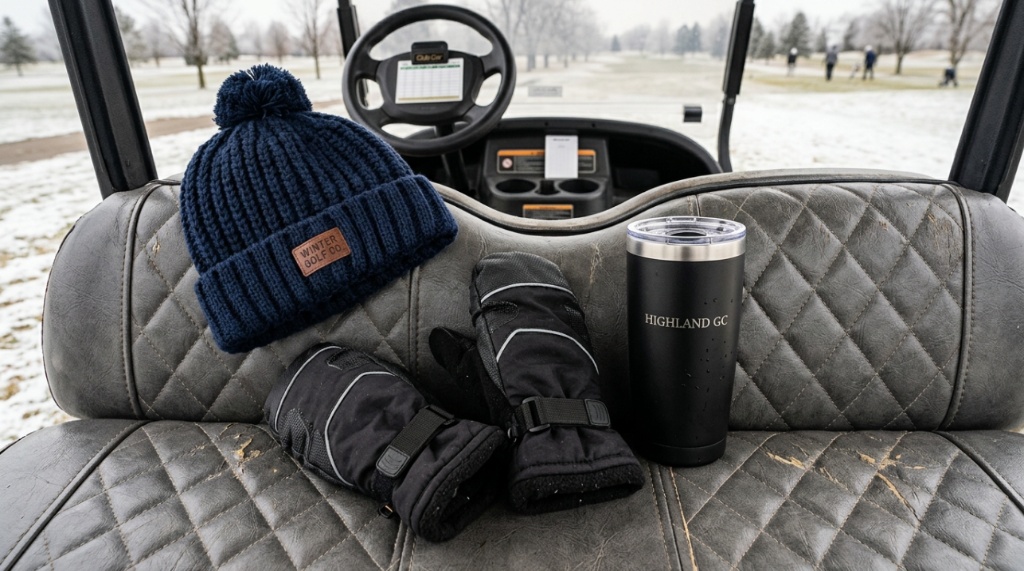
Essential accessories for cold morning golf include a beanie or headband, a neck gaiter, and a lightweight pair of gloves. These small items dramatically improve your comfort and can be removed easily as the day warms up. Never underestimate how much heat you lose through your head and neck.
Should You Wear a Beanie or a Headband?
Wear a beanie when temperatures are below 40°F and wind is minimal. The full coverage keeps your ears, scalp, and forehead warm. Wear a headband or ear warmer when temperatures are between 40°F and 50°F. A headband keeps your ears warm while letting your scalp breathe, preventing overheating during walking. Both should be made of acrylic or wool blends that wick moisture.
Why a Neck Gaiter Is Better Than a Scarf for Golf
A neck gaiter is a seamless tube of fabric that sits around your neck. Unlike a scarf, it will not dangle, get caught on your club, or require constant adjusting. You can pull it up over your nose and mouth on the coldest tee boxes, then pull it down around your neck between shots. It is one of the most versatile and underrated cold-weather golf accessories.
How Do Golf Mittens or Gloves Help in the Cold?
A pair of thermal golf mittens worn between shots keeps your hands warm and flexible. When it is your turn to hit, remove the mitten from your glove hand only. Some golfers prefer a pair of winter golf gloves that provide insulation and grip simultaneously. Whichever you choose, keep your hands warm to maintain feel and grip pressure throughout your round.
How Do You Manage the Transition from Cold to Warm During a Round?
Plan your layers so you can remove them without disrupting your rhythm. Keep an extra pocket or compartment in your golf bag for shedded layers. Store your vest or jacket in a place you can access quickly during the walk between holes. The goal is to stay comfortable without wasting time or mental energy on clothing adjustments.
When Should You Remove a Layer During a Round?
Remove a layer when you feel your core temperature rising and you are not actively swinging. The best time is while walking to the next tee or waiting for the group ahead. If you wait until you are sweating, you have waited too long. Shedding layers proactively keeps you dry and comfortable for the entire round.
How to Store Removed Layers in Your Golf Bag
Fold or roll your removed layers neatly and place them in a dedicated compartment of your bag. A compression sack can help save space. Avoid stuffing damp or sweaty garments into your bag; they can make everything else smell and feel wet. If the round is still cold but you removed a jacket, keep it accessible in case a cloud passes over or wind picks up.
What Should You Wear on Your Hands and Head During Wet Cold Mornings?
For wet cold mornings, wear a water-resistant beanie or a brimmed rain hat over a beanie. For your hands, use a pair of waterproof winter golf gloves. Regular cold-weather gloves become heavy and cold when wet. A rain glove with thermal properties keeps you warm and maintains grip even in damp conditions.
Is a Brimmed Hat Useful in Cold Weather?
Yes, a brimmed hat can be useful even in cold weather, especially if there is light rain or dew. It keeps water off your glasses and out of your eyes. Pair it with a fleece headband underneath to cover your ears. Switch to a beanie if the temperature drops significantly below 40°F, as the brimmed hat offers less heat retention for your head.
Can You Wear Regular Winter Gloves for Golf?
Regular winter gloves are usually too thick for golf. They reduce your feel of the club and can make gripping correctly difficult. Invest in golf-specific winter gloves or hybrid gloves that combine thin insulation with grip technology. These allow you to swing naturally while keeping your hands warm enough to function well.
Layering up properly ensures your swing stays fluid and unrestricted, even when the thermometer drops. However, staying comfortable on the course is only half the battle; having the right equipment in your bag matters just as much. If you are looking to upgrade your gear this season without breaking the bank, check out our comprehensive guide to the Best Budget Golf Irons in 2026 to maximize your performance on a budget.
Frequently Asked Questions
What is the ideal temperature for wearing a vest on the golf course?
A vest is ideal when temperatures are between 45°F and 55°F with low wind. It keeps your core warm while allowing full arm movement for your swing. If the temperature drops below 45°F, consider adding a lightweight jacket on top of your vest.
Can I wear a hoodie for golf in cold weather?
Most golf courses discourage hoodies due to dress codes, and the loose fit can interfere with your swing. A quarter-zip fleece or a sweater is a better choice for mobility, appearance, and layering. Save the hoodie for the drive to the course.
How many layers should I wear for 40-degree golf?
Wear three layers for 40°F golf: a moisture-wicking base layer, a fleece or thin sweater mid layer, and a windproof vest or jacket as your outer layer. This combination keeps you warm on the first tee but allows easy removal as the day warms.
Do I need special shoes for cold morning golf?
You do not need special shoes, but waterproof golf shoes are highly recommended. Cold dew and morning moisture can soak through standard shoes, leading to cold feet. Pair them with merino wool socks for optimal warmth and dryness.
Should I wear shorts or pants for early morning golf in cool weather?
Always wear pants for early morning golf when temperatures are below 60°F. Your legs will be warmer, and you will avoid the chill of wet grass against your skin. Choose thermal-lined pants if the temperature is below 50°F.
Is it better to dress too warm or too cold for golf?
It is better to dress slightly too cool than too warm. If you are too cool, you can add a layer or move faster between shots. If you are too warm, you will sweat, become uncomfortable, and your performance will drop. Layer strategically so you can adjust.
What is the best fabric for cold weather golf clothing?
Merino wool is the best fabric for cold weather golf clothing. It wicks moisture, regulates temperature, resists odor, and feels soft against the skin. Synthetic polyester blends are a good budget alternative that also wick well and dry quickly.
Conclusion: Own the Morning with the Right Gear
Early morning golf in cooler weather does not have to be a battle against the elements. When you dress with the right layering system, you gain control over your comfort from the first tee to the final putt. Start with a quality base layer that wicks moisture, add a flexible mid-layer for warmth, and finish with outerwear that blocks wind and light rain. Choose accessories like a beanie, neck gaiter, and appropriate gloves to protect the areas where you lose the most heat.
The key is to prepare for change. You do not need to own a closet full of specialized gear; a few versatile, high-quality pieces will serve you across multiple weather conditions. Pay attention to fabrics, avoid cotton, and think about how easily you can shed or add layers during the round. By making smart choices now, you will stop worrying about the cold and start focusing on your game.
Review your current golf wardrobe and identify one or two pieces you can upgrade before your next early morning round. A proper vest or a merino wool base layer will pay for itself in comfort and better scores. Step onto the first tee prepared, and make every cold morning round your best round yet.