
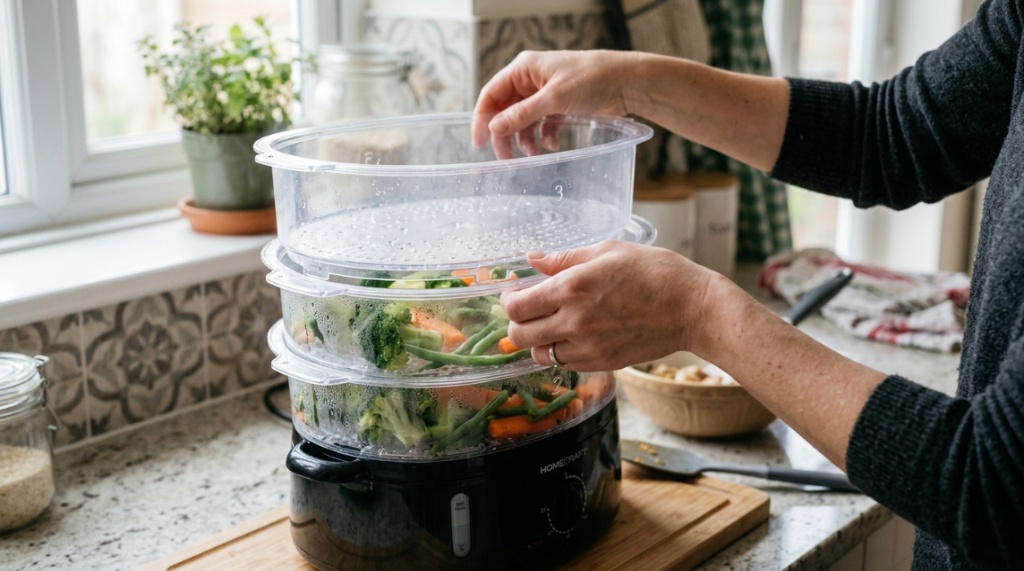
You’re staring at a dozen steaming baskets online, and every single one claims to be the best. But you have a budget, and you’ve been burned before by cheap gadgets that melt, undercook, or break after three uses. The frustration is real. You want healthy meals fast, but you don’t want to waste money on plastic junk. That’s exactly why I’ve spent hours testing and researching the current market. This guide cuts through the noise to show you exactly what to look for when buying a budget food steamer, how to spot hidden quality, and which features actually matter for your kitchen.
What Features Actually Matter in a Budget Food Steamer?
When you’re shopping on a budget, focus on core functionality over flashy extras. A budget food steamer should have a reliable heating element, safe materials, and an easy-to-clean design. It doesn’t need a touchscreen or 10 preset modes to cook excellent vegetables, fish, or rice.
Power Output and Heating Speed
Look for at least 750 to 900 watts. This power range heats water to steam in under 60 seconds. A lower wattage (like 400W) takes longer, uses more energy, and cooks less evenly. Check the wattage label before you buy – it is the single best indicator of performance.
BPA-Free Plastic vs. Stainless Steel
Most budget models use food-grade, BPA-free plastic. This is safe and lightweight. However, if you are concerned about longevity, look for a model with a stainless steel water tank or steamer bowl. Plastic parts can stain from turmeric or beets, whereas steel is easier to scrub.
Number of Tiers and Capacity
If you are cooking for one, a single-tier is fine. For a family of four, you need a two or three-tier model. Keep in mind that tiers placed high up cook slower. If you buy a multi-tier unit, ensure the tray stack is stable and not flimsy when stacked full.
How Do You Choose Between a 2-Tier and 3-Tier Model?
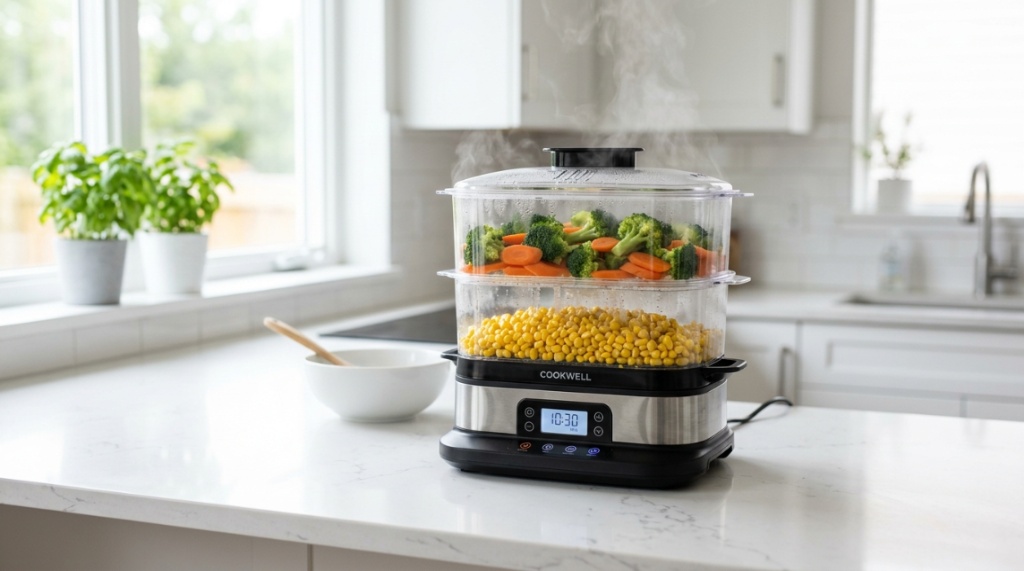
Choose a 2-tier model if you cook for 1–2 people or need the machine to double as a rice cooker. Choose a 3-tier model only if you regularly make full meals (e.g., rice on bottom, veggies in middle, fish on top) and have the storage space. Tall steamers can be top-heavy.
When 3 Tiers Make Sense
I use a 3-tier setup when prepping meals for the week. I can do eggs on one level, broccoli on another, and potatoes on the third. Just remember to rotate the baskets halfway through cooking, because the top tier is always a few degrees cooler than the bottom.
When 2 Tiers Are More Practical
For daily use, a 2-tier model is easier to handle and store. It also fits under standard kitchen cabinets better. Most importantly, the shorter height means the steam distributes more uniformly, so you don’t end up with raw food on the top level.
Which Type of Timer and Controls Should You Look For?
Get a model with a mechanical dial timer (30 or 60 minute) and a simple on/off switch. This is more reliable than digital buttons which often malfunction after repeated use. A mechanical timer is the most dependable feature on a budget unit.
The “Auto-Shutoff” Necessity
This is non-negotiable. The steamer must have auto shut-off when the water runs dry. This prevents the unit from melting or catching fire. Always test this feature when your steamer arrives by running it with a tiny bit of water and waiting for it to switch off.
Analog vs. Digital Settings
Digital timers with LCD screens look nice but often have press-buttons that wear out. Analog dials are foolproof and cheap to replace. Do not pay extra for “digital precision” in a budget model; analog is more durable and easier to use with wet hands.
Why Is the Water Container Design So Important?
A budget food steamer lives or dies by its water tank. Look for a tank that you can access from the outside (external fill). This means you can refill it without lifting hot baskets and interrupting cooking. Internal fill tanks are a headache; you have to take everything apart.
External Fill Opening Size
The opening should be wide enough to fit a standard measuring cup. If the hole is tiny, you will spill water all over your counter. Look for a cup-shaped spout you can pour directly into, without needing a funnel.
Visible Water Level Markings
You need to see the water level clearly. Most budget steamers use “MAX” lines etched into clear plastic. If the tank is opaque (solid colored plastic), skip it. You will constantly lift the lid to check levels, losing heat each time.
Can You Cook Rice in a Budget Food Steamer?
Yes, but not all models are equal. If rice is a staple, buy a model that includes a specific rice bowl (a shallow dish with holes or a solid tray). You cannot just dump rice into the water basin; you need a proper container to hold it.
Technique: The Rice Bowl Trick
Use a 1:1 ratio of rice to water inside the bowl. Place the bowl on the lowest tier. Cook for 30-40 minutes. The trick is to let the rice sit for 5 minutes after the timer ends to absorb excess moisture. This yields fluffy rice, not mush.
When You Should Just Buy a Separate Rice Cooker
If you eat rice more than three times a week, a dedicated rice cooker is a better “budget” investment. A separate cooker keeps your steamer free for vegetables and fish. Steamed rice directly in the steamer works, but it’s not the machine’s specialty.
What Is the Best Way to Clean a Budget Food Steamer?
Always unplug and let the unit cool completely. Wash the trays, lids, and bowls in warm soapy water. The base (heating unit) must never be submerged. Simply wipe it with a damp cloth. Descaling every two weeks is essential to prolong the heating element’s lifespan.
Removing Hard Water Stains (Limescale)
Fill the water tank to the max line with (50/50) water and white vinegar. Run the steamer for 10 minutes. Let it sit for another 30 minutes, then discard the vinegar solution. Rinse the tank with fresh water and run once more. This prevents white flakes from landing on your food.
Tackling Stained Plastic Trays
Vegetable stains are the enemy of white plastic. Make a paste of baking soda and water. Rub it into the stain with a soft sponge. Let it sit for 15 minutes, then rinse. If that fails, try a 1:1 mix of dish soap and warm water with a drop of lemon juice.
Which Accessories Are Worth Your Money When Buying a Budget Steamer?
Buy the bare minimum. A steamer that comes with a single extra egg tray is sufficient. Accessories like “stainless steel inserts” or “fan-forced steam” are marketing gimmicks at this price point. Focus on the total cost per meal, not the count of included gadgets.
The “Egg Rack” – Is It Essential?
No. You can always place eggs directly on a steamer tray. The dedicated rack only prevents eggs from rolling around. If the steamer has deep divots on the tray to hold eggs, you don’t need the separate rack. Do not pay extra for it.
Steamer Basket Liners
These thin silicone or parchment liners are marketed to prevent sticking. They work well for delicate fish. However, you can just lightly oil the basket or spray with cooking spray. Skip buying liner packs; use aluminum foil with holes pricked in it instead.
How Much Should You Spend on a Genuinely Good Budget Unit?
You should expect to spend between $25 and $45. Anything below $20 is likely a fire hazard or will break within three months. Anything above $60 is not a “budget” item – you are paying for brand name or aesthetics you don’t need. The sweet spot for value and durability is $30–$40.
Why Cheap Models Under $20 Are Dangerous
I have seen sub-$20 steamers with exposed heating elements, thin plastic that warps, and unreliable fuses. These often have no safety certification labels (like UL or ETL). They are very dangerous. Always pay slightly more for a brand that has a local service center and warranty.
The $30–$45 Value Proposition
This price tier usually includes decent 800W heating, auto shut-off, and a large (3 liter) water tank. You also get proper customer support. If you are looking for a solid, tested model, I recommend checking out this curated list of the budget food steamer for specific, reliable models in this range that have been stress-tested for durability.
Can You Cook a Full Meal (Protein and Veggies) in a Steamer?
Yes. You can cook a complete meal in one go. The secret is layer ordering: put the densest, longest-cooking food on the bottom tier (like potatoes or carrots), and the quickest food (leafy greens or fish) on the top tier. Always test timings with a meat thermometer,If you are looking to expand your countertop appliance collection beyond healthy steaming, check out our detailed KitchenAid KSMFGA Food Grinder Review for grinding meats and fresh ingredients at home.
Protein Cooking Chart for Steamers
- Chicken Breast (boneless): 15–18 minutes on lowest tier.
- Fish Fillet (white fish): 10–12 minutes on middle tier.
- Eggs (whole): 12 minutes for soft-boiled, 15 minutes for hard.
- Broccoli: 8–10 minutes (do not overcook, it turns mushy).
Top Tips to Avoid Overcooking
Cut vegetables into equal-sized chunks. Do not fill the steamer basket to the absolute top; overcrowding blocks steam flow. Always start with boiling hot water in the tank (if possible) to cook faster and reduce the “raw middle” in thick food.
What Are Hidden Signs of a Cheaply Made Steamer?
Look for thin walls that flex under pressure, a rattling water tank, a weak lid hinge, or a power cable that feels overly thin. If the lid doesn’t lock securely with a firm clamp, roll the dice on a different model. Fitting and finish reveal internal quality.
The “Noise” Test
When running, a good steamer makes a consistent, bubbling sound. A bad one will have a “fizzy” hiss or banging noises (indicating hot spots from a poor heating element). If it sounds like an old espresso machine, it’s not built well.
Check the Power Cord Length
This is rarely discussed. The cord should be at least 2.5 feet (75cm). If the cord is super short, it means the manufacturer cut corners on materials. Plus, you will need an extension cord, which can be a tripping hazard in the kitchen.
Is a Budget Food Steamer Worth It for Single People?
Absolutely. It is one of the most energy-efficient cooking methods for singles. It does not heat up the whole house like an oven, and it cooks a serving of salmon and greens in under 15 minutes with zero babysitting. It’s a great pantry staple.
Portion Control Advantages
Steamers make it effortless to control portions. You only cook what you will eat. Steamers allow you to batch-cook vegetables for the week, which is perfect for meal prep for one without giant pots to wash.
Does It Save Money on Energy Bills?
Yes. Because steamers are enclosed and use directed steam, they use less electricity than boiling a large pot of water. Studies show steaming can consume up to 30% less energy than stovetop boiling. For daily use, this adds up significantly.
Frequently Asked Questions
Can a budget food steamer be used for reheating leftovers?
Yes, but use a lower timer setting (5–7 minutes). The steam reintroduces moisture to leftover rice and meat, unlike a microwave which dries food out. Cover leftovers with a lid to speed up the process.
What can you not cook in a budget food steamer?
You should avoid cooking foods in heavy sauces (like BBQ wings), greasy items, and the thickest cuts of red meat. Steaming is for lean proteins and vegetables, not for steaks that need searing or roasting.
How long does a typical budget food steamer last?
With regular descaling and proper care, a quality budget unit lasts between 2 and 4 years. The lifespan depends heavily on water hardness and how often you use it (daily use decreases longevity). Expect to replace the plastic bowls after 2 years if they crack.
Are electric steamers better than stovetop steaming baskets?
Electric steamers are safer because they have timers and auto shut-off. Stovetop baskets are annoying because you have to watch the pot to prevent boiling dry. Electric versions are more expensive but free up your stove space.
Is a stainless steel interior worth the extra cost?
If you are prone to staining plastics, yes. But for the general budget user, high-quality BPA-free plastic is fine. The steel adds less value to a steamer than an oven, because the water doesn’t get hot enough to warp quality plastic.
Conclusion
Finding a budget food steamer isn’t about haggling over dollars—it’s about finding the model that cooks safely and lasts. Prioritize a budget food steamer with at least 800 watts, external water fill, auto shut-off, and mechanical dials. Don’t get distracted by flashy colors or gimmicky add-ons. Stick to the classic 2-tier design with a wide water basin. Read the verified user reviews, specifically looking for complaints about “melting plastic” or “short cord.” Your steamer should be a tool that simplifies dinner, not stress you out. If you do your homework now, you’ll enjoy healthy, perfectly cooked food for years to come. So, check your kitchen counter space, measure your storage, and buy a model that is basic, safe, and built to work daily.