
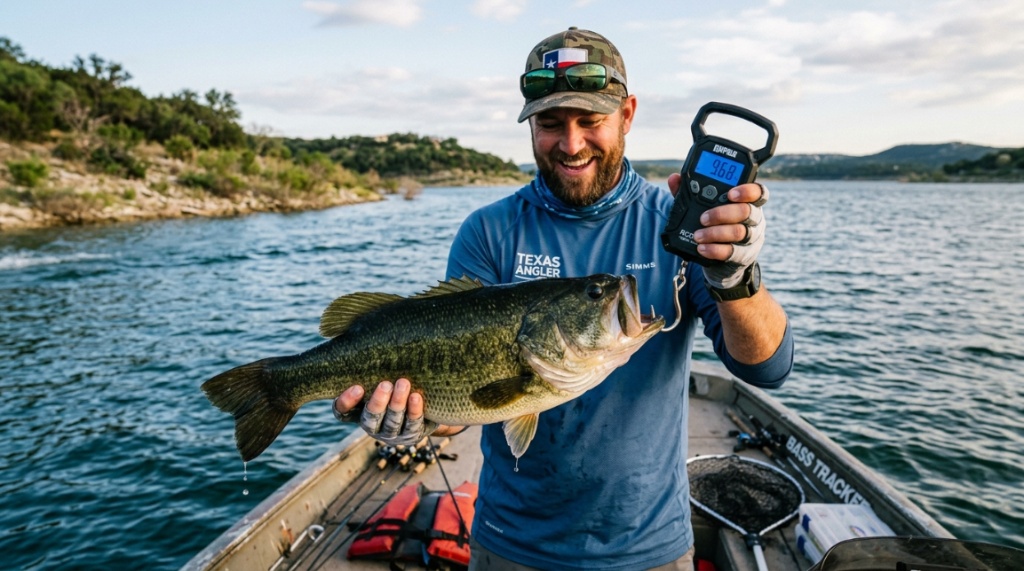
Picture this: you’ve just hooked a massive bull redfish on the Texas Gulf Coast. The fight was brutal, your arms are burning, and you finally have the fish boatside. You reach for your scale to weigh your catch for a tournament or a personal record, and the needle snaps, the digital screen fogs up, or the hook bends under the pressure. All that effort, wasted. In Texas, where freshwater giants like trophy bass share the spotlight with saltwater bruisers like gafftopsail catfish and bull sharks, your equipment has to be as tough as the environment. The problem is that most anglers buy a cheap, flimsy scale and only realize their mistake when it fails them at the worst possible moment. You need a tool that can handle corrosive saltwater, extreme heat, and heavy weights without breaking the bank.
In this guide, we’re going to break down exactly how to choose a heavy-duty fish scale that will survive the unique demands of Texas fishing. We’ll cover everything from weight capacity and material durability to waterproofing and accuracy—so you can buy with confidence and never second-guess your gear again. If you’re looking for a specific list of top-rated models, check out our curated selection of heavy duty fish scales Texas anglers trust for the toughest conditions.
What Makes a Fish Scale “Heavy Duty” in the First Place?
Heavy duty isn’t just a marketing buzzword. It refers to specific engineering choices that allow a scale to handle extreme stress, harsh environments, and repeated use. A true heavy-duty scale in Texas must go beyond the standard 50-pound capacity found on most consumer models.
Defining Weight Capacity Standards
For serious Texas anglers, a scale that tops out at 30 or 50 pounds is a toy. You need a scale with a rating of at least 100 pounds to handle large catfish, bull reds, and jack crevalle. Some specialized scales go up to 300 or 500 pounds for offshore species like amberjack and grouper. A heavy-duty scale typically features a reinforced load cell and a thicker shackle or hook designed to lift fish that are heavier than you are.
The Role of Build Materials
Plastic casings crack under pressure. Heavy-duty scales are almost exclusively built with aircraft-grade aluminum, stainless steel, or rugged ABS composite polymer with metal internal gearing. The hook and shackle must be solid stainless steel to resist bending. If you can twist the hook with your hands, it’s not heavy duty.
Accuracy vs. Durability Balance
Some heavy-duty scales sacrifice fine accuracy for raw strength. A good scale should be accurate to within 1% or 1 ounce (whichever is greater). scales that read in 0.1 lb increments are ideal. However, if a scale advertises 500-pound capacity but only shows whole-pound increments, that’s a red flag for poor engineering.
| Feature | Standard Scale | Heavy Duty Scale |
|---|---|---|
| Capacity | 30–50 lbs | 100–500+ lbs |
| Hook Material | Zinc alloy/plastic | Stainless steel (welded) |
| Casing | Thin ABS plastic | Anodized aluminum/composite |
| Water Resistance | Splash proof | IPX6 fully waterproof |
Why Texas Saltwater Destroys Cheap Scales
Texas offers some of the most diverse fishing in the country, from the freshwater lakes of the Hill Country to the brackish bays of the Gulf Coast. That environment is uniquely punishing on gear because of the combination of salt, heat, and humidity.
Salt Corrosion Timeline
Saltwater is highly conductive and accelerates galvanic corrosion. A standard scale with exposed metal parts can start rusting within hours of a single trip. Even if you rinse your gear, microscopic salt crystals remain in the crevices and degrade the internal mechanism. Stainless steel (specifically grade 316) is virtually immune to this process.
Heat and UV Degradation
Sitting on a boat deck in August in Texas, temperatures can exceed 120°F in direct sunlight. This heat warps cheap plastic components, causing the scale’s zero point to drift. Over time, UV rays make the casing brittle, leading to cracks and eventual failure. A heavy-duty scale with a metal or UV-stabilized casing handles this without issue.
Impact and Shock Resistance
Fishing in Texas isn’t a gentle sport. Scales get knocked around in tackle boxes, fall on hard boat decks, and get stepped on. Standard scales have internal plastic gears that strip easily. Heavy-duty scales use metal reduction gears or electronic load cells that are properly shock-mounted.
Which Type of Scale is Right for Your Style of Fishing?
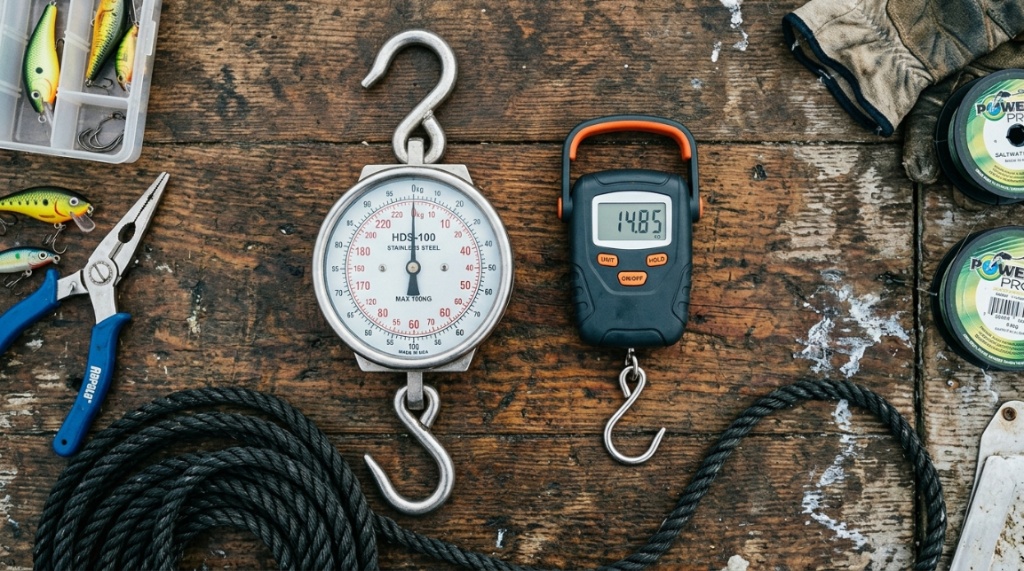
Not all heavy-duty scales are built the same. Your choice depends on whether you fish freshwater, inshore saltwater, or offshore deep sea. Each environment has unique demands that will dictate which features you prioritize.
Mechanical Dial Scales for All-Around Reliability
Dial scales (often called spring scales) are old school but still reliable. They have no electronics to fail, no batteries to drain, and they work even when fully submerged. The downside is that they are less precise than digital models and can be affected by spring fatigue over time. They excel for inshore Texas fishing where you’re moving fast and don’t want to worry about battery life.
Digital Electronic Scales for Precision
Digital scales offer the best accuracy and often feature tare functions, hold functions, and backlit displays. Look for models with a sealed keypad and a protective rubber boot. For offshore fishing, a digital scale with a remote display or wireless probe is incredibly useful for weighing fish on the deck without lifting them higher than necessary.
Certified Tournament Scales
If you compete in texas fishing tournaments, you need a scale that is certified by the International Game Fish Association (IGFA) or a local sanctioning body. These scales have certified accuracy and a certificate of calibration. They are more expensive but ensure your catch stands up to scrutiny.
- For Kayak Anglers: Compact, waterproof digital scale with a 100 lb capacity and a clip for easy attachment.
- For Shore Anglers: Mechanical dial scale with a long handle to keep your hands away from teeth.
- For Offshore Boats: High capacity (300+ lb) digital scale with a heavy crane hook or a deck scale platform.
How to Verify a Scale’s Real-World Accuracy
The biggest complaint we see from Texas anglers is that their scale reads incorrectly—either too high or too low. This often ruins a potential record. You don’t need expensive laboratory equipment to test your scale.
The Water Bottle Weights Test
Use a gallon jug of water that weighs exactly 8.34 pounds. Weigh it on your scale and see if the reading matches. Do this with two gallons (16.68 lbs) and three gallons (25.02 lbs) to check accuracy across the range. This is the simplest DIY test.
Using Certified Calibration Weights
For absolute peace of mind, purchase a set of calibration weights (50 lb and 100 lb). These are cheap and allow you to test your scale before every major trip. Ensure the scale has a “zero” or “tare” function that allows you to reset it after hanging a weight for a few minutes.
Understanding Tolerance Levels
A quality heavy-duty scale has a stated accuracy of +/- 1% of the reading. That means at 100 pounds, the reading could be 99 to 101 pounds. If your scale shows a 1-ounce error on a 10-pound weight, that’s fine. But if it’s showing 2 pounds off at 50 pounds, that’s a 4% error and unacceptable.
When Should You Upgrade Your Current Scale?
You might be asking if it’s time to ditch that scale you’ve had in your tackle bag for years. There are several telltale signs that your scale is a liability rather than an asset.
Signs of Mechanical Wear
If the needle on your dial scale sticks or doesn’t return to zero smoothly, the internal spring is damaged. If a digital scale shows “E” errors or inconsistent readings when you tap the fish, the load cell is failing. These issues are not repairable—replacement is necessary.
Safety Hazards from Rust
If you see rust on the hook or the shackle, it can fail under load. dropping a 50-pound fish on your foot is painful, but dropping a 200-pound shark is dangerous. Rusted components have micro-fractures that are invisible to the eye.
Upgrading for a New Species
If you’ve started fishing for trophy blue catfish in Lake Texoma (which regularly exceed 80 lbs) or targeting offshore tuna, your old 60-pound scale is useless. upgrade to a 200-pound+ model before you hook a massive fish.
How to Properly Use a Heavy Duty Scale Without Injury or Fish Damage
Even the best heavy-duty fish scale will provide bad data if you use it wrong. Proper technique is also crucial for the ethical handling of your catch.
Lifting Techniques for Large Fish
Never lift a large fish by the jaw or gills with the scale hook—that will tear the fish’s mouth. Use a tail harness or a lip grip that is attached to the scale. Distribute the weight evenly. For fish over 100 pounds, use a winch or a block and tackle; don’t try to dead-lift it with your back.
Measuring the Fish Safely
Place the fish on a wet, soft surface (like a boat cushion) while you attach the scale. Always use a second person to help stabilize bigger fish. The scale should be held vertically, and the fish should hang freely. Do not let the fish swing or bounce, which can cause stress and injury.
Quick Return to Water
Limit air exposure to less than 30 seconds. Take the weight, snap a quick photo if you need it, and release the fish immediately. A heavy-duty scale with a quick-release hook is a lifesaver here.
Once you have accurately weighed your catch using a reliable scale, safely securing it with the best fish net in florida ensures the fish remains protected before release.
Comparing the Best Materials for Saltwater Corrosion Resistance
When you’re buying a scale, the material specifications tell you everything about its lifespan. Let’s break down what to look for in the construction materials.
Stainless Steel Grades (304 vs. 316)
Most scales use 304 stainless steel, which is fine for freshwater. For Texas saltwater, you need 316 marine-grade stainless steel. It contains molybdenum, which makes it significantly more resistant to chloride corrosion. If the product page doesn’t specify the grade, assume it’s cheap 400-series steel.
Anodized Aluminum vs. Cast Zinc
Anodized aluminum is lightweight and forms a hard, corrosion-resistant surface. Cast zinc is heavy and tends to corrode in salt. Heavy-duty scales often use anodized aluminum for the main frame to reduce weight while maintaining strength.
Sealed Bearings and O-Rings
Water can get inside the scale through the hook attachment point. A truly waterproof scale will have a sealed bearing or a rubber O-ring at every point where the hook passes through the casing. This prevents internal rust.
Can a Heavy Duty Scale Be Used for Ice Fishing or Bowfishing?
Absolutely. While we’re focusing on Texas, these scales have multi-species utility. The same durability that handles a big catfish in the summer handles a heavy northern pike in the winter. The main difference is temperature tolerance.
Cold Weather Performance
Digital scales with liquid crystal displays (LCD) can freeze or slow down in sub-zero temperatures. If you ice fish in the Texas Panhandle, look for a scale with an Operating Temperature Range listed down to -10°F. A mechanical dial scale is often better for extreme cold because it doesn’t rely on battery chemistry.
Bowfishing and Rough Handling
Bowfishing involves mud, debris, and rough handling. A heavy-duty scale with an IP67 rating (fully dust-tight and immersible) is essential because you might drop it in a murky river. Your scale gets a bath every single trip, so waterproofing is not optional.
How Much Does a Good Heavy Duty Fish Scale Cost in Texas?
Pricing for heavy-duty scales ranges wildly depending on capacity and certification. Understanding the price points helps you avoid overpaying for features you don’t need.
Budget Range ($30 – $60)
In this range, you can find decent 100 lb digital scales with stainless steel hooks and basic waterproofing. They are fine for the weekend angler who fishes local bays. Ensure they have a replaceable battery and a visible warranty.
Mid-Range ($60 – $120)
This is the sweet spot. scales in this bracket feature 316 steel, MIL-SPEC waterproofing, and higher capacity (200 lbs). Some even come with a wireless remote. This is what most serious Texas anglers should look for.
Professional/Certified ($120 – $400)
These are tournament-grade scales with NIST certification certificates. They have extremely robust casings and are guaranteed to be waterproof. If you fish for a living or are chasing state records, this is your category.
If you’re on a budget but still need reliability, reading reviews for affordable options is key. We’ve compiled a list of the most cost-effective heavy duty fish scales Texas guides, so you don’t have to guess.
Maintenance Tips to Extend the Life of Your Heavy Duty Scale
Even the best scale will fail if you neglect it. A simple 5-minute maintenance routine after every trip can double the lifespan of your tool.
Rinsing Protocol
Immediately after your trip, rinse the scale with freshwater. Use a hose to blast out the hook slot, but don’t pressurize the electronic display. Then, submerge the entire scale in a bucket of warm freshwater mixed with a little dish soap to cut through the oil and salt.
Drying and Lubrication
Allow the scale to air dry completely in the shade before storing. Once dry, apply a single drop of lightweight lubricant (like reel oil or WD-40) to the hook pivot point. Wipe off any excess to prevent dirt attraction.
Battery Removal and Storage
If you won’t use the scale for over a month, remove the batteries. Battery leakage is a leading cause of digital scale failure. Store the scale in a breathable bag—not a sealed plastic bag, which traps moisture.
Frequently Asked Questions
Before you head to the store or click “buy,” here are answers to the most common questions we get from Texas fisherman about heavy-duty scales.
What capacity scale do I need for redfish?
A 100-pound capacity scale is plenty. Redfish in Texas rarely exceed 50 pounds, so a 100 lb scale gives you double the headroom and ensures the load cell is operating in a comfortable, stress-free zone.
Are cheaper scales accurate enough for record claims?
No. Claiming a state record requires a certified scale with a calibration sticker. A $25 scale might be accurate to a pound, but it won’t hold up to official scrutiny. use certified models for records.
Can I use a fish scale to weigh my luggage?
Yes, you can. A heavy-duty 100 lb scale is perfect for checking luggage weight at the airport before you fly to your favorite fishing destination. It’s a versatile tool.
How often should I recalibrate my digital scale?
You should test the scale with a known weight before every long trip. Full recalibration by the manufacturer should be done annually if you use it heavily in saltwater, as the load cell can drift with age.
Is a spring scale better than a digital scale?
Spring scales are more reliable in freezing temperatures and never run out of battery. Digital scales are more accurate. If you only fish in Texas heat, digital is the better choice. If you fish across seasons, a spring scale is bulletproof.
Conclusion
Choosing the right heavy-duty fish scale for Texas isn’t about buying the most expensive option—it’s about matching the equipment to your specific fishing conditions. The two most critical factors are material corrosion resistance (go with 316 stainless steel) and capacity headroom (double your largest target species). Prioritize a scale with an IPX6 waterproof rating or higher, and make sure it’s built with anodized aluminum or high-grade polymer casings. Remember that accuracy can be tested at home with a simple water jug, so you never have to rely on trust alone.
Now that you know what to look for, stop dragging a broken scale around and upgrade to something that can actually handle the fight. The next time you have a 30-pound fish on the line, you’ll want to know exactly what it weighs without any guesswork. Don’t let a faulty tool ruin a potential record. Make an informed decision, spend your money where it counts, and get back to doing what matters—catching those big Texas Gulf Coast fish. If you’re ready to buy, start by exploring the most reliable and budget-friendly models available today.