
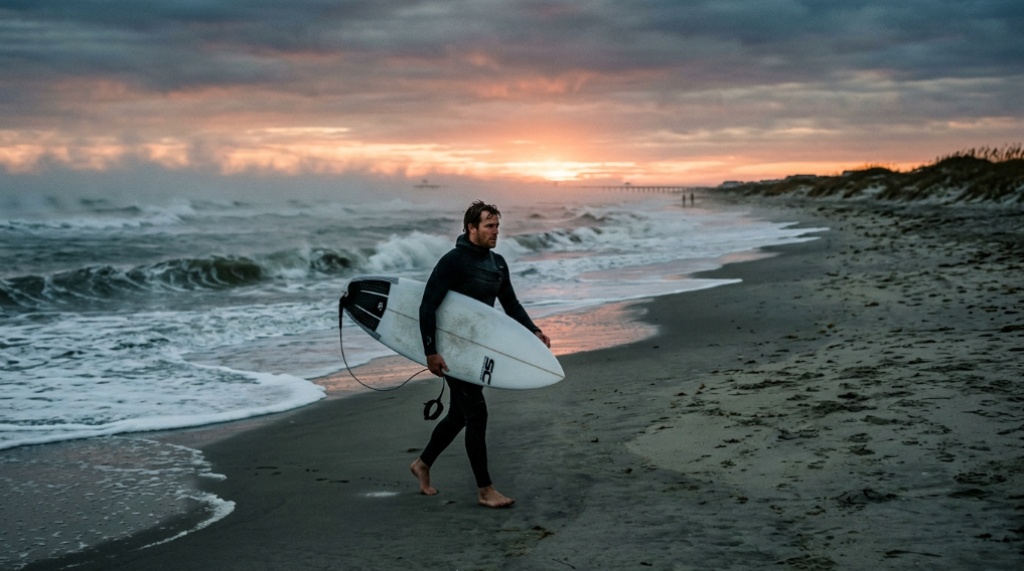
Most surfers along the South Carolina coast spend the majority of the year in boardshorts or a thin springsuit, so a January cold snap or an early spring upwelling can catch them completely off guard. The water at Folly Beach, Pawleys Island, or Hilton Head might sit near 80°F in August, but by February it can drop into the low 50s or even upper 40s. Preparing for those colder sessions is less about surviving Arctic conditions and more about layering intelligently, timing your paddle-outs, and protecting the parts of your body that lose heat fastest. That includes your feet, which is why many local surfers pair their cold-water gear with breathable sand socks for warm coastal waters to handle the transitional months. Below is a practical, locally grounded guide to getting it right.
Quick Answer
To prepare for cold-water surfing in South Carolina, focus on a 3/2mm or 4/3mm wetsuit for winter, booties or sand socks for your feet, and gloves or a hood for the coldest dawn patrols. Water temps typically range from the upper 40s to low 60s during the cold season, so layering flexibility matters more than owning one heavy suit. Check the tide, wind, and water temperature before you paddle out, and always have a warm change of clothes waiting on shore.
Key Takeaways
- South Carolina water temperatures swing dramatically by season, so a single heavy wetsuit is rarely the right answer for the whole cold season.
- A 3/2mm fullsuit handles most fall and spring sessions, while a 4/3mm is better for the coldest winter weeks around Charleston and the Grand Strand.
- Your feet, hands, and head lose heat fastest; booties, gloves, and occasionally a hood make a bigger difference than an extra millimeter of suit thickness.
- Sand socks and thin booties are useful in shoulder-season water when full booties would be overkill but bare feet still get cold.
- Post-surf warming matters as much as in-water gear; have dry towels, warm layers, and a thermos ready before you get out of the water.
Understanding South Carolina’s Cold-Water Reality
South Carolina is not a cold-water surfing destination in the way Maine or Northern California is, but it has a genuine cold season that surprises visitors and new locals. Water temperatures along the coast generally peak in the low 80s during late summer and bottom out somewhere in the upper 40s to low 50s in January and February. That range is wide enough that a wetsuit that works in October will feel inadequate in January, and a winter suit will feel suffocating by April.
Air temperature adds another variable. A sunny 55°F day with light offshore wind feels completely different from a 45°F morning with a stiff northeast wind. Wind chill on the beach and during the paddle-out can make a session feel far colder than the water temperature alone suggests. This is why experienced local surfers check multiple conditions before committing to a cold-water session, Before heading out into the waves with your new gear, make sure your equipment matches your expertise by learning How to Pick the Right Surfboard for Your Skill Level.
Why the Water Gets Cold
Several factors drive South Carolina’s winter water temperatures down. Coastal upwelling, offshore winds that push surface water away from the beach, and the general seasonal cooling of the Atlantic all play a role. In some years, a strong cold front can drop nearshore water temperatures several degrees in a matter of days. That means a spot that felt tolerable last weekend can feel noticeably colder this weekend without any change in your gear.
How Cold Is “Cold” for Local Surfers
For most South Carolina surfers, anything below about 65°F starts to justify some form of foot and hand protection. Below 60°F, a full wetsuit becomes standard. Below 55°F, booties, gloves, and a hood or earplugs become common. Below 50°F, only the most dedicated surfers paddle out, and they tend to be fully geared up.
Choosing the Right Wetsuit for South Carolina Winters
The most common mistake is buying one heavy winter suit and trying to wear it from November through March. In practice, a two-suit or layered approach works better because South Carolina’s cold season has distinct phases, Looking to expand your water sports gear lineup beyond the winter season? Check out our guide on how to get the best inflatable SUP under 500 for calm-water paddling and warm-weather exploration.
Fall and Spring: The 3/2mm Fullsuit
A 3/2mm fullsuit covers water temperatures roughly from the low 60s down to the mid 50s. This is the workhorse suit for South Carolina. It handles October and November, most of March and April, and any unusually cool summer upwelling days. If you only buy one cold-water suit, make it a quality 3/2mm with sealed seams.
Deep Winter: The 4/3mm Fullsuit
When water drops into the low 50s and upper 40s, usually in January and February, a 4/3mm fullsuit provides the extra insulation needed for sessions that last more than an hour. Some surfers also add a hooded vest or a separate hood for dawn patrols. A 5/4mm suit is generally overkill for South Carolina unless you’re surfing in an unusually cold year or you run cold and plan long sessions.
Fit Matters More Than Thickness
A poorly fitting 4/3mm suit will keep you colder than a well-fitting 3/2mm because water flushing through the suit defeats the insulation. Pay attention to neck, wrist, and ankle seals. If water can easily enter, it can easily steal your heat.
Foot Protection: Booties, Sand Socks, and When to Use Each
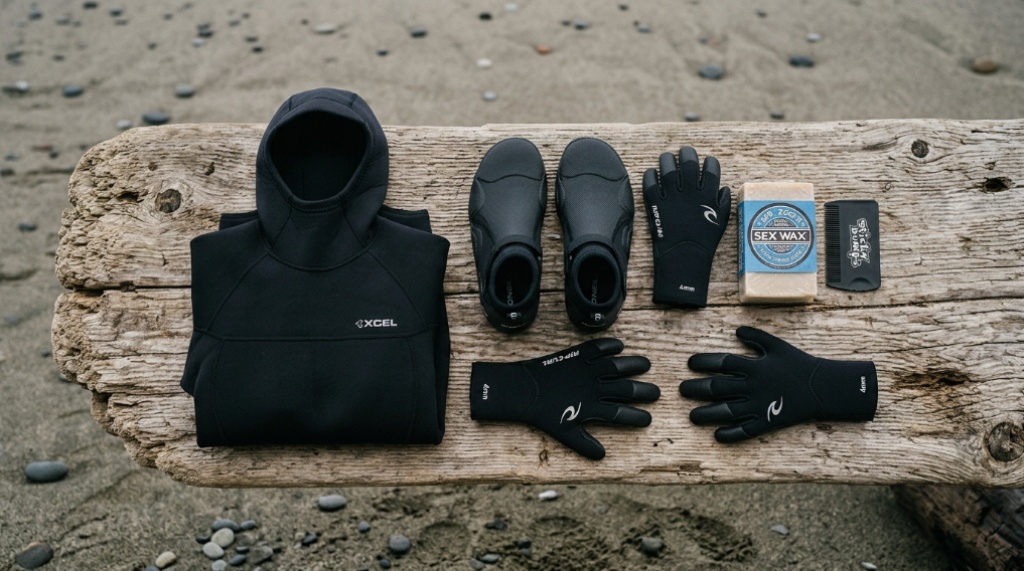
Your feet are one of the first places you’ll notice cold. They’re in near-constant contact with the board and the water, and they have relatively little muscle mass to generate heat. The right foot protection depends on water temperature and session length.
When Booties Make Sense
Full neoprene booties, usually 3mm or 5mm, are the standard choice when water drops below about 58°F. They provide real insulation, protect against shell cuts and stingrays, and keep your feet functional during longer sessions. The trade-off is reduced board feel, which matters more for performance surfing than for cruising.
When Sand Socks Make Sense
Sand socks are thinner than booties and are designed primarily to protect your feet from hot sand, shells, and small debris rather than to insulate against cold water. That said, they serve a useful transitional role in South Carolina. During those shoulder-season weeks when the water is in the low 60s and full booties feel like too much, a breathable sand sock can take the edge off without killing board feel. They’re also handy for the walk across cold sand before and after your session.
What to Avoid
Avoid cotton socks or any non-neoprene footwear in the water. They soak up water, lose all insulation value, and can actually make your feet colder. If you’re layering, use neoprene-specific products designed for water use.
Hands, Head, and Core: The Often-Overlooked Gear
Surfers tend to focus on the wetsuit and forget that extremities and the head drive heat loss. Addressing these areas can extend a session significantly.
Gloves
Neoprene gloves, typically 1.5mm to 3mm, become useful when water drops below about 58°F. Below 55°F, most surfers want at least 2mm. Mittens are warmer than five-finger gloves but offer less dexterity. For South Carolina, a 2mm five-finger glove covers most cold sessions.
Hood or Earplugs
A full hood is rarely necessary in South Carolina, but a hooded vest or a separate neoprene hood can help on the coldest dawn patrols. Earplugs are a lighter option that prevents the ice-cream headache effect when cold water enters the ear canal. Many local surfers use earplugs year-round for ear health, not just warmth.
Core Warmth
A wetsuit with a built-in thermal lining or a separate rash guard and thermal top can add meaningful warmth without adding bulk. If you run cold, consider a heated vest or a thicker chest panel. These are optional but can make the difference between a 45-minute session and a two-hour session.
Before You Paddle Out: A Practical Cold-Water Checklist
- Check the water temperature, air temperature, wind speed, and wind direction for your specific break.
- Match your wetsuit thickness to the water temperature, not the air temperature.
- Decide on foot, hand, and head protection based on session length and personal cold tolerance.
- Pack a dry bag with warm clothes, a towel, and a thermos of something hot.
- Park close to the beach if possible so your walk back to the car is short.
- Warm up before paddling out; cold muscles are more prone to injury.
- Tell someone where you’re surfing and when you expect to be back.
After the Session: Warming Up Safely
Getting out of cold water is often the coldest part of the experience. Wind on wet skin accelerates heat loss dramatically. The faster you can get dry and into warm layers, the better you’ll feel.
Have a towel and a change of clothes ready before you paddle out, not after. If you’re surfing alone, leave them on the beach in a dry bag or in your vehicle within easy reach. Avoid standing around in a wet wetsuit; peel it off as soon as you’re out of the wind. A thermos of warm tea, coffee, or broth helps raise your core temperature from the inside.
Watch for Signs of Cold Stress
Shivering, numbness in the fingers or toes, clumsiness, and difficulty speaking clearly are early signs that you’ve been in the cold too long. If you notice these, get out of the water and warm up gradually. Do not use hot showers or direct heat on numb extremities, as this can cause tissue damage.
Frequently Asked Questions
What wetsuit thickness do I need for winter surfing in South Carolina?
A 4/3mm fullsuit handles most South Carolina winter sessions. A 3/2mm works for fall and spring. Some surfers add a hooded vest or gloves for the coldest weeks.
Are sand socks warm enough for cold water?
Sand socks are not primarily insulation; they protect against sand, shells, and debris. In genuinely cold water, use neoprene booties instead. Sand socks work best in transitional water temperatures where full booties feel excessive.
Do I need gloves and a hood in South Carolina?
Gloves become useful below about 58°F. A hood or earplugs help on the coldest dawn patrols, typically in January and February. Many surfers skip the hood and use earplugs alone.
How do I check water temperature before surfing?
Use local surf reports, NOAA buoy data, or surf shop websites that publish daily water temperatures. Check the specific break you plan to surf, since temperatures can vary between inlets and open beaches.
What should I bring for after a cold-water session?
Bring a towel, dry warm clothes, a dry bag, and something warm to drink. Park close to the beach if possible. Getting dry and warm quickly is the most important part of recovery.
Can I surf in South Carolina year-round?
Yes. With the right wetsuit and accessories, surfing is possible year-round along the South Carolina coast. Winter sessions are shorter and require more planning, but the waves are often less crowded.
Conclusion
Cold-water surfing in South Carolina is less about extreme conditions and more about preparation. A 3/2mm suit for shoulder season, a 4/3mm for deep winter, and the right foot, hand, and head protection will keep you comfortable in water that most people assume is too cold to surf. Check conditions before you go, dress for the water rather than the air, and have a warm change of clothes waiting on shore. Do that, and you’ll extend your surfing season well beyond the summer crowds.