
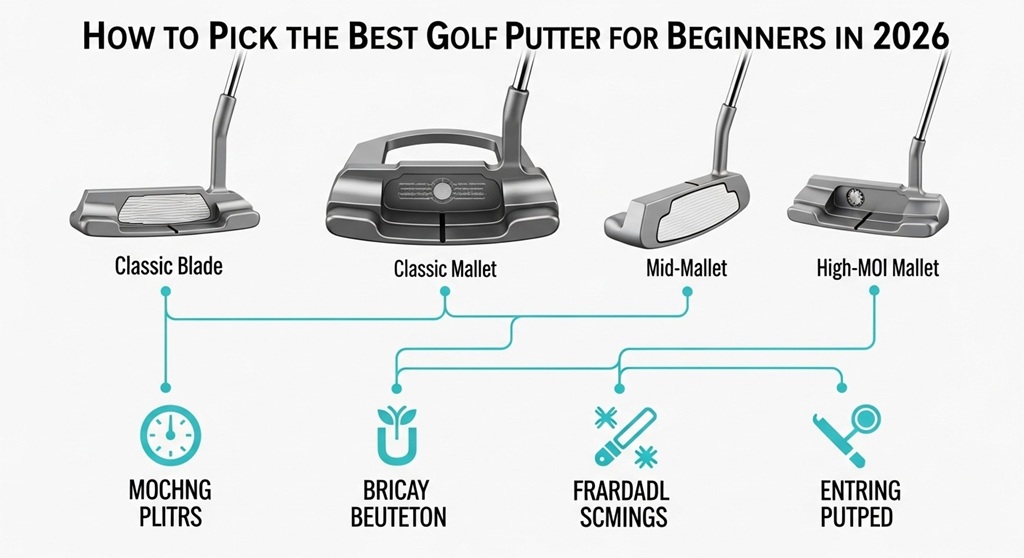
Choosing the best golf putter for beginners in 2026 is not about buying the most expensive club. It is about finding a putter that helps you align easily, control distance, and keep your stroke consistent. For new golfers, the right putter can quickly reduce three-putts and build confidence on the green.
Putting accounts for nearly 40% of total strokes in an average round of golf. According to a Shot Scope 2024 amateur performance report, mid-handicap golfers average between 34–36 putts per round. That means the putter is often the most used club in the bag. Yet beginners frequently overlook it when choosing equipment.
The best beginner putters are usually forgiving golf putters with high stability and clear alignment lines. These clubs help reduce mishits and keep the ball rolling on line. Features like large heads, balanced weighting, and easy alignment systems make putting more predictable.
In this guide, you will learn how to pick the right beginner putter step by step. We will break down the different putter types, explain how alignment aids work, and show what features actually improve performance for new players. By the end, you will know exactly how to choose a putter that makes putting easier and more consistent.
Why Is the Right Putter Important for Beginner Golfers?
Short answer: The right putter improves alignment, distance control, and consistency, helping beginners avoid three-putts and lower their scores.
Many new golfers focus on drivers and irons. But most strokes happen on the green. Even professional players spend a large portion of practice time improving their putting.
A beginner using the wrong putter often struggles with:
- Poor alignment on short putts
- Inconsistent contact
- Difficulty controlling distance
- Loss of confidence on the green
A forgiving golf putter reduces these issues by stabilizing the club head and guiding your aim. Modern beginner putters often include visual alignment systems that make it easier to square the face to the target line.
A study by Golf Laboratories found that high-moment-of-inertia (MOI) putters can reduce face twisting on off-center hits by more than 30%. That means mishits still roll closer to the intended line.
For beginners, that forgiveness makes a significant difference.
What Type of Golf Putter Is Best for Beginners?
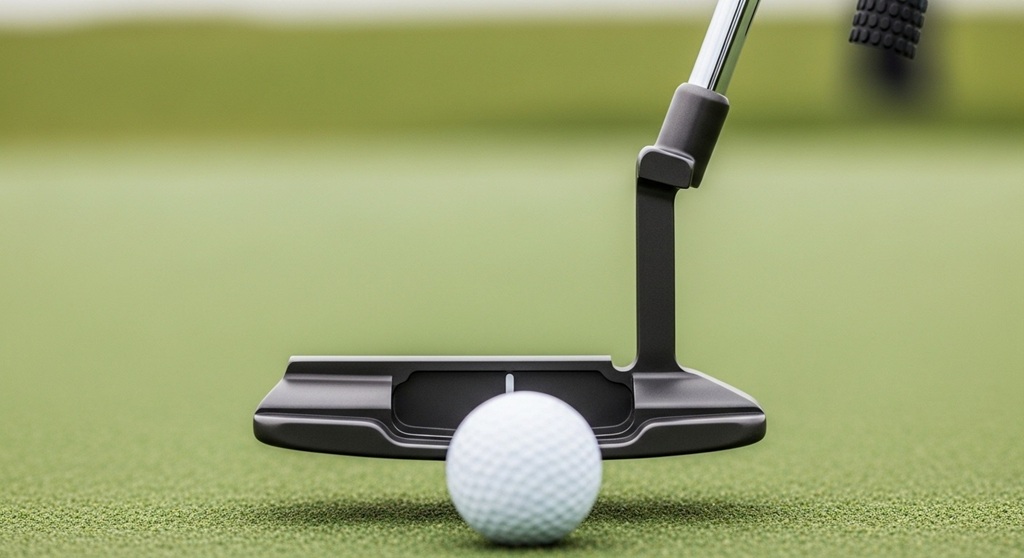
Short answer: Most beginners perform better with mallet putters because they offer higher forgiveness and easier alignment.
There are three main types of golf putters. Each has different benefits.
| Putter Type | Best For | Key Benefit |
|---|---|---|
| Mallet Putters | Beginners | High forgiveness and alignment support |
| Blade Putters | Experienced players | Better feel and feedback |
| Mid-Mallet Putters | Intermediate players | Balance of control and forgiveness |
Why Mallet Putters Work Best for Beginners
Mallet putters are larger and heavier than blade putters. This extra mass increases stability and reduces twisting when the ball is struck away from the center.
Benefits include:
- Large sweet spot
- Higher MOI stability
- Better alignment systems
- More consistent roll
That is why most easy alignment putters on the market use a mallet design.
What Makes a Golf Putter “Forgiving”?
Short answer: Forgiving golf putters use perimeter weighting, larger heads, and high MOI designs to reduce the impact of off-center hits.
A forgiving putter keeps the club face stable during impact. This reduces errors caused by mishits.
Important features that create forgiveness include:
- High MOI (moment of inertia)
- Perimeter weighting
- Large putter head
- Balanced face design
These features help maintain the correct face angle at impact, which directly affects the starting line of the putt.
Research from Ping engineering studies shows that increasing MOI can reduce face rotation during impact by several degrees, improving directional control.
What Are Easy Alignment Putters?
Short answer: Easy alignment putters use visual guides such as lines, dots, or shapes to help golfers aim the club face correctly.
Alignment is one of the biggest problems for beginners. Many players misalign the putter face without realizing it.
Modern beginner putters solve this problem with built-in visual alignment systems.
Common alignment features include:
- Long alignment lines
- Dual parallel lines
- Contrasting color patterns
- Triple-track systems
These guides help players set the club face square to the target line.
In a Golf Digest putting experiment, players improved aim accuracy by up to 25% when using putters with enhanced alignment aids.
How Do You Choose the Correct Putter Length?
Short answer: The correct putter length allows your eyes to sit directly over the ball while maintaining a comfortable posture.
Putter length affects both alignment and stroke mechanics.
Most beginner golfers use putters between 33 and 35 inches.
| Height | Recommended Putter Length |
|---|---|
| Below 5’6″ | 33 inches |
| 5’6″ – 6’0″ | 34 inches |
| Above 6’0″ | 35 inches |
However, personal posture and arm length can change this recommendation. The best test is simple: when addressing the ball, your eyes should be positioned directly above or slightly inside the ball line.
What Putter Face Insert Is Best for Beginners?
Short answer: Soft face inserts provide better distance control and feel for beginner golfers.
The face insert is the material that strikes the golf ball.
Two common types exist:
- Soft polymer inserts
- Milled metal faces
Soft inserts absorb impact slightly, producing a smoother roll and helping beginners control speed.
Milled metal faces provide more feedback but require greater skill.
That is why many beginner putters use polymer inserts designed for consistent roll.
How Important Is Putter Weight and Balance?
Short answer: Balanced putters stabilize the stroke and help beginners maintain consistent tempo.
Weight distribution influences how the putter moves during the stroke.
There are two main balance types:
- Face-balanced putters
- Toe-hang putters
Face-Balanced Putters
These are ideal for beginners because they work well with a straight putting stroke.
Benefits include:
- Reduced face rotation
- Simpler stroke path
- More stability
Toe-Hang Putters
These are designed for golfers with an arcing stroke, which is more common among experienced players.
For most beginners, face-balanced mallet putters remain the easiest option.
How Much Should Beginners Spend on a Golf Putter?
Short answer: Beginners typically find high-quality putters between $80 and $200.
Price does not always equal performance.
Many beginner putters offer excellent technology at mid-range prices.
| Price Range | What You Get |
|---|---|
| $50–$80 | Basic beginner putters |
| $80–$150 | Best value beginner putters |
| $150–$300 | Premium alignment and materials |
Beginners should focus more on forgiveness and alignment rather than premium materials.
What Features Should Beginners Look for in 2026 Putters?
Short answer: Look for high MOI designs, strong alignment systems, soft inserts, and face-balanced weighting.
Modern beginner putters often include:
- High-MOI mallet designs
- Enhanced alignment lines
- Multi-material heads
- Soft face inserts
- Counterbalanced grips
These technologies make putting easier for players still developing their stroke.
Conclusion: Choosing the Right Beginner Putter in 2026
Picking the best golf putter for beginners in 2026 does not require complicated decisions. The most effective approach is focusing on forgiveness, alignment, and comfort.
Beginner golfers typically perform best with mallet putters that feature high MOI stability and strong visual alignment aids. These designs reduce the effect of mishits and help players aim more accurately.
Correct putter length, balanced weighting, and a soft face insert also contribute to better distance control and smoother roll. When these factors work together, beginners gain confidence and reduce unnecessary strokes on the green.
Putting may look simple, but it is one of the most influential parts of golf performance. A well-chosen beginner putter can dramatically improve consistency and scoring.
If you are starting golf or struggling with putting accuracy, invest time in selecting the right putter. Test different designs, check alignment features, and choose the model that feels most natural during your stroke.
Ready to improve your putting? Start by testing forgiving golf putters with clear alignment guides. The right club can turn putting from your biggest weakness into a reliable scoring advantage.
FAQ: Beginner Golf Putters
What is the most forgiving putter style for beginners?
Mallet putters are generally the most forgiving. Their larger heads and higher MOI reduce twisting during impact, helping mishits stay closer to the intended line.
Do beginners need expensive golf putters?
No. Many beginner putters priced between $80 and $150 offer excellent performance. The key factors are alignment aids, balance, and forgiveness rather than premium materials.
Are alignment lines important on beginner putters?
Yes. Alignment aids help golfers aim the putter face correctly. Studies show that visual alignment systems can improve putting accuracy significantly, especially for new players.
Should beginners choose face-balanced putters?
Yes. Face-balanced putters are easier for golfers with straight putting strokes, which is common among beginners. They reduce face rotation and simplify stroke mechanics.
What putter length should beginners use?
Most beginners use putters between 33 and 35 inches. The correct length allows your eyes to sit directly over the golf ball when addressing the putt.
Is a soft putter face better for beginners?
Soft inserts help beginners control distance more easily. They absorb impact slightly and create a smoother roll compared to firm metal faces.
How can beginners improve putting quickly?
Beginners improve putting by practicing distance control, using alignment aids, and choosing forgiving golf putters designed to reduce errors during off-center hits.
Read More Also: How to Protect Your Surfboard Gear From Damage
Find out: How to Find Cheap Waterproof Waders That Actually Last