
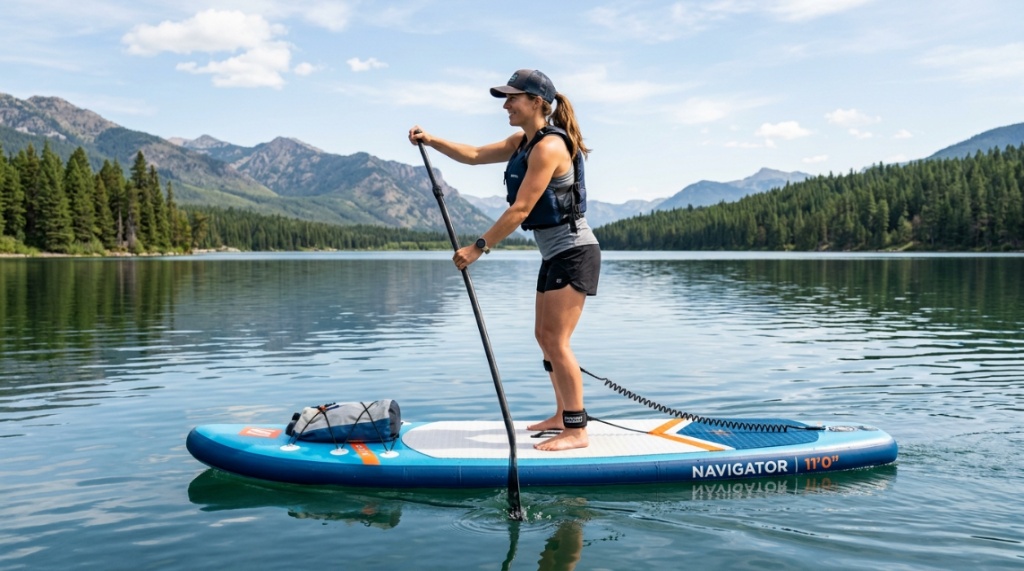
You have the perfect spot picked out—a glassy lake, a calm bay, or a winding river—and you are ready to glide across the water. Then you start shopping for an inflatable paddle board, and suddenly everything gets complicated. There are cheap boards that look like bargains, expensive boards that seem overhyped, and technical specs that read like a foreign language. The truth is, the wrong purchase can turn your dream of stand-up paddling into a frustrating experience before it even begins. The worst part? Most mistakes are completely avoidable when you have the right inflatable paddle board buying guide in your hands. This guide will walk you through the top pitfalls, give you actionable advice, and help you find a board that actually performs, lasts, and fits your budget.
What Is the Single Most Common Mistake When Buying an Inflatable Paddle Board?
The most common mistake is buying based solely on price without considering construction quality or intended use. A board that costs under $300 might look appealing, but it often fails within one season because of poor material, low air pressure capacity, or weak glue seams.
When you see a board drastically cheaper than the competition, you are not getting a deal. You are getting a board that uses single-layer PVC, which is heavier and less rigid. It might hold air at 10 PSI while a quality board holds 15 to 20 PSI. The difference in stiffness is night and day. A flexible board feels wobbly, makes paddling exhausting, and tracks poorly in the water. To avoid this mistake, consider these factors before looking at the price tag:
- Verify the material: Look for drop-stitch PVC with a double or triple layer.
- Check the recommended PSI: Higher PSI equals better stiffness.
- Read reviews about durability after several months of use.
If you invest in quality upfront, you will spend less money in the long run because you will not need to replace the board after a handful of trips.
Why Do So Many Beginners Choose the Wrong Board Shape?
Beginners often pick a short, wide board because it looks stable on paper, but they ignore the trade-offs in speed and tracking. A short board can feel stable at first, but it turns slowly and fights you on longer paddles.
Board shape directly affects how you experience the water. All-around shapes are the safest for beginners, but there are nuances within that category. A board that is 10 feet 6 inches long and 32 inches wide offers a solid balance of stability and glide. A board that is 9 feet long and 34 inches wide might feel like a barge. To help you decide, here is a simple comparison table:
| Board Shape | Best For | Stability | Speed | Beginner Rating |
|---|---|---|---|---|
| All-Around (10’6″ x 32″) | Recreation, fitness, flat water | High | Moderate | Excellent |
| Long (11’6″ or longer) | Touring, speed, distance | Moderate | High | Good |
| Short Wide (9′ x 34″) | Surf, yoga | Very High | Low | Fair |
Your best bet is to choose an all-around shape between 10 and 11 feet long. It will feel stable enough for your first few outings while giving you room to grow your skills.
How Do You Identify Low-Quality Construction Before Buying?
You can identify low-quality construction by checking the number of layers, the type of glue, and the quality of the valve. Cheap boards use single-layer PVC and standard drop-stitch that delaminates under pressure.
High-quality inflatable paddle boards use a fusion lamination process. In this method, the PVC layers are bonded without glue by using heat and pressure. Glued layers are more prone to separating, especially in hot sun or cold water. Look for boards that advertise fusion technology or double-layer side rails. Specific warning signs include:
- Visible seams that look rough or uneven
- Plastic valves instead of brass or stainless steel
- Mesh or nylon carry bags instead of padded roller bags
- Low PSI recommendations (under 12 PSI)
Also check the weight limit. A board rated for 200 pounds that actually weighs 250 pounds fully loaded will struggle to plane on the water. Always look for a weight capacity that exceeds your total load by at least 50 pounds.
Which Accessories Actually Matter for a Paddle Board Purchase?
The accessories that truly matter are a high-pressure pump with a pressure gauge, a three-piece adjustable paddle, a coiled leash, and a quality repair kit. Many budget boards include accessories that are borderline unusable.
A hand pump is fine for inflation, but a dual-action pump that works on both the upstroke and downstroke cuts inflation time in half. A reliable inflatable paddle board buying guide will tell you to skip boards that include a cheap aluminum paddle. Aluminum paddles are heavy and bend easily. Fiberglass or carbon-fiber shafts are lighter and transfer more power to the water. Here is what to look for in each accessory:
- Pump: Must have a PSI gauge. Pumps without a gauge lead to over-inflation or under-inflation.
- Paddle: Three pieces with a nylon or fiberglass blade. Avoid one-piece aluminum.
- Leash: Coiled leash that attaches to the back D-ring. Straight leashes drag in the water.
- Repair Kit: PVC patches and valve tool. Round patches work better than square ones.
- Bag: Rolling backpack style with padded interior. Duffel bags without wheels are painful to carry.
If the accessory kit looks skimpy, calculate the cost of upgrading. Sometimes it is cheaper to buy a board with better accessories included.
Can a Budget Board Be “Good Enough” for Occasional Use?
Yes, a budget board can be good enough for occasional use if you stay under 10 uses per year, paddle only in calm water, and keep the board stored out of direct sunlight. But the definition of “good enough” varies by person.
A board in the $300 to $500 range typically uses single-layer PVC, weighs around 25 to 30 pounds, and has a lower PSI limit. These boards work fine for a few family trips to the lake each summer. However, they are heavier to carry, harder to inflate fully, and feel less responsive. If you plan to paddle more than a handful of times per season, spending slightly more on a mid-range board drastically improves your experience. Consider these scenarios:
- Occasional family use: Budget board is acceptable. Expect shorter lifespan (2 to 3 seasons).
- Weekend warrior: Mid-range board recommended for better stiffness and tracking.
- Regular fitness paddler: High-end board is worth the investment for performance.
The golden rule is this: buy the best board you can afford, but only if you will actually use it. A $400 board that gets used 30 times per year is a better value than a $200 board that sits in the garage.
How Do You Know If You Are Overlooking Weight and Portability?
You know you are overlooking weight and portability when you focus only on the board’s length and ignore its packed weight and bag design. A 30-pound board feels manageable in a store but becomes a burden after a long walk to the water.
Inflatable paddle boards vary in weight from 16 pounds to over 30 pounds. The weight comes from the number of PVC layers, the size of the board, and the accessories included. Before buying, ask yourself these questions:
- How far will you carry the board from your car to the water?
- Do you have to carry it up stairs or across sand?
- Can you lift the bag into your car by yourself?
A board that weighs 22 pounds or less is considered lightweight. Boards in this range use single-layer PVC with fusion bonding. They pack down smaller and are easier to handle. Heavier boards (26 pounds and above) use double or triple layers, which add durability but reduce portability. Your choice depends on your physical ability and access to water. If you have a dock or easy beach access, weight matters less. If you hike to remote spots, prioritize a lighter board.
What Should You Check About the Warranty and Return Policy?
You should check that the warranty covers manufacturing defects for at least one year and that the return policy allows for a trial period of 30 days or more. A short warranty often signals low confidence in the product.
Most reputable brands offer a one-year warranty on materials and workmanship. Some premium brands offer two years or more. The warranty should cover seam separation, valve failure, and delamination. It typically does not cover punctures from sharp objects or improper storage. Before clicking buy, read the warranty terms carefully. Look for these specifics:
- Length of coverage: 1 year is standard, 2 years is excellent
- What is excluded: normal wear and tear, punctures, UV damage
- Claim process: Do you pay for shipping? Is there a restocking fee?
Return policies matter just as much. Some companies let you paddle the board for 30 days and return it if you are not satisfied. Others charge a 15% restocking fee. If a company does not offer a trial period, consider it a red flag. The best purchase carries no risk of being stuck with a board you hate.
How Do You Properly Compare Brands and Avoid Marketing Gimmicks?
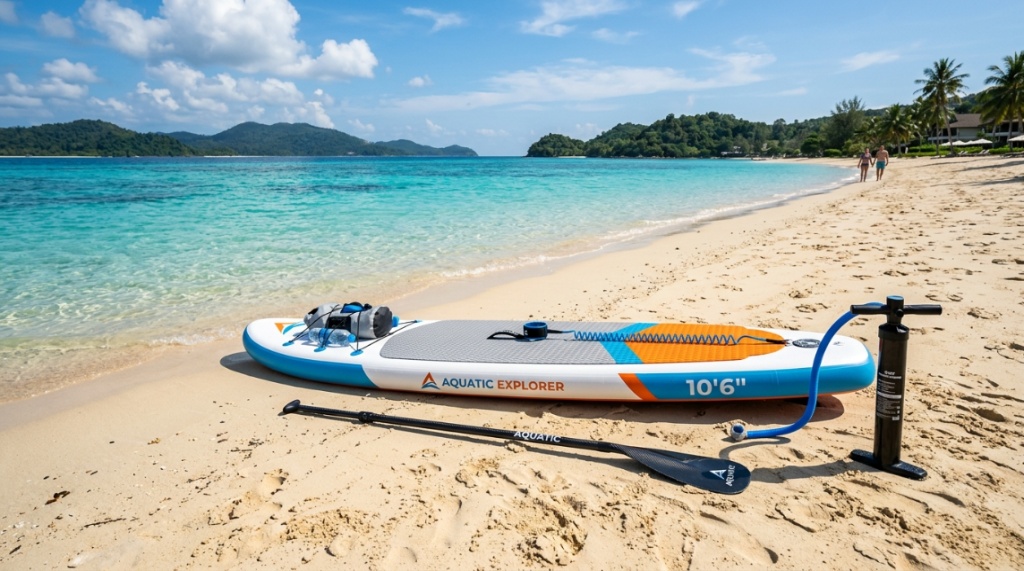
You properly compare brands by focusing on technical specifications like PSI rating, weight capacity, material layers, and fin system instead of flashy marketing phrases like “military-grade” or “ultra-durable.”
Marketing teams love buzzwords. “Military-grade PVC” sounds impressive, but there is no official standard. Similarly, “extra thick” is meaningless without a thickness measurement. The industry standard is 6 inches thick for most all-around boards. Some boards claim 7 inches, which adds stability but also weight and cost. To cut through the noise, use this checklist:
- PSI rating: 15 PSI minimum. 18 to 20 PSI is ideal.
- Material: Drop-stitch PVC with fusion lamination.
- Weight capacity: Match your weight plus 50 to 100 pounds for gear.
- Fin system: US fin box is standard; avoid permanent fins unless you never travel.
- Customer reviews: Look for reviews after 3+ months of use, not first impressions.
For a practical example, compare two boards side by side. Board A costs $400 with 15 PSI, single-layer PVC, and a 200-pound capacity. Board B costs $600 with 18 PSI, triple-layer PVC, and a 300-pound capacity. Board B costs more upfront but will last longer and perform better. When you follow a comprehensive inflatable paddle board buying guide, you will spot these differences immediately and make a smarter choice.
Is a Bundle Package Usually a Good Deal or a Trap?
A bundle package is usually a good deal only if the included accessories match quality items you would buy separately. Many bundles include cheap paddles, poor pumps, and flimsy bags to make the price look attractive.
Here is how brand bundles typically work. The manufacturer buys accessories in bulk at low cost and packages them with the board. The paddle might be a single-piece aluminum shaft that weighs twice as much as a fiberglass model. The pump might lack a pressure gauge, forcing you to guess at PSI levels. Before buying a bundle, calculate the value of each item. If the paddle is worth $20, the pump is worth $15, and the bag is worth $10, you are paying $45 for accessories that would cost you $100 to replace with quality versions. In that case, you are better off buying a board-only package and sourcing your own accessories. Look for bundles that specifically list branded or tiered components, such as “fiberglass paddle” or “dual-action pump with gauge.”
One of the most dangerous inflation errors isn’t just about the board itself—it’s neglecting safety gear. Always budget for a high-quality leash to stay attached to your board in rough water. If you plan to cross over into catching small waves, make sure to Buy a Surfboard Leash that can withstand the extra pull of the surf.
When Should You Buy a Wide Board Versus a Standard Board?
You should buy a wide board when you prioritize stability and plan to do yoga, fish, or carry a pet. You should buy a standard board when you want speed, better tracking, and an easier paddling stroke over distance.
Wide boards measure 33 to 36 inches across. They feel like a floating platform. You can stand confidently, turn around, and even sit without tipping. The downside is that wide boards are slower. They require more effort to paddle in a straight line, and they catch wind more easily. Standard boards measure 30 to 32 inches across. They cut through water more efficiently, glide longer between strokes, and track straighter. Most beginners are fine with a 31- or 32-inch wide board. Only move to a 34-inch or wider board if you have specific stability needs. For reference:
- 32 inches wide: Best balance of stability and performance
- 34 inches wide: Superior stability, slower speed
- 36 inches wide: Maximum stability, noticeable drag
If you are deciding between two sizes, choose the narrower option. You will adapt to the stability within a few sessions, but you will never adapt to a slow board.
How Do You Verify a Brand’s Reputation Before Spending Money?
You verify a brand’s reputation by reading long-form reviews from owners who have used the board for multiple seasons, and by checking independent YouTube reviews or forum discussions instead of only looking at the company website.
Company websites only show five-star reviews. Amazon reviews can be faked. A better method is to search for the brand name plus “inflatable paddle board review” with a date filter for the past year. Look for reviews that mention specific issues like valve failures, seam separation, or poor customer service. Red flags include:
- Multiple reviews citing the same problem
- Brands that delete negative comments on social media
- Lack of contact information or physical address
- No history of paddle sports (new brands pop up frequently)
Also check the brand’s participation in the paddling community. Brands that sponsor events, have a repair facility, or offer instructional content are usually more trustworthy than generic companies that import unbranded boards from a factory.
Frequently Asked Questions
How long does an inflatable paddle board last?
With proper care and storage, a quality inflatable paddle board lasts 3 to 5 seasons. Budget boards may last 1 to 2 seasons, while premium boards can last 5 to 10 years.
Can you leave an inflatable paddle board inflated?
It is safe to leave it inflated during daily use, but you should deflate it for long-term storage. Prolonged inflation can stress seams, and UV exposure degrades the PVC material over time.
What PSI should I inflate my paddle board to?
Most boards recommend 12 to 15 PSI for optimal performance. Check the side of the board for the manufacturer’s recommended PSI. Do not exceed the maximum PSI listed.
Are inflatable paddle boards harder to paddle than hard boards?
High-quality inflatable boards at 15 to 20 PSI feel nearly as rigid as hard boards. Lower-end inflatables feel softer and require more effort to paddle because they flex with each stroke.
Can you use an inflatable paddle board in the ocean?
Yes, but you need a board with a US fin box so you can use a larger fin for tracking in waves. Also look for a heavier-duty PVC build to withstand saltwater and potential impacts.
What size inflatable paddle board do I need for my weight?
Add your body weight plus any gear weight, then choose a board with a capacity at least 50 pounds higher. A good rule is 10 feet long for riders under 180 pounds and 11 feet for heavier riders.
Do I need a leash for my inflatable paddle board?
Yes, a leash is essential for safety. If you fall off, the leash keeps the board from drifting away. Use a coiled leash for calm water and a straight leash for waves to avoid tangles.