
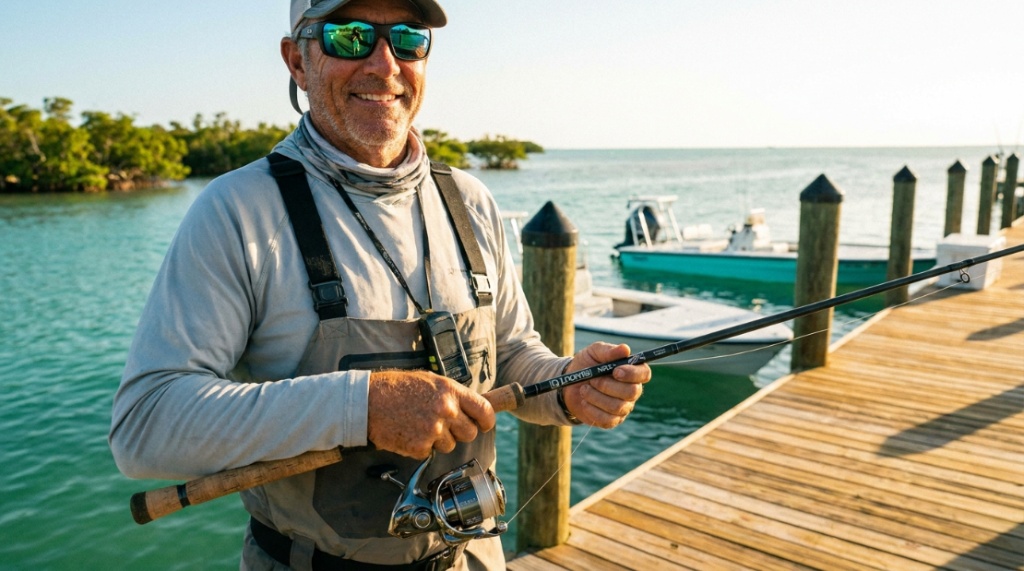
Florida is a notoriously demanding place to fish. You might be sight-casting to tailing redfish in a skinny grass flat one morning, then pitching heavy swimbaits around bridge pilings for snook that evening. The sheer variety of species, water types, and weather conditions makes choosing one single setup surprisingly difficult. Many anglers end up with a garage full of mismatched rods and reels that never quite feel right. The real challenge is finding a versatile, durable, and well-balanced setup that performs in these diverse environments without draining your bank account. In this guide, we break down exactly what you need to consider, helping you identify the best fishing rod combo for Florida based on your specific targets and techniques.
Key Takeaways
- Match your combo to the target species and water type; inshore and offshore setups are fundamentally different.
- A 7-foot medium-heavy rod paired with a 3000 or 4000-size spinning reel is the most versatile “do-it-all” setup for Florida inshore fishing.
- While fishing line matters, the rod’s action (“fast” vs. “moderate”) is the primary factor determining lure control and hook-setting power.
- Buying a quality combo from a reputable brand often provides better balance and performance than pairing mismatched rods and reels.
- Prioritize corrosion resistance (specifically sealed bearings and quality guides) above all else when selecting gear for the saltwater environment.
The Problem with the “One-Size-Fits-All” Approach
Before diving into specific recommendations, it’s critical to understand why generic advice often fails. A combo that’s perfect for bass fishing in a freshwater lake will likely be destroyed by the corrosive salt and be too light to handle the power of a large jack crevalle. Conversely, a heavy offshore trolling rod is useless for detecting a subtle speckled trout bite in a calm bay.
To find the true “best” rod and reel combo, you first have to identify your primary fishing style. Florida offers three distinct zones: freshwater (lakes and canals), inshore saltwater (bays, flats, and mangroves), and offshore saltwater (reefs and deep water). We will focus primarily on the inshore saltwater environment, as it offers the greatest challenge in balancing weight, power, and durability, while noting the essential adjustments for other arenas. For many, the answer lies in a mid-range spinning rod that features a carbon fiber blank to keep the weight down while maintaining extreme sensitivity, paired with a sealed drag reel to withstand the elements.
Defining the “Workhorse” Inshore Combo
If you want to cover the most bases possible in a single setup, you are looking for a specific spec range. This is the guiding principle for the most effective patterns on the market.
Length and Power: The “7′ Medium-Heavy” Standard
The industry standard for a Florida inshore combo is a 7-foot rod with medium-heavy power and fast action. Why? This length gives you the leverage to make long casts across grass flats without wind-knotting your braided line. The medium-heavy power provides enough backbone to drive a wide-gap hook into the bony mouth of a redfish, but it still offers enough flex to cast lightweight artificial lures like topwater plugs and jerkbaits without tearing the hooks out of the fish. Shorter rods (6’6″) are better for tight mangrove creeks, while longer rods (7’6″) are often preferred for surf fishing, but the 7-footer is the perfect compromise for the majority of anglers.
Reel Size and Gear Ratio
Pair that rod with a 3000 or 4000-size spinning reel. This size is the sweet spot because it holds enough 10 to 20 lb braided line to handle a big run, yet it is light enough to hold in your hand all day without fatigue. When looking at the reel, pay close attention to the gear ratio—a 6.0:1 ratio is a standard “high-speed” retrieve that allows you to quickly reel in slack line and set the hook before a fish can spit the bait. The drag system is also critical; you need a smooth drag that can be tightened down to 10-15 pounds of pressure to fight fish around structure.
| Component | Recommended Specification | Why It Matters |
|---|---|---|
| Length | 7 feet | Balance between castability and accuracy in wind. |
| Action | Fast | Bends primarily in the top third, allowing for quick hooksets. |
| Power | Medium-Heavy | Provides backbone for larger fish while maintaining lure weight versatility. |
| Reel Size | 3000–4000 | Ideal line capacity and weight for 10-20 lb braid. |
| Braid Rating | 15–20 lb | Withstands abrasion from oyster bars and dock pilings. |
What Makes a Fishing Rod “Florida-Ready”?
Not all graphite and fiberglass rods are created equal. When evaluating your options, you must look beyond the price tag to the construction materials and hardware.
Carbon Fiber vs. Fiberglass Blanks
In the past, fiberglass was the standard for durability, but it is heavy and lacks sensitivity. Modern carbon fiber (or graphite) blanks are increasingly popular because they offer a superior strength-to-weight ratio. A carbon fiber rod allows you to cast for hours without your arm tiring, and it transmits vibrations from the bottom—like a trout tapping a shrimp on a jig head—directly to your hand. However, lower-quality carbon fiber can be brittle. The ideal is a high-modulus carbon fiber blank that resists breakage while maintaining a lightweight profile. This is where comparative shopping becomes vital, as “graphite” marketed in budget rods may not be true high-modulus carbon fiber.
Corrosion-Resistant Hardware
This is the most overlooked aspect of buying a saltwater combo. The guide frames, hook keepers, and reel seats are the first parts to degrade. Stainless steel guides with aluminum oxide or zirconium inserts are the minimum standard. If you see chrome-plated guides, they will eventually flake and cut your line. Similarly, the reel seat must be made of a non-corrosive material or have a corrosion-resistant coating to prevent it from seizing up after exposure to salt spray. A true “Florida combo” should be designed with sealed magnetic or carbon-fiber drag systems inside the reel to prevent fine sand from grinding the gears down.
Choosing the Right Combo for Your Target Species
While the 7-foot medium-heavy is a great baseline, you may need to adjust your purchase if you have a specific target in mind. The same rod that excels for redfish is too heavy for speckled trout in the winter.
For Snook and Redfish Around Structure
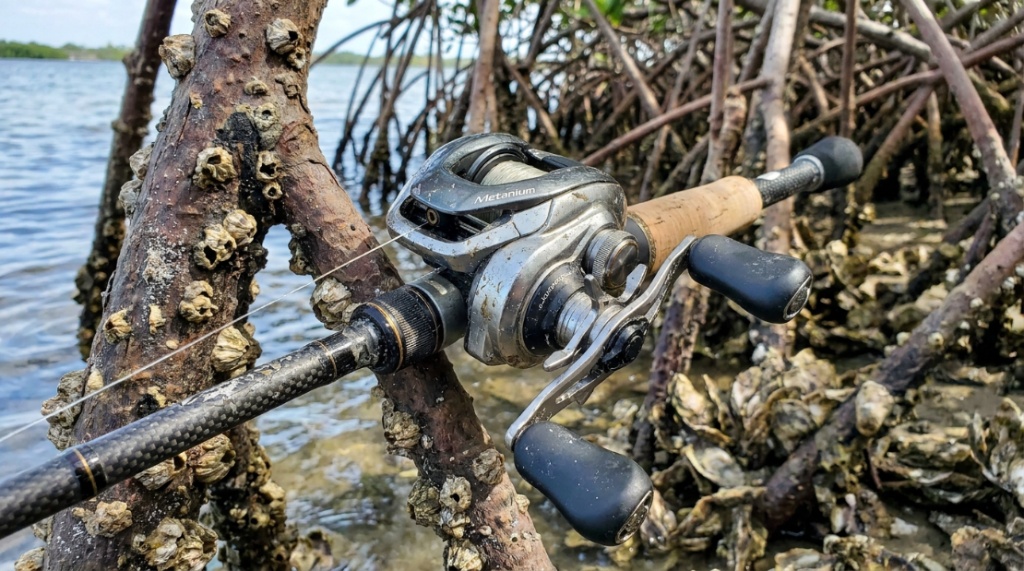
If you plan on fishing heavy cover like mangroves or docks for snook, err on the heavier side. Choose a 7’3″ rod with “Heavy” power rather than medium-heavy. Pair it with a 4000-size reel spooled with 30 lb braid. This setup has the raw pulling power to immediately turn a snook’s head away from sharp barnacle-covered pilings. You are sacrificing the ability to cast small baits effectively, but you are gaining the control needed to wrestle a fish out of danger quickly.
For Trout and Flounder in Open Grass
Conversely, if you are fishing open grass flats for spotted sea trout, you need a lighter presentation. A 6’10” to 7’0″ rod rated “Medium” with a fast tip is ideal. This allows you to cast smaller baitfish imitations (like 4-inch paddle tails or topwater plugs) without overpowering them, and the softer action prevents you from ripping the hook out of a soft-mouthed trout. Use a 2500-size reel with 10-12 lb braid to maximize your cast distance.
The Heavy Hitter: Tarpon and Jacks
If you are specifically targeting smaller tarpon (up to 80 lbs) or big jacks, you are no longer looking for a “combo” in the traditional sense, but rather a specialized fight stick. You will need a 7’6″ to 8’0″ rod rated Heavy or Extra Heavy paired with a 5000 or 6000-size reel with a massive drag system. These setups are not fun to cast for small fish, but they are the minimum standard for turning a large tarpon that has just jumped in the air.
Comparing Top Materials: What the Search Results Don’t Tell You
Many reviews focus on the aesthetic or the brand name, but you need to concentrate on three technical aspects to avoid a costly mistake.
- Fuji Guides vs. Custom: While Fuji is an excellent brand, the spacing of the guides is just as important as the quality. Look for a combo that uses a “low-rider” or “K-guide” configuration, which helps the line come off the spool with less friction and reduces tangles.
- Handle Length and Butt Shape: If you cast two-handed often, ensure the rear handle gives you enough length to grip with both hands. If you prefer “pitching and flipping,” look for a shorter rear grip that keeps the rod’s center of gravity close to your body.
- Warranty and Service: In the salt, gear breaks. Look for manufacturers that offer a “no-fault” warranty where you can replace a broken tip for a small fee rather than having to buy an entirely new rod.
Where Most Anglers Make a Mistake
The most common mistake anglers make when buying their first Florida combo is ignoring the balance point. If you hold the rod and it feels “tip heavy,” you will fight the rod all day. Learn to balance the combo before buying. Attach the reel (ask to feel it with a real reel if buying a blank) and balance the rod on your trigger finger just above the reel seat. If the rod tips over backward (butt heavy), it is well-balanced; if the tip drops immediately, pair it with a heavier reel. A well-balanced combo is worth far more than a high-end rod paired with a cheap reel.
When to Spend More: The Budget Guide
There are functional options available at almost every price point, but here is what your money actually gets you as you move up the price scale:
- Budget ($50-$100): Exclusively fiberglass or low-grade graphite. They are durable but heavy and lack sensitivity. Best for occasional freshwater fishing or for young anglers.
- Mid-Range ($100-$200): This is the “sweet spot.” You begin to see high-modulus carbon fiber blanks, high-quality stainless steel guides, and better reel sealing. This is where you will find the best value for the stated specs.
- High-End ($200+): You are paying for extreme weight reduction, premium anti-corrosion materials (like titanium guides), and superior drag systems. These are great, but you reach a point of diminishing returns for standard inshore fishing.
Frequently Asked Questions
Can I use a freshwater bass combo in the salt?
Technically yes, for a few trips, but it is not advised. Freshwater reels lack the sealed bearings necessary to protect against salt corrosion. The rod guides are often not resistant to corrosion and will eventually crack or warp after exposure to saltwater, leading to severe line fraying. It is always best to purchase a combo specifically rated for “saltwater” use, even if it is an entry-level model.
Do I need a casting reel or a spinning reel?
For most Florida inshore anglers, a spinning reel is the better choice. Spinning reels are easier to cast into the wind (a common issue in Florida), are harder to backlash, and require less maintenance. Baitcasting setups are preferred for frog fishing in heavy lilies or for pitching heavy lures into mangroves, but they have a steeper learning curve. If you want to focus on catching fish rather than untangling line, choose spinning.
What is the best line to pair with my new combo?
Braided line is the standard for inshore fishing because it has zero stretch (allowing for strong hook sets at distance) and lasts longer than monofilament. Use 15 or 20 lb braid for general use and tie a monofilament or fluorocarbon leader (20-30 lb) to connect to the lure. The leader adds abrasion resistance and prevents fish from seeing the bright braided line, For a complete setup on the beach, check out our guide on essential surf fishing gear to maximize your success.
Is a longer rod always better?
No. Longer rods (7’6″ and up) provide better casting distance but are difficult to fish in tight quarters. They also put more leverage on the angler when a fish is close to the boat, allowing the fish to potentially use the rod’s length against you. For anglers fishing from a kayak or in tight creeks, a shorter 6’6″ rod is often more comfortable. Use the 7-foot length as a baseline and adjust based on your primary location.
How do I build a good rod setup for beginner anglers on a strict budget?
Do not sacrifice the quality of the reel to buy a better rod. A cheap reel will fail, locking up gears and ruining your day. Buy a lower-grade rod but ensure you purchase a reel with at least one sealed bearing and a smooth, oiled drag system. The corrosion-proof mechanics of the reel are much harder to improve after purchase than the strength of a rod.
Our Verdict on the Best Fishing Rod Combo for Florida
There is no magical one-size-fits-all remote; the best setup depends entirely on your strategy.
For the majority of anglers who want the “do-it-all” Florida combo, The Plusinno Carbon Fiber Spinning Combo (or similar spec) is a standout.
Look for a 7-foot, medium-heavy power, fast-action Carbon Fiber rod paired with a 4000-size Spinning Reel. Ensure the rod utilizes high-modulus carbon fiber for sensitivity and that the reel comes spooled or is compatible with braided line. This combination will handle just about everything Florida throws at you—from speckled trout to redfish and snook—without causing fatigue. For specialized tasks, such as fishing heavy structure or tiny docks, adjust the rod’s power and length as described above.
Conclusion
Selecting the right fishing rod combo for Florida is about matching the gear to the environment, not just buying the most expensive option. Prioritize corrosion resistance in the reel and hardware, choose a 7-foot medium-heavy carbon fiber rod for versatility, and spool it with quality braided line. By understanding the specifications explained in this guide, you can confidently navigate the market and invest in a setup that will perform for years rather than accumulating dust in the corner. If you remain unsure, always plan to purchase just one versatile combo first, learn its limits, and then build your arsenal around what you find you truly need.