
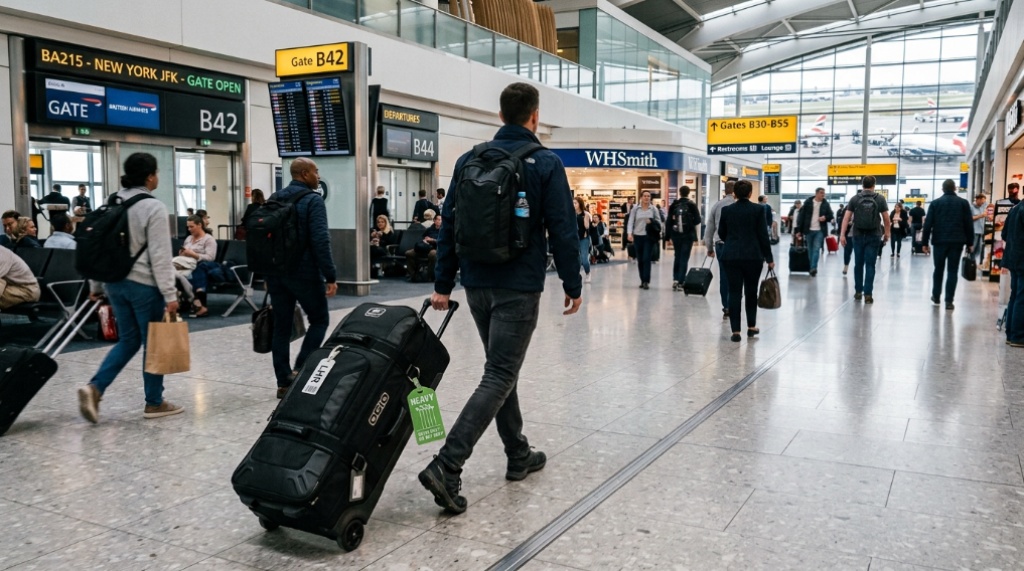
You are standing at the airport curb, watching the luggage carousel turn. Other travelers grab their suitcases and walk away. You wait for your golf clubs, hoping the soft-sided cover you bought to save space survived the journey without a torn seam or a snapped driver shaft. Choosing between a wheeled and a wheelless design often comes down to this exact moment. A golf club travel bag with wheels protects your investment differently than a lightweight carry cover, but it also forces you to navigate tight rental car trunks and crowded shuttle buses. The question is not simply which one is better, but which compromises you are willing to accept for your specific trip.
Quick Answer
Wheeled golf travel covers are worth the added bulk for most golfers who fly commercially, especially with expensive clubs or connecting flights. The wheels reduce physical strain during long airport walks and typically offer better structural protection. Wheelless covers make sense for short car trips, minimal packing space, or golfers who prioritize a lighter bag above all else and accept the trade-offs in convenience and durability.
Key Takeaways
- A wheeled cover shifts weight from your shoulder to the ground, which matters most during long airport transits and multi-leg journeys.
- Wheelless covers are lighter and easier to squeeze into tight spaces, but they require you to carry the entire load and often provide less rigid protection.
- The best choice depends on how often you fly, the value of your clubs, and whether you usually travel alone or with someone who can help carry luggage.
- Hard-sided wheeled covers offer the highest protection but weigh more and take up more storage space at home.
- Soft-sided wheeled covers are a practical middle ground for golfers who want convenience without the weight of a hard case.
Why Wheels Change the Travel Experience
The difference between dragging a golf bag and rolling one becomes obvious the moment you leave the check-in counter. A fully loaded golf travel cover can weigh anywhere from 20 to 40 pounds or more, depending on the number of clubs, shoes, and accessories. Carrying that weight through a terminal, across a parking lot, or up a shuttle bus step is awkward and tiring. Wheels solve that problem directly.
But wheels also add hardware. That hardware contributes weight, takes up space, and creates a new point of failure. A broken wheel or a bent axle can turn a convenient travel bag into a burden. Understanding how wheeled and wheelless designs handle these trade-offs helps you decide which one fits your actual travel patterns.
Airport and Ground Transport Realities
Airports are designed for rolling luggage. Terminals have smooth floors, ramps, and elevators. A wheeled golf travel cover moves through these environments with little effort. If you have a long layover or need to transfer between terminals, the advantage becomes even clearer.
Wheelless covers work fine if someone else handles the bag or if you only move it a short distance. But on a solo trip with a connecting flight, carrying a wheelless cover for an extended period is uncomfortable and can leave you fatigued before you even reach the gate.
Rental Cars, Shuttles, and Tight Trunks
Rental car trunks and shuttle vans are where wheeled covers can become frustrating. A hard-sided wheeled cover might not fit into a compact car trunk without folding down a seat. Soft-sided wheeled covers are more flexible but still take up more space than a wheelless bag that can be compressed.
Shuttle buses present a different problem. You often need to lift your bag onto a rack or hold it in a crowded aisle. Wheels do not help in that moment, and the added bulk can make the bag harder to maneuver in tight quarters. If your typical trip involves small vehicles or crowded shuttles, a wheelless cover may actually be easier to manage once you leave the airport.
Protection: Does Wheeled Design Offer More Safety for Your Clubs?
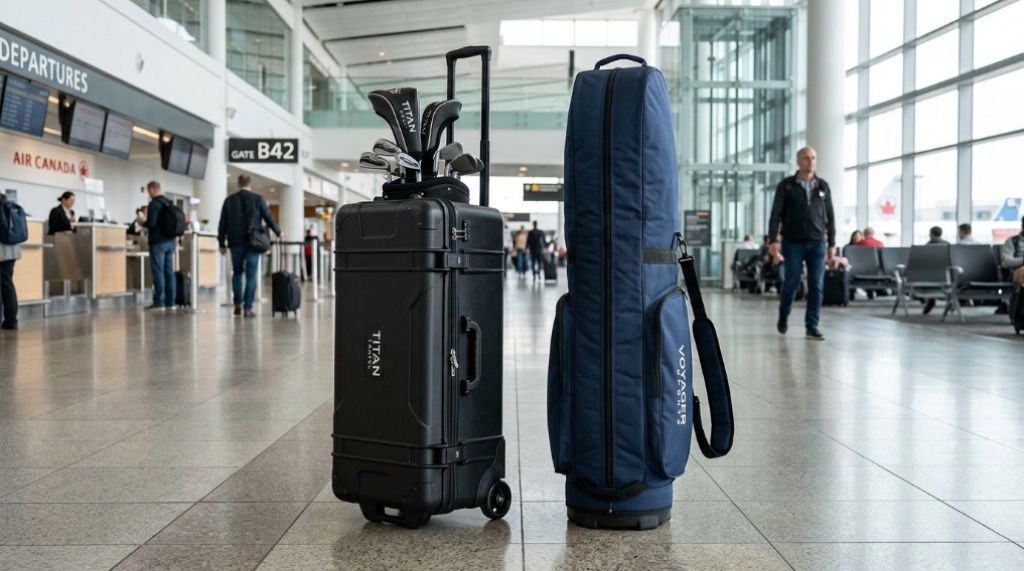
Wheeled covers, particularly hard-sided models, generally provide better protection than wheelless soft covers. The rigid shell absorbs impact from drops and stacking, and the wheels keep the bag elevated from rough surfaces. Soft-sided wheeled covers offer less rigid protection but still benefit from a structured base and reinforced corners.
Wheelless soft covers rely entirely on padding and fabric strength. A well-padded wheelless cover can protect clubs adequately for car travel, but it is more vulnerable to punctures, crushing, and baggage handler mishandling. If you are checking your clubs on a flight, the protective advantage of a wheeled design is significant, if you need to upgrade your equipment after traveling, check out our guide to help you pick the best budget golf irons in 2026.
Hard vs. Soft Wheeled Covers
| Feature | Hard-Sided Wheeled Cover | Soft-Sided Wheeled Cover |
|---|---|---|
| Protection level | Highest; rigid shell resists crushing | Moderate; padded but flexible |
| Weight | Heavier | Lighter |
| Storage at home | Bulky; needs dedicated space | Can be folded or compressed |
| Flexibility in tight spaces | Low; does not compress | Moderate; some give |
| Best for | Frequent flyers with expensive clubs | Occasional travelers wanting convenience |
This table highlights a key point: the “best” wheeled cover depends on how much protection you need versus how much weight and bulk you are willing to accept. A golfer flying twice a year with a mid-range set might be perfectly happy with a soft-sided wheeled cover. A golfer with custom clubs and a weekly travel schedule may prefer the security of a hard case.
When a Wheelless Cover Makes More Sense
Wheelless golf travel covers are not obsolete. They serve specific situations well. If you drive to your destination and never check your clubs on a plane, a wheelless cover is lighter, cheaper, and easier to store. It slides into a car trunk without the awkward wheel hardware, and you never have to worry about a wheel cracking or an axle bending.
Golfers who travel with a partner who can help carry luggage may also find a wheelless cover sufficient. The weight is shared, and the bulk is less of a problem when two people are managing bags. Similarly, if you are packing a travel cover inside a larger suitcase for a trip where you will rent clubs at the destination, a wheelless cover is the only practical option.
Storage and Home Logistics
Where you store your travel cover at home matters more than many golfers expect. A hard-sided wheeled cover can take up a significant amount of closet or garage space. A soft-sided wheelless cover can be folded or hung, which is a real advantage for golfers with limited storage.
If you live in an apartment or have a small garage, this factor alone might push you toward a wheelless design. The added bulk of a wheeled cover is not just a travel concern; it is a year-round storage concern.
Weight, Bulk, and Physical Strain
Wheeled covers add weight even before you pack them. The wheel assembly, handle, and reinforced base can add several pounds compared to a wheelless equivalent. That extra weight matters when you need to lift the bag onto a scale, into a car, or onto a luggage rack.
However, the rolling motion reduces strain during the longest parts of the journey. The net effect depends on your physical condition and the specific trip. A golfer with back or shoulder issues will almost always benefit from wheels, even if the bag is heavier overall. A golfer in good physical condition on a short trip might not notice the difference.
Airline Weight Limits
Many airlines impose weight limits on checked golf bags, often around 50 pounds before overweight fees apply. A heavier wheeled cover eats into that allowance. If you pack heavy clubs, shoes, and balls, a wheeled cover could push you over the limit faster than a lightweight wheelless bag.
Check your airline’s specific policy before you travel. If you are close to the limit, a lighter wheelless cover might save you money on fees, even if it is less convenient to carry.
Making the Decision: A Practical Framework
Use the following criteria to decide which type of golf travel cover fits your needs. Answer each question honestly based on your most common travel scenario, not an ideal one.
- How often do you fly with your clubs? If more than once or twice a year, wheels are usually worth it.
- Do you have connecting flights or long airport walks? Wheels become more valuable as the journey gets longer.
- How expensive are your clubs? Higher value justifies better protection, which often means a wheeled design.
- What is your storage situation at home? Limited space favors a wheelless or soft-sided foldable cover.
- Do you usually travel alone or with help? Solo travelers benefit more from wheels.
- How close are you to airline weight limits? A heavier wheeled cover could trigger fees.
There is no universal correct answer. A golfer who drives to a local course for a weekend trip has different needs than a golfer who flies to a tournament across the country. The goal is to match the cover to your actual behavior, not to an imagined scenario.
Common Mistakes to Avoid
One common mistake is buying a hard-sided wheeled cover for occasional car travel. The extra weight and bulk become annoying when you never actually need the protection. Another mistake is buying the cheapest wheelless cover for frequent flying, only to have it tear or fail to protect your clubs.
Golfers also sometimes overlook the size of their travel cover relative to their golf bag. A cover that is too small is difficult to pack, while one that is too large allows clubs to shift during transit. Measure your golf bag before you buy, and check the internal dimensions of the cover.
Frequently Asked Questions
Are wheeled golf travel covers allowed on all airlines?
Most major airlines accept wheeled golf travel covers as checked baggage. However, size and weight restrictions vary by airline. Always check your specific airline’s policy before flying, and confirm whether the cover counts as a standard checked bag or requires a special handling fee.
Can a wheelless golf travel cover protect clubs on a flight?
A well-padded wheelless cover can protect clubs on a flight, but it offers less defense against crushing and rough handling than a hard-sided wheeled cover. If you fly frequently or have expensive clubs, a wheeled design is generally the safer choice.
Do wheels add significant weight to a golf travel bag?
Wheel assemblies and handles typically add a few pounds compared to a wheelless equivalent. That extra weight matters most when you are close to airline weight limits or need to lift the bag frequently. The trade-off is reduced physical strain during rolling.
Is a hard-sided wheeled cover better than a soft-sided one?
Hard-sided covers provide better protection against impact and crushing. Soft-sided wheeled covers are lighter and easier to store. The better choice depends on how much protection you need and how much weight and bulk you are willing to accept.
Can I use a wheelless cover for car travel only?
Yes. A wheelless cover is often the best choice for car travel because it is lighter, cheaper, and easier to store. You do not need the rolling convenience when you are loading the bag directly into a trunk.
How do I know if my clubs will fit in a travel cover?
Measure the height and width of your golf bag, including any external pockets or attachments. Compare those measurements to the internal dimensions listed for the travel cover. If you are between sizes, choose the larger option to avoid a cramped fit.
Conclusion
Wheeled golf travel covers are worth the added bulk for most golfers who fly with their clubs. The rolling convenience reduces physical strain, and the structured design usually provides better protection. Wheelless covers remain a practical choice for car travel, limited storage, or golfers who prioritize a lighter bag. Match the cover to your most common travel scenario, check airline weight limits, and measure your bag before buying. The right choice is the one that makes your trip easier, not the one that looks best on a spec sheet.