
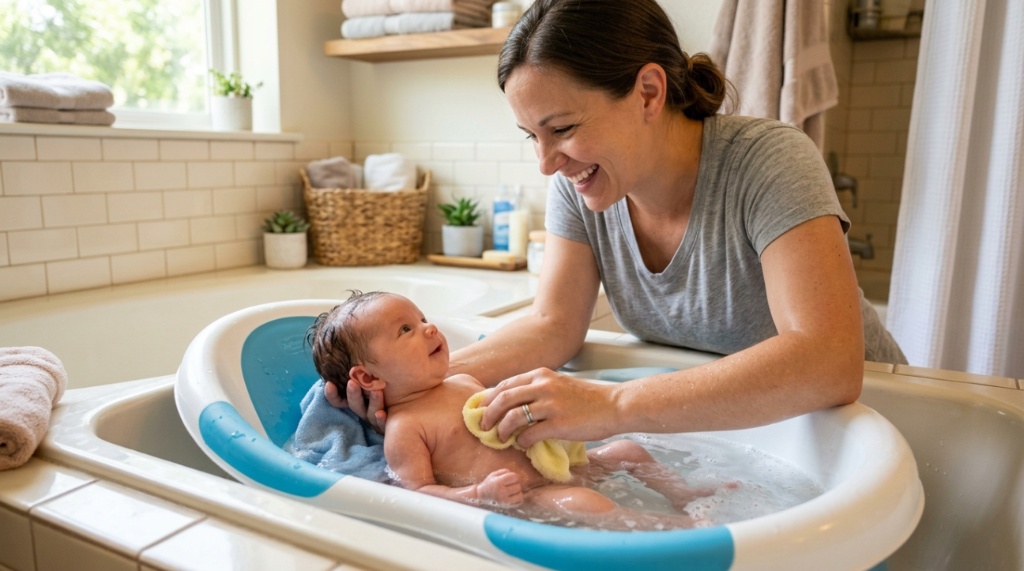
Bath time can be a wonderful bonding experience, but for many parents in Texas, it can quickly turn into a stressful wrestling match. Between the hard water in many parts of the state, the need for a safe, non-slip surface, and the sheer challenge of supporting a slippery infant, choosing the right tub is critical. If you’ve been searching for an easy bath time baby tub in Texas, you likely want something that simplifies the process, helps your baby feel secure, and makes cleaning up straightforward. This guide will walk you through the essential factors to consider, the different types of tubs available, and practical tips for making bath time a breeze.
Key Takeaways
- Focus on Safety and Support: Look for tubs with a non-slip bottom, a comfortable harness or sling, and a design that prevents your baby from slipping.
- Consider Your Water Source: Texas water’s mineral content can leave film on tubs. Choose a material that is easy to rinse and won’t stain easily to simplify maintenance.
- Match the Tub to Your Space: Whether you have a large master bath or a compact apartment in Austin or Houston, the tub’s footprint should fit your sink or standard bathtub.
- Plan for Growth: A tub with adjustable features or a higher weight capacity will last longer, saving you money and storage space in the long run.
Understanding the Search for the Perfect Tub
The primary goal when selecting an easy bath time baby tub in Texas is to find a model that reduces physical strain on your back and arms while ensuring your baby is safe and comfortable. Parents often look for terms like “easier on the back,” “drain the water,” and “non-slip” to find a product that doesn’t require bending awkwardly over a full-size tub. The best choice depends heavily on your specific bathroom setup and your baby’s age and size. Let’s break down the main categories of tubs to see which fits your lifestyle.
Decoding the Main Types of Baby Tubs
Not all baby tubs are created equal. Understanding the core design differences is the first step in narrowing down your options. Each type offers distinct advantages and potential drawbacks depending on your needs.
Sloped and Contoured Tubs
These are the most common and often the most straightforward option. They feature a built-in slope that physically supports your baby in a semi-reclined position, which is excellent for newborns and infants who cannot yet sit up unassisted. The contoured ridges provide a natural “seat” that prevents sliding.
- Pros: Simple to use, easy to clean, generally budget-friendly, and provides good ergonomic support.
- Cons: They can be bulky to store, and while they save water compared to a full tub, they still require a lot of water for the deepest part.
Bucket-Style Tubs
Often shaped like a large bucket or deep basin, these tubs allow your baby to sit upright on their own (or with support) while submerged in warm water up to their mid-chest. This design is fantastic for keeping babies warm and feeling secure, as it mimics the womb-like environment.
- Pros: Excellent for older babies who like to splash, uses less water than a sloped tub, and the deep sides contain messes effectively.
- Cons: Not suitable for newborns who cannot sit upright without assistance, and the deep design can be harder to rinse quickly.
Inflatable and Compact Tubs
For families with limited storage space or those who travel frequently, inflatable tubs are a lifesaver. They are also a popular choice for guests who may be visiting a Texas vacation home or staying with relatives during the summer heat.
- Pros: Extremely portable, collapses flat for storage, soft and cushioned sides are gentle for your baby, and easy to inflate in minutes.
- Cons: Requires inflation before use, the material can be prone to punctures, and they can be less stable than rigid plastic tubs.
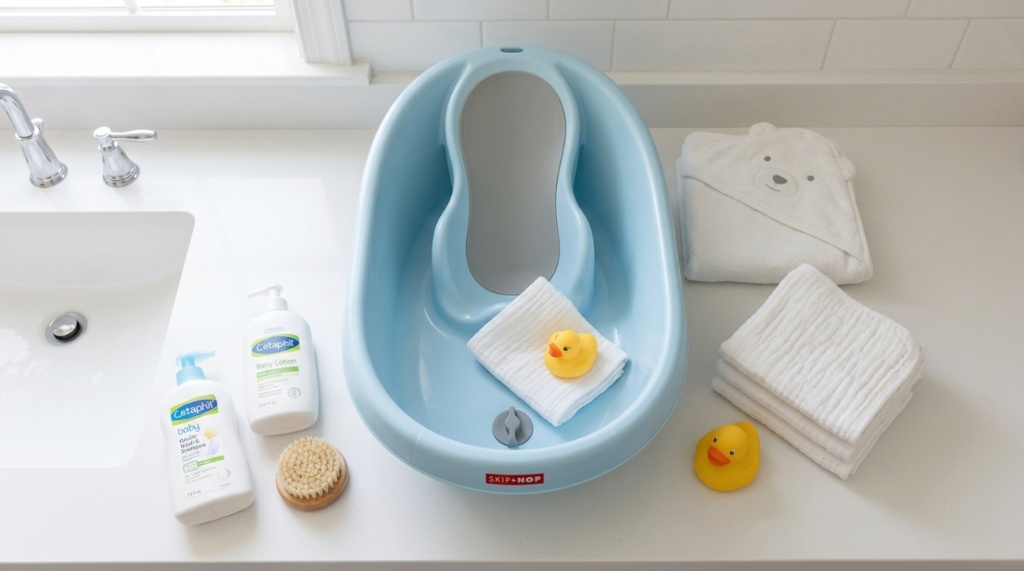
Key Features That Define “Easy”
Once you understand the basic structure, you can focus on the specific features that will make your day-to-day routine easier. These are the details that separate a good tub from a great one in the humid, hard-water climate of Texas.
Drainage and Cleaning
The most critical feature for “easy” is the drainage system. A tub with a built-in drain valve is a game-changer. You can simply lift the plug and let the water flow directly into your bathtub or sink without having to lift and tip a heavy, water-filled container.
In Texas, where hard water is common, you might notice a soap scum film forming. Tubs made of smooth, non-porous materials like polypropylene are the easiest to wipe down and prevent hard-water staining. Avoid textured surfaces that can trap grime and soap residue.
Safety and Support Elements
Safety features are non-negotiable, but they also contribute to the “ease” of use by giving you peace of mind. A built-in harness or a detachable sling is essential for a newborn. It locks your baby in place, freeing your hands to wash them without the constant fear of them sliding.
Look for a tub with a textured, non-slip bottom that sits firmly on your sink or floor. A wide base prevents tipping. For older babies, a built-in seat belt or a non-slip insert is crucial once they can sit independently, as they tend to wiggle and try to stand up.
How to Choose a Baby Tub for Your Texas Home
Your home environment plays a significant role in your decision. A large, deep tub that works well in a ranch-style home might be a nuisance in a compact apartment. Here’s a practical breakdown to guide your situational selection.
For the Master Bath Sink
If you plan to bathe your newborn in the bathroom sink, you need a tub that fits the dimensions of your basin. Measure the inner width, length, and depth of your sink before purchasing. Sloped and contoured tubs are often designed with a slight “lip” that can rest securely over the sink edge, which is handy.
For sink use, a smaller, ergonomic tub is best. It will be lighter and easier to handle when filling and emptying. The contoured design is ideal here, as it allows you to wash your baby without having to bend over a large, deep bathtub.
For the Standard Bathtub
If you are bathing your baby directly in the big tub, you can choose a larger, more versatile model. Bucket-style tubs work well here because they keep the baby contained within a smaller, warmer body of water without having to fill the entire bathtub.
Consider a tub with a suction cup or a non-slip base to keep it anchored to the bottom of the larger tub. This prevents the smaller tub from sliding around when your baby kicks and squirms. This setup is also great for extending the tub’s use as a “safe zone” in the larger tub for older toddlers.
Common Mistakes Parents Make
Many parents make small errors that turn a simple task into a chore. Avoiding these can significantly cut down on bath time stress.
- Choosing a “Lifetime” Tub Too Early: Tubs that promise to last from birth to toddlerhood are often too large for a floppy newborn and too restrictive for a mobile toddler. It is often easier to use a small, simple newborn tub and switch to a regular bathtub with a non-slip mat once your baby can sit up unassisted.
- Ignoring the Drain Valve: If you buy a tub with a plug, use it! Lifting the tub to empty it puts immense strain on your back and is a key reason bath time becomes “hard.” Always drain the water in place.
- Forgetting about Hanging to Dry: After draining, the tub needs to be stored in a way that allows it to completely dry. If you place it in a cabinet with residual water, you risk mildew. Look for tubs with holes in the handles or a design that hangs over the showerhead or the edge of the tub.
If you are dealing with unexpected plumbing troubles while getting the nursery ready, or if you notice a sudden plumbing malfunction, check out this guide on When Your Bathtub Water Won’t Turn Off.
How to Bathe Your Baby Like a Pro
Even with the right tub, the technique matters. Here’s a simple, step-by-step guide to ensure a smooth experience.
- Preparation is key: Gather all your supplies—washcloth, baby soap, a cup for rinsing, and a clean towel—before you even start running the water. Never leave the bathroom to grab a forgotten item.
- Use a comfortable water temperature: Aim for around 100°F (38°C). Always test the water on your inner wrist or elbow to ensure it is warm, not hot. Fill the tub to about 2-3 inches of water for a newborn; the water level should be lower than your baby’s belly button when seated.
- Keep your baby warm and engaged: Undress your baby in the bathroom and cover them with a towel. Slowly lower them into the tub, feet first. Use one hand to support their head and back, and use the other to wash. Keep a second cup or a warm washcloth over their chest to keep them warm.
- Be gentle and efficient: Wash your baby’s face with just water first. Then use a tiny amount of soap and water for the body, working top-down. Make eye contact and talk gently to reassure them.
Frequently Asked Questions
When should I transition my baby out of a baby tub?
Once your baby can sit up independently and strongly (usually around 6 months), they may be ready for the big bathtub. More importantly, if they are too large for the baby tub and water overflows easily, or if they attempt to climb out, it’s time to switch.
Does the tub’s material matter?
Yes. Rigid plastic is durable and easy to clean but can be cold against the skin. Soft, foam-covered plastic is warmer and more comfortable but can harbor bacteria if not dried properly. Inflatable tubs are soft but less durable. Always choose a material that is BPA-free and phthalate-free and easy to sanitize.
Can I use a baby tub in a stand-up shower?
No. A baby tub is designed to be used on a flat surface or on the floor of an empty bathtub. Using it in a stand-up shower is unsafe because the surface may not be level. Instead, you can give your baby a shallow sponge bath on the floor of the shower until they are old enough to sit securely in the shower with your direct supervision.
How do I clean and store my baby tub?
After draining the water, rinse the tub with a mild, baby-safe soap and warm water. Wipe it down to remove any soapy residue. You can disinfect it weekly with a solution of white vinegar and water or a gentle, food-safe disinfectant spray. Hang it to dry completely to prevent mold growth.
Conclusion
Choosing the right baby tub in Texas is about finding the perfect balance of safety, convenience, and practicality for your home. Prioritize a tub with a reliable drain valve, a stable non-slip base, and a material that resists the effects of hard water to ensure everyday ease. While features like inflatable sides or bucket depths are appealing, the simplest design that fits your bathroom layout and supports your baby’s changing needs is usually the best investment. Take your time to measure your space and consider how long you plan to use the tub. Making an informed choice will help you transform bath time from a stressful chore into one of the most joyful parts of your day.