

You’re exhausted. You wake up more tired than when you went to bed, your throat is dry, and your partner has already moved to the guest room for the third time this week. Snoring is the problem, and you’ve finally decided to do something about it. You’ve researched, scrolled forums, and kept landing on one specific solution: a wedge pillow.
But walking into a store or clicking through endless online listings is overwhelming. How high should the incline be? What foam density offers the right support? Will it actually stay in place during the night, or will you wake up sleeping flat in a pile of pillows? This guide will cut through the noise, helping you understand exactly what makes a wedge pillow effective for snoring relief and how to select one that matches your sleep style, body type, and comfort preferences—so you can finally get the quiet, restorative rest your body craves.
What Is the Ideal Incline Angle for a Wedge Pillow to Stop Snoring?
The ideal incline angle for a wedge pillow to mitigate snoring is between 20 and 45 degrees, with the sweet spot typically sitting around 30 degrees. This elevation physically lifts your head, neck, and upper torso, which helps prevent the tongue and soft palate from collapsing backward into the airway—the primary mechanical cause of vibratory snoring.
Finding the right angle is rarely a “one-size-fits-all” proposition. While 30 degrees works for a broad audience, individual factors like weight, neck circumference, and shoulder width will affect how effective that specific height feels. More importantly, an angle that is too steep can cause neck strain, while one that is too shallow might not provide enough airway clearance to make a meaningful difference.
Measuring the Right Height for Your Body Type
The degree of incline correlates directly to the height of the pillow at its tallest point. Standard wedge pillows for snoring typically range from 4 inches to 12 inches in height.
- For lighter individuals (under 150 lbs): A 4- to 6-inch incline is often sufficient and prevents the sensation of sliding down.
- For average builds (150-200 lbs): A 6- to 8-inch incline generally offers the best balance of elevation and spinal alignment.
- For larger frames (over 200 lbs): An 8- to 10-inch incline is often necessary to effectively lift the torso and open the airway.
The 30-Degree Rule: The Standard for Airway Health
Sleep specialists often reference the 30-degree rule. This isn’t just about snoring; it is the benchmark angle used for managing acid reflux (GERD) and mild sleep apnea. At this angle, the gravitational pull on the soft tissues of the throat is dramatically reduced, decreasing the velocity of air turbulence that creates the snoring sound.
Adjustable Wedges vs. Fixed Foam Wedges
Fixed foam wedges are single-density, solid blocks of foam. They are stable but do not allow for angle customization. Adjustable wedges, however, feature a foldable design with interlocking pieces that allow you to change the incline height from 6 inches to 12 inches. If you are unsure what angle works best, an adjustable model is a safer investment because it allows you to “test” multiple heights without needing to buy a new pillow.
What Materials Are Best for a Snoring Wedge Pillow?
The best wedge pillows for snoring utilize high-density polyurethane foam, often botanical or memory foam blends, which offer firm support without compressing completely under the weight of the head. Avoid standard soft pillows; they lack the structural integrity to maintain elevation throughout the night.
The material determines not only the support but also the temperature regulation and longevity of the pillow. A low-quality foam will break down quickly, flattening the incline and rendering the pillow useless within a few months.
High-Density Foam: The Non-Negotiable Base
High-density foam (typically rated at 30 ILD or higher) is the gold standard. It provides a firm, stable base that pushes back against gravity. Unlike soft memory foam that cradles you, high-density foam holds your torso up. It is critical to check the ILD (Indentation Load Deflection) rating; if the foam is too soft, your head will sink, negating the incline and collapsing the airway.
Bio-Green vs. Hypoallergenic Covers
Snoring often occurs alongside allergies. The cover of your wedge pillow should be removable and washable, preferably made of a hypoallergenic, breathable fabric like organic cotton or bamboo viscose. This prevents dust mites and allergens from accumulating on the sleeping surface, which can congest the nasal passages and worsen snoring.
The Importance of “Firm” vs. “Soft” Touch
While the base needs to be firm, the top layer—the part your head touches—doesn’t have to feel like a rock. Many high-quality wedges feature a “mission split” design: a firm support base with a slightly softer topper layer. This allows for a comfortable head position without sacrificing the structural elevation needed to stop the snoring.
Why Does Sleeping Flat Make Snoring Worse?
Sleeping flat exacerbates snoring because gravity pulls the relaxed muscles of the throat, including the soft palate and the base of the tongue, directly backward into the pharynx. This narrows the airway, causing the tissues to vibrate rapidly as air struggles to pass through.
When you lie supine (on your back), your airway is at its most vulnerable. The jaw also tends to drop backward, further occluding the passage. Elevating your head changes the mechanics of your throat, preventing these tissues from obstructing the airflow.
The Physics of Airway Collapse
Think of your airway as a flexible straw. If you bend the straw, the flow is restricted. If you pinch it while it’s bent, it closes entirely. Sleeping flat creates that “bend” in your throat. A wedge pillow straightens the angle of the trachea, reducing the “bend” and allowing air to move smoothly, minimizing the turbulence that causes the snoring noise.
Positional Sleep Apnea Gravity Effects
For individuals with mild positional sleep apnea (where symptoms are worse on the back), a wedge pillow can be an effective therapeutic tool. The incline works to maintain airway patency. However, it is vital to understand that a wedge pillow is not a cure for severe obstructive sleep apnea—it is a management tool for snoring and very mild cases.
Comparing Supine vs. Side Sleeping with an Incline
If you are a side sleeper, a wedge pillow requires a specific adaptation. You cannot sleep with your head directly on the sloped part without craning your neck. Instead, you need to position your shoulder slightly down the slope or use a secondary flat pillow on top of the wedge to ensure your spine stays aligned. This keeps the torso elevated while protecting the cervical spine.
How Do I Stop My Wedge Pillow from Sliding During the Night?
To stop a wedge pillow from sliding, you must place it firmly against the headboard, use a non-slip rug pad underneath it, or secure it between the mattress and box spring. The angle of the incline naturally creates gravitational pull that pushes the pillow down toward the foot of the bed.
Nothing ruins a good night’s sleep faster than waking up to find your pillow on the floor or wedged against your lower back. Here are the most effective methods to anchor your wedge in place so you can actually benefit from “sleeping on the incline.”
Using the “Tuck” Method for Stability
The most effective way to stabilize a wedge is to ensure the flat base is tucked tight against the headboard and the mattress is snug against it. If you have a pillow-top mattress, the wedge can sink into the soft edge. For this, place a piece of plywood or a firm yoga mat between the wedge and the mattress to create a rigid surface.
Shop for Wedges with Non-Slip Bottoms
When shopping, look for wedge pillows that feature a high-friction rubberized or PVC backing on the bottom. This texture grips the mattress sheets and prevents the forward slide. If your chosen wedge lacks this, spray adhesive or a simple silicone caulk line on the base can create enough friction to keep it in place.
Sheet Placement Tricks
Your fitted sheet can work against you. Smooth satin sheets are terrible for wedge stability. Try tucking the bottom edge of the wedge into the gap between the mattress and the headboard, and pull the fitted sheet over the wedge itself. This creates a “hammock” effect that holds it in place.
Can a Wedge Pillow Help with Both Snoring and Acid Reflux?
Yes, a wedge pillow is one of the few sleep aids that addresses two distinct nighttime issues: snoring and acid reflux (GERD). By elevating the head and torso, you prevent stomach acid from traveling back up the esophagus while simultaneously opening the airway.
This dual functionality makes the wedge pillow a highly cost-effective health investment. However, there is a difference in the required height for each condition. Reflux often requires a more aggressive incline than snoring, so you may need to prioritize a higher angle to address both simultaneously.
The Torso Lift vs. Head Lift Distinction
For acid reflux, the “break” in the body must occur at the waist. If you only lift the head with a standard pillow, your stomach remains folded, which actually increases intra-abdominal pressure and worsens reflux. A wedge lifts the entire torso, ensuring that gravity keeps the stomach acid down.
Recommended Height for Dual Relief
If you suffer from both snoring and GERD, look specifically for a wedge that is at least 7 inches high at the top. This ensures the incline breaks at the lower back rather than the cervical spine. Some specialized wedges have a “cut-out” or contoured design specifically to facilitate this torso lift without causing lower back pain.
Digestion and Meal Timing
A wedge pillow is not a license to eat right before bed. While the pillow prevents reflux symptoms, it doesn’t stop the digestive process. For optimal results, maintain an upright posture for at least 3 hours after eating, and use the pillow to ensure you remain elevated for the remaining time you sleep.
Which Type of Wedge Pillow Is Best for Side Sleepers Who Snore?
For side sleepers who snore, the best wedge pillow is one with a lower incline profile (around 4 to 6 inches) paired with a firm supplementary neck roll or a contoured depression at the top to support the cervical spine.
Side sleeping is inherently better for snoring than back sleeping, but adding a wedge can create a “neck-roll” effect if not chosen carefully. The key is to maintain the head, neck, and spine in a straight horizontal line while the torso is inclined.
Analyzing the “Cut-Out” Design
Manufacturers have developed wedge pillows with a “shoulder cut-out”—a scooped section on the sides specifically for side sleepers. This allows your shoulder to sink slightly into the pillow, preventing your neck from bending upwards at an awkward angle. This design is widely considered the most comfortable for side sleepers.
Pairing with a Contoured Topper
If you love the support of a wedge but tend to sleep on your side, consider buying a wedge with a detachable, contoured topper. The wedge provides the elevation, while the contour cradles your head with a deep pocket that keeps your spine aligned. This prevents the “crick in the neck” often reported by side sleepers using flat wedges.
Adjustable Options for Positional Changes
Many side sleepers migrate to their backs during REM sleep. An adjustable wedge allows you to start the night at a lower angle (for side sleeping comfort) and, if you happen to roll onto your back, you still have sufficient elevation to prevent snoring. A lower profile is often better than a steep one for this sleep stage.
How to Break in a New Wedge Pillow for Maximum Comfort
Breaking in a new wedge pillow takes 3 to 5 nights. You should not judge the pillow on the first night, as the foam will be stiff and “off-gassing” may occur. You must allow the foam to expand fully and your body to acclimatize to the new sleeping angle.
Many users give up after the first night because they experience back pain or stiffness. This is often due to the body adjusting to a new spinal posture, not a defect in the pillow. Here is how to ease the transition.
Step-by-Step Expansion Process
When you unbox your wedge, remove the plastic cover immediately. Place the pillow in a well-ventilated room for 24-48 hours to allow it to expand to its full shape. Do not sleep on it during this time if it feels compressed. “Memory foam” wedges, in particular, need this time to reach their stated height. If you sleep on it too soon, you may find it too soft or too low.
The “Incline Acclimation” Strategy
Do not go from sleeping flat to a 10-inch incline instantly. Start by placing the wedge on the bed, but use a standard pillow on top for the first night. On night two, place your head directly on the wedge but stay propped up reading for 30 minutes to let your back adjust. By night three, you should be able to sleep comfortably.
Managing Initial Neck Stiffness
If you wake up with a stiff neck, you are likely using a steep wedge and sleeping too far up the slope. Slide down the incline so that your lower back is near the base of the wedge, not your mid-back. This ensures the curve of your lower back supports the lift rather than your neck muscles straining to hold your head up.
What Size Wedge Pillow Should I Choose: Full-Length or Under-Shoulder?
The size choice—whether to get a full-length wedge that extends to your hips or an under-shoulder wedge that stops mid-chest—depends entirely on whether you want posture support or targeted head and neck elevation. Full-length wedges are superior for preventing sliding and maintaining spine alignment.
Full-Length Wedges (4ft and 5ft lengths)
These are the most effective for snoring because they elevate the entire torso. They are the best choice for individuals who move around at night, as the long surface area keeps the body in a consistent position. They are significantly more expensive and require custom sheets, but they offer the highest level of stability.
Under-Shoulder/Short Wedges
These stop at the shoulder blades. They are lighter and less expensive. However, they have a “cliff” effect—your torso drops off abruptly mid-back, which can cause spinal issues for stomach and back sleepers. They are best for those who just need minor head elevation and sleep on their side.
Width Considerations for Couples
If you sleep with a partner who doesn’t snore, a king-sized wedge is a luxury. However, a standard queen wedge is designed to fit one person. If you place a standard wedge on a king bed, the plane is only on your side. Ensure the wedge’s width matches your sleeping surface, not the whole mattress, to avoid a sudden drop-off in the middle of the night.
How Long Does a Wedge Pillow Last Before Needing Replacement?
A high-quality wedge pillow made from high-density foam should last between 3 to 5 years with nightly use. The lifespan is directly linked to the compression rate of the foam. If the pillow loses more than 20% of its height, it must be replaced to maintain its effectiveness.
Unlike standard pillows that flatten, wedges often go flat slowly. You may not notice the decrease in angle because it happens gradually. Here is how to tell if your wedge is past its expiration date.
The “Finger Press” Test
Place your hand in the center of the wedge and press down hard with all your weight. Release. If the foam takes more than 5 seconds to spring back to its original shape, or if it leaves a permanent indent, it is time to replace it. This indicates the foam cells are breaking down and no longer offering structural support.
Signs of Degradation Beyond Sagging
Check for discoloration (yellowing) of the foam, a persistent musty odor, or a “crumbly” texture. These are signs that the polyurethane foam is beginning to disintegrate, which can release particles into the air that are irritants. Don’t wait for visible tears; replace it at the first sign of material breakdown.
The Cost-Per-Night Equation
When evaluating the cost, consider the split. A $100 wedge pillow used for 4 years (1,460 nights) costs roughly 7 cents a night. Cheaper wedges ($30) might only last 6 months before flattening, which actually costs more per night. Always prioritize the density over the wedge pillow for snoring price tag to ensure you are getting real value and actual relief.
Is a Foam Wedge Pillow Too Hot to Sleep On?
Traditional foam wedge pillows can sleep hot, but modern designs use “open-cell” foam, gel-infused layers, and breathable mesh covers to significantly mitigate heat retention. If you are a hot sleeper, you must specifically look for cooling technologies rather than buying the cheapest memory foam option.
The physics of foam dictates that it traps body heat. However, the incline itself can aid airflow. Air circulates better around an elevated body than a flat one. Here are the best ways to ensure a cool sleep experience.
Selecting Gel-Infused or Copper-Infused Foam
Look for labels that specifically mention “gel swirl” or “phase change material” (PCM). Gel beads absorb heat away from the body, and PCM actually changes state to cool the surface. Copper-infused foam is also excellent for heat transfer and has added antibacterial properties.
The “Ventilated” Foam Structure
Choose wedges that feature a honeycomb or lattice structure at the base. These “airflow channels” allow trapped heat to escape downward into the mattress rather than radiating back up at you. If the foam is solid with no visible holes, it will inherently be warmer.
Cooling Toppers vs. Mattress Protectors
If your wedge is warm, purchase a separate cooling topper (like a bamboo pad or a gel pad) to place on top. Do not use a thick mattress protector, as this will trap heat. A woven breathable cotton cover is better than a polyester protector, which acts as a thermal blanket.
Can a Wedge Pillow Replace a CPAP Machine for Sleep Apnea?
No, a wedge pillow cannot cure or treat moderate to severe Obstructive Sleep Apnea (OSA), and it is not a replacement for a CPAP machine. However, it can be a beneficial addition to positional therapy, reducing the AHI score in some patients with mild apnea and helping CPAP users reduce air leaks.
Critical Warning: If you have been diagnosed with OSA, do not stop using your CPAP without consulting your doctor. A wedge is a lifestyle modification, not a medical device.
The “Residual Airway Pressure” Myth
Some marketers claim wedges “open the airway enough to cure apnea.” This is false. The tongue base collapses in apnea patients due to neurological and anatomical factors that a simple incline cannot fully overcome. While the wedge reduces the collapsibility, it does not remove the obstruction entirely.
How Wedges Complement CPAP Therapy
Many CPAP users find that a wedge pillow helps them keep their mask on. The incline prevents the jaw from dropping back, which is a common cause of mask leaks. It also helps resolve the “pressure swallowing” (aerophagia) issue, as the elevated position reduces the amount of air forced into the stomach.
When a Wedge is Most Valuable
A wedge is most valuable for those with “positional snoring” or “positional apnea” (where AHI is significantly lower when sleeping on the side). For these individuals, combining a wedge with an anti-snoring mouthpiece can provide remarkable relief, but all major medical guidelines still recommend CPAP as the first-line treatment for moderate-severe apnea.
What Features Should I Look for in the “Best” Wedge Pillow for Snoring?
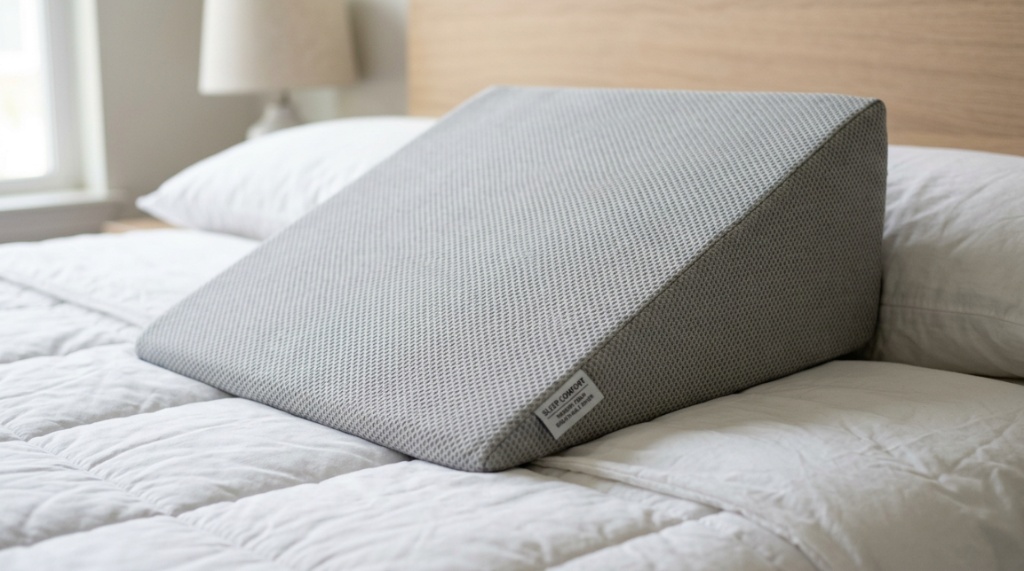
The “best” wedge pillow for snoring is the one that offers a balance of height (6-8 inches), density (high ILD), and a removable, breathable cover. It should also come with a trial period, allowing you to test the angle risk-free.
There are hundreds of options on Amazon, but the sheer volume makes it hard to choose. To narrow it down, score your options on the following three pillars: Support, Hygiene, and Trial Period.
Support Checklist
- Density: Look for 30-40 ILD foam. It should feel very firm when you press on it.
- Height: Ensure the height is listed in the product description. If the height isn’t listed, don’t buy it—it’s usually too low to work.
- Base: It must have a flat bottom, not rounded, to prevent rocking.
Hygiene Check
- Zipper: The cover must have a full-length zipper for removal.
- Material: Cotton or Tencel is better than polyester for breathability.
- Waterproof: A waterproof inner liner is a plus, especially if you are also addressing reflux, to prevent sweat and acid damage to the foam.
The Trial Period Factor
Never buy a wedge pillow that does not offer at least a 30-night trial. The angle is a personal preference, and a product that works for a 180-lb male may be a torture device for a 140-lb female. The trial period allows you to test the incline and return it if it exacerbates neck pain, Looking for a travel-friendly option for your next outdoor adventure? Check out our guide on how to choose a Compressible Camping Pillow for maximum comfort on the go.
How to Clean and Maintain Your Wedge Pillow for Snoring
To clean your wedge pillow, unzip the outer cover and machine wash it on a cold, gentle cycle. Do not place the foam base in the washing machine—it will ruin the structural integrity. Spot-clean the foam with a damp cloth and mild soap.
Proper maintenance is not just about aesthetics; it is about ensuring the foam remains buoyant and supportive over time. Here is your weekly and monthly maintenance regime.
Weekly Washing Routine
- Wash the cover: Remove the cover and machine wash it. Air dry it, as high heat can shrink it or damage the fabric’s moisture-wicking properties.
- Spot clean the foam: Use a spray bottle with water and a few drops of dish soap. Spray the foam and wipe with a white cloth to lift sweat and skin oils.
Monthly Deep Cleaning
Once a month, sprinkle a thin layer of baking soda over the entire foam surface. Allow it to sit for 30 minutes to neutralize odors. Then, vacuum it off using the upholstery attachment. This removes skin flakes and dust mites that accumulate despite the cover.
Never Compress the Foam
When moving or transporting the wedge, do not roll it tightly or weigh it down with luggage. Compressing it for extended periods can permanently damage the “memory” of the foam, reducing its loft. Always store it flat or propped against a wall if you need to remove it from the bed temporarily.
Frequently Asked Questions
How quickly will I see results from a wedge pillow?
Many users see immediate reduction in snoring volume by the second night. However, it takes up to a week to break in the foam and adjust your sleeping posture to the incline.
Can I use a wedge pillow if I have shoulder pain?
Yes, but you must choose a contoured design with a shoulder cutout. A flat wedge will force your shoulder to raise, pinching the joint. The cutout design allows the shoulder to sit lower while keeping the head elevated.
Does the incline help with sinus congestion snoring?
Yes, a wedge helps drain the sinuses naturally. The incline reduces blood pooling in the nasal passages, which reduces swelling and congestion, making nasal breathing easier.
Is a 4-inch wedge worth it, or is it too small?
A 4-inch wedge is minimal but often effective for stopping snoring in petite individuals or children. For average adults, it may only offer a minor lift that is negated by a thick pillow. It is best for those who need a subtle change.
Will a wedge pillow work if I sleep on my stomach?
Generally, no. Stomach sleeping on a wedge causes hyperextension of the neck. If you are a stomach sleeper, a wedge will likely worsen neck pain. You must transition to side sleeping to benefit from a wedge.
Can I use a normal bed frame with a wedge pillow?
Yes, wedge pillows work on any flat surface, including adjustable bed frames. In fact, using a wedge on an adjustable bed can provide extra elevation if the frame’s head section is not steep enough.