
Packing for a flight should be simple. However, many travelers get caught off guard at the airport. They bring a backpack that seems perfectly fine at home, only to be told it is too large to bring on board. This situation is frustrating, costly, and very easy to avoid.
Understanding personal item backpack size is one of the most useful things you can learn as a traveler. Airlines have specific rules about what you can carry on, and those rules vary from one airline to the next. Therefore, knowing the basics before you pack can save you time, money, and a lot of stress.
This article breaks everything down in simple, clear language. You will learn what a personal item actually is, how airlines measure bags, and how to choose the right backpack for any flight.
What Is a Personal Item on a Flight
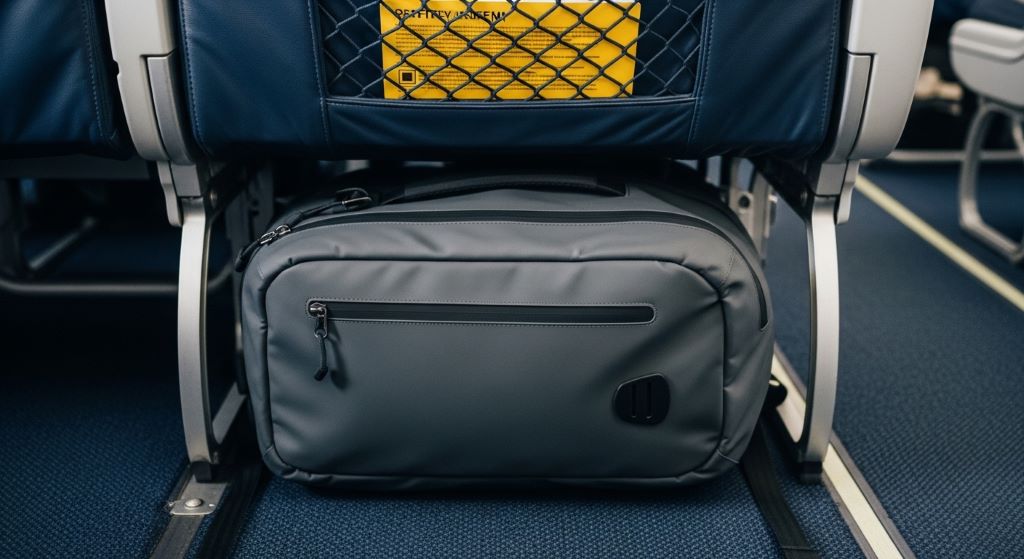
Most airlines allow passengers to bring two items on board. The first is a carry-on bag, which goes in the overhead bin. The second is a personal item, which goes under the seat in front of you.
A personal item is typically smaller than a carry-on. It can be a backpack, a handbag, a tote, a laptop bag, or a small duffel. The key requirement is that it must fit under the seat. That space is limited, so the bag must not be too wide, too tall, or too deep.
Airlines set their own rules for what counts as a personal item. Some are strict about dimensions. Others are more relaxed. However, it always pays to know the rules in advance so there are no surprises at the gate.
Why Airlines Have Size Rules
Airlines have size rules for practical reasons. The cabin has limited space. Every passenger needs room for their belongings. If everyone brought oversized bags, the overhead bins would fill up fast and under-seat space would become unusable.
Additionally, safety plays a role. Bags that are too large can block emergency exits or shift during turbulence. Therefore, airlines enforce size limits to keep passengers safe and the cabin organized.
Fees also come into play. Many budget airlines charge extra for bags that do not meet their personal item rules. These fees can be steep, especially when added at the gate. Knowing the rules ahead of time helps you avoid these unexpected costs.
How Airlines Measure Personal Items
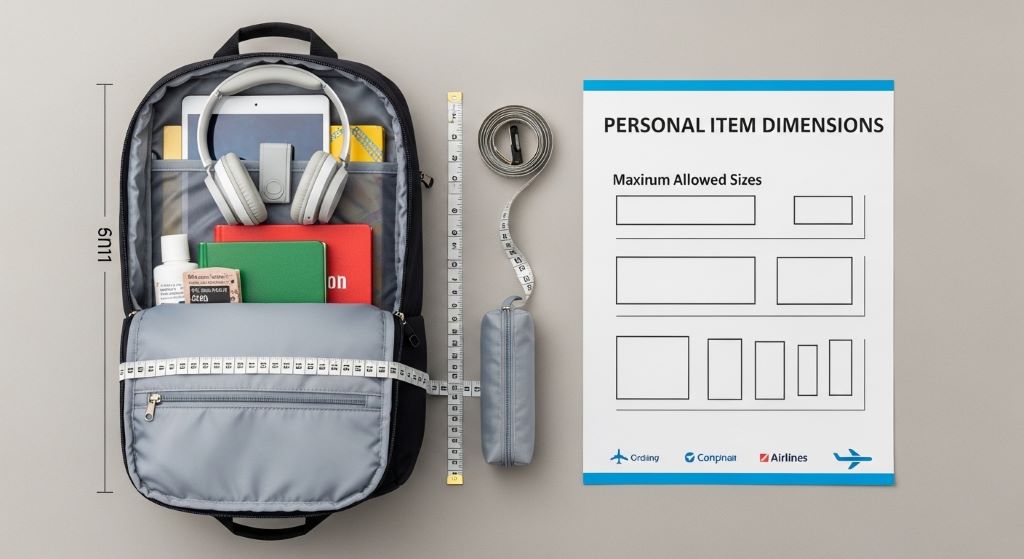
Airlines measure bags using three dimensions: height, width, and depth. These are often listed in the format of inches or centimeters. For example, a common size listed might be 18 x 14 x 8 inches.
It is important to measure your bag when it is fully packed. An empty backpack may look small, but once filled with clothes, shoes, and electronics, it can expand significantly. Therefore, always test your bag with everything inside before heading to the airport.
Some airlines use a sizing box at the gate. This is a metal frame that represents the maximum allowed dimensions. If your bag fits inside the frame, you are good to go. If it does not, you may be asked to check the bag and pay a fee.
Common Personal Item Dimensions Across Major Airlines
Different airlines allow different sizes for personal items. Here is a general overview of what several major carriers typically allow. Keep in mind that these can change, so always check directly with your airline before flying.
American Airlines generally allows personal items up to 18 x 14 x 8 inches. Delta Air Lines follows a similar guideline. United Airlines typically allows bags up to 17 x 10 x 9 inches for under-seat items.
Budget carriers tend to be stricter. Spirit Airlines, for example, allows a personal item of up to 18 x 14 x 8 inches for free, but this can change. Frontier Airlines has similar policies but enforces them more firmly at the gate.
International airlines vary widely. Ryanair in Europe is known for very strict personal item rules, often limited to a small bag that fits under the seat. Therefore, if you are flying internationally, pay close attention to the specific airline size limits for that carrier.
Choosing the Right Backpack as a Personal Item
Now that you understand the rules, how do you choose the right backpack? There are a few things to consider.
Look for Bags Designed for Travel
Many brands now make backpacks specifically designed to meet airline personal item requirements. These bags are labeled as personal item backpacks or underseat backpacks. They are built to maximize space while staying within common size limits.
Look for a bag with dimensions around 18 x 14 x 8 inches or smaller. This size works for most major airlines. Additionally, choose a bag that is slightly compressible. Soft-sided backpacks tend to squeeze into tight spaces more easily than rigid ones.
Prioritize Organization Over Capacity
A good travel backpack is not just about size. It is about how well it is organized. Look for multiple compartments. A dedicated laptop sleeve is useful. So are small pockets for cables, documents, and a water bottle.
When everything has a place, packing becomes faster and easier. You also avoid the temptation to overstuff the bag, which can push it past the allowed dimensions. Therefore, a well-organized bag helps you stay within limits naturally.
Think About Material and Weight
Heavy backpacks add to your overall luggage weight before you even put anything inside. Therefore, choose a bag made from lightweight materials like ripstop nylon or polyester. These fabrics are also durable and water-resistant, which is a bonus for travel.
Avoid bags with heavy metal frames or thick padding that adds unnecessary bulk. The goal is to carry as much as possible while keeping the bag light and compact.
How to Pack a Personal Item Backpack Smartly
Choosing the right bag is only half the challenge. Packing it well is equally important.
Start with the heaviest items at the bottom, close to your back. This includes your laptop, a book, or a small shoe. Distribute weight evenly so the bag does not pull to one side.
Use compression packing cubes for clothes. These small fabric cubes squeeze air out of your clothing and reduce bulk significantly. As a result, you can fit more items without exceeding carry on dimensions.
Place your most-needed items near the top or in an outer pocket. This includes your passport, phone charger, headphones, and snacks. You will want easy access to these during the flight without digging through the entire bag.
Additionally, wear your bulkiest items on the plane. A thick jacket and heavy shoes take up a lot of space in a bag. Wearing them saves that space for other essentials.
What Happens If Your Bag Is Too Big
If your bag does not meet the airline’s requirements, you have a few options. The gate agent may ask you to check the bag. This usually means paying a checked bag fee, which can range from $30 to $100 or more depending on the airline.
In some cases, you may be able to rearrange your belongings. If you are traveling with a companion who has extra space in their bag, you could transfer a few items. However, this is not always possible or practical.
The best way to avoid this situation is preparation. Measure your bag before you leave home. Check the airline’s website for their current personal item policy. Furthermore, arrive at the airport with enough time to address any issues without rushing.
Tips for Traveling with Just a Personal Item
Some travelers choose to bring only a personal item and skip the carry-on bag entirely. This is known as one-bag travel. It has real advantages.
You never have to wait at baggage claim. You board and exit the plane faster and also avoid checked bag fees on budget airlines. Additionally, moving through airports with a single small bag is much easier and less stressful.
To make this work, you need to pack light. Choose versatile clothing that can be mixed and matched. Limit toiletries to travel-size containers. Opt for digital versions of books and documents when possible.
One-bag travel takes practice. However, once you master it, it is hard to go back to hauling large suitcases around the world.
Checking Airline Policies Before Every Trip
Airline policies change. What was allowed last year may not be permitted today. Therefore, always check the airline’s official website before each trip. Look for the baggage policy page and find the personal item section.
Pay attention to the exact dimensions listed. Also check whether the airline uses inches or centimeters so you can measure accurately. Some airlines also list weight limits for personal items, which is worth noting.
If the policy is unclear, call the airline directly. A quick phone call can save you from an expensive surprise at the airport. It is also worth checking forums and travel blogs for recent traveler experiences with that specific airline.
Conclusion
Understanding personal item backpack size is a simple skill that makes a big difference. Airlines have clear rules about what you can bring on board, and those rules exist for safety and practical reasons. Knowing the airline size limits for personal items means you can pack confidently and travel without worry.
Choose a backpack designed for travel, pack it smartly, and always check the policy for every airline you fly. Whether you travel once a year or once a week, these habits will serve you well. With the right bag and the right knowledge, navigating airport rules becomes second nature. Travel lighter, move faster, and enjoy every journey more.
Frequently Asked Questions
What is the standard personal item size for most airlines?
Most major airlines allow personal items up to 18 x 14 x 8 inches. However, budget carriers and international airlines often have stricter limits. Always check with your specific airline before flying to confirm their current policy.
Can a backpack be used as a personal item on a flight?
Yes, a backpack is one of the most common types of personal items. As long as it fits within the airline’s size requirements and can slide under the seat in front of you, it qualifies as a personal item on most flights.
What happens if my personal item does not fit under the seat?
If your bag is too large to fit under the seat, the airline may require you to place it in the overhead bin. If the overhead bin is also full, you may be asked to check the bag and pay a fee. This is why it is important to size your bag correctly before you travel.
Do all airlines charge fees if your personal item is oversized?
Not all airlines enforce personal item rules with equal strictness. However, budget airlines like Spirit, Frontier, and Ryanair are known for strict enforcement and can charge significant fees at the gate. It is best to assume the rules will be enforced and pack accordingly.
Is a 40-liter backpack too large for a personal item?
In most cases, yes. A 40-liter backpack is typically too large to qualify as a personal item. It is more likely to be considered a carry-on bag. For a personal item, look for backpacks in the 20 to 25-liter range, which better align with standard carry on dimensions.
Related Topics:
What is Destination Travel In The World?