
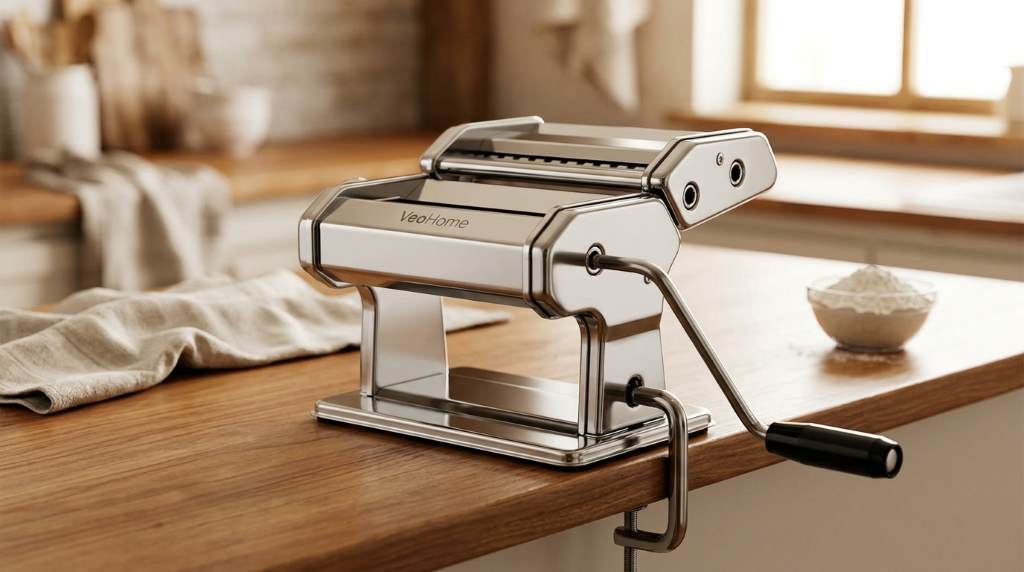
The VeoHome Pasta Maker is a strong choice for home cooks who want fresh pasta without electricity. It currently carries a 4.69/5 rating from 64 customer reviews, while its seven thickness settings add useful control. This home pasta machine review examines its design, performance, accessories, strengths, and limitations. The goal is simple: help you decide whether this manual pasta maker deserves space in your kitchen.
Key Takeaways
- VeoHome uses a manual stainless steel design with a table clamp for stability.
- Seven thickness settings provide useful control for different pasta recipes.
- The kit includes a drying rack, ravioli maker, cleaning brush, and hand crank.
- Two cutting options let you make different pasta widths at home.
- The machine needs no electricity, making it simple and portable around the kitchen.
- Manual cleaning requires more attention because the machine is not dishwasher safe.
VeoHome Pasta Maker: Quick Verdict
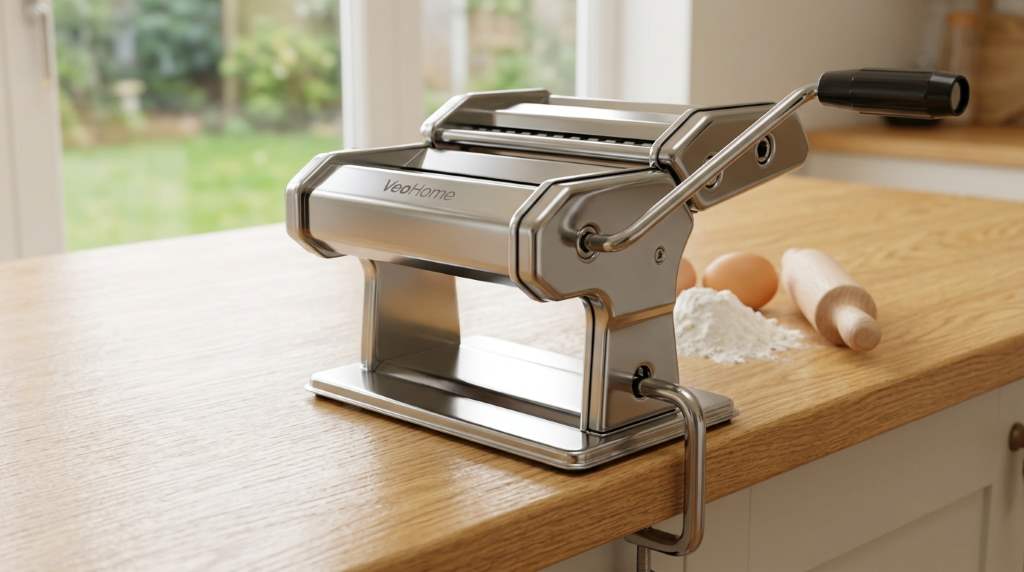
The VeoHome Pasta Maker earns its appeal through simplicity, versatility, and a surprisingly complete accessory package. It rolls and cuts fresh dough manually, giving you direct control throughout the process.
Moreover, the stainless steel construction gives the machine a more substantial feel than many lightweight alternatives. Its 2.9 kg weight also helps provide stability during repeated rolling and cutting.
The machine suits beginners, weekend cooks, families, and pasta enthusiasts who prefer hands-on preparation. However, users who prioritize speed and automation may prefer an electric pasta system instead.
VeoHome includes seven thickness settings, two cutting options, and a table clamp. The package also includes a pasta drying rack, ravioli maker, cleaning brush, and hand crank.
That combination matters because you receive more than a basic roller and cutter. Instead, you get most of the tools needed to move from dough preparation to finished pasta.
VeoHome Pasta Maker Features Worth Knowing
The machine’s feature set focuses on practical pasta preparation rather than unnecessary complexity. For broader kitchen planning ideas, these kitchen refurbishment elements can also help you plan suitable counter space.
Seven Adjustable Thickness Settings
The seven thickness levels represent one of the machine’s most useful features. You can progressively thin dough until it reaches the texture required for your chosen recipe.
For example, thicker sheets can work well for lasagna, while thinner sheets suit ravioli and delicate pasta. VeoHome recommends specific settings based on pasta type, giving beginners a useful starting point.
The adjustment system also encourages experimentation once you understand your dough. You can gradually change thickness instead of relying on one fixed setting for every recipe.
Two Pasta Cutting Options
VeoHome provides two cutting options for creating different pasta widths. This gives the machine more practical range than a simple dough sheeter.
You can prepare familiar styles such as spaghetti and fettuccine while using the roller for lasagna sheets. The available formats make the machine suitable for several everyday pasta dishes.
However, buyers should understand the machine’s scope before purchasing. It does not replace specialized equipment designed for a much wider range of pasta shapes.
Manual Hand Crank Operation
The hand crank keeps the machine completely independent from electrical power. Consequently, you can use it anywhere you have a stable work surface.
Manual operation also gives you tactile control over the dough. You can slow down when the sheet needs attention or maintain a steady rhythm during longer batches.
Still, manual rolling requires effort, especially when preparing pasta for several people. That tradeoff matters for anyone who regularly cooks large quantities.
Stainless Steel Construction
VeoHome builds the main machine from stainless steel, creating a sturdy and traditional appearance. The material also makes sense for a tool that handles flour, dough, and repeated mechanical movement.
The 2.9 kg weight adds substance without making the machine excessively difficult to move. Therefore, it can remain practical for countertop use and storage between cooking sessions.
Table Clamp for Better Stability
The included clamp secures the machine to your work surface during operation. This feature becomes especially valuable when you roll larger dough pieces.
A stable machine helps you maintain consistent pressure while turning the crank. It also reduces unnecessary movement that could make thin dough harder to manage.
How Well Does the VeoHome Pasta Maker Work?
The VeoHome works best when you treat pasta making as a process rather than a single machine operation. Proper dough preparation remains essential before the rollers can deliver consistent sheets.
First, prepare and knead the dough until it becomes smooth and elastic. Then let it rest for at least 30 minutes before beginning the rolling process.
Next, start at the widest setting and repeatedly pass the dough through the rollers. VeoHome recommends folding and rerolling the dough several times before progressively reducing thickness.
Afterward, move through the settings gradually instead of jumping directly to the thinnest level. This approach produces a more even sheet and reduces unnecessary strain on the dough.
The machine’s manual process also rewards patience. If the dough becomes sticky, use a light dusting of flour rather than adding excessive amounts.
What Beginners Should Expect
First-time users should expect a short learning curve rather than instant perfection. Dough hydration, flour choice, kneading, resting, and flouring all influence the final result.
Once you understand those variables, the machine becomes considerably easier to operate. Recent customer feedback also frequently describes the machine as easy to use and robust.
One 2025 reviewer specifically praised its quality and straightforward operation. Another described the included drying rack as particularly useful for regular fresh pasta preparation.
These experiences support the machine’s beginner-friendly positioning, although individual results naturally depend on technique. The strongest results come from learning the dough process alongside the machine.
Kitchen Setup and Storage
The machine measures approximately 21 × 21 × 16 cm, giving it a relatively compact footprint. Nevertheless, you need sufficient counter depth for comfortable hand-crank operation.
Before buying, measure your preferred work area and check whether the clamp can grip the surface securely. Modern kitchens with limited counter space should consider this requirement carefully.
For design inspiration, understanding how kitchen door styles evolved can also help when planning storage around countertop appliances.
Cleaning, Maintenance, and Everyday Care
Cleaning the VeoHome requires a slightly different approach from ordinary kitchen equipment. The manufacturer specifically advises manual cleaning rather than washing the machine with water.
After use, allow leftover dough to dry slightly when necessary. Then use the included cleaning brush to remove flour and dough from the rollers and cutters.
For additional pasta equipment, this guide to cleaning KitchenAid pasta attachments offers useful maintenance context. The same principle applies here: remove residue carefully without soaking mechanical components.
VeoHome also recommends using a small amount of dough to collect residue from the rollers. Discard that dough afterward instead of using it for cooking.
Why Cleaning Technique Matters
Dried flour and dough can accumulate around moving components when you skip routine cleaning. Over time, that buildup can make operation less smooth.
Therefore, spend a few minutes brushing the machine after every pasta session. Consistent maintenance usually requires less effort than removing heavily dried dough later.
Keep the machine dry between uses and store the accessories together. A dedicated storage location can also prevent small components from getting misplaced.
VeoHome Pasta Maker Pros
The VeoHome has several advantages that make its feature set particularly appealing for home pasta enthusiasts. Its strongest benefit comes from combining core functions with useful accessories.
- Manual operation: The machine requires no electricity and gives users direct control over rolling and cutting.
- Seven thickness levels: Multiple settings support different pasta recipes and dough thicknesses.
- Two cutting options: The cutters provide useful variety for everyday pasta preparation.
- Complete accessory package: The drying rack and ravioli maker expand what you can prepare.
- Stainless steel construction: The metal design provides a sturdy feel for repeated home use.
- Table clamp: The clamp helps keep the machine stable during rolling and cutting.
- Compact footprint: Its dimensions make storage easier than larger countertop pasta systems.
VeoHome Pasta Maker Cons
No manual pasta machine eliminates every inconvenience, and the VeoHome has several limitations worth considering. These drawbacks matter most when your cooking habits demand speed or automation.
- Manual effort: You must turn the crank throughout rolling and cutting.
- Learning curve: Beginners need practice to manage dough consistency and thickness effectively.
- Limited pasta shapes: The machine focuses on rolling, cutting, and ravioli rather than numerous specialized shapes.
- Manual cleaning: The machine cannot go into the dishwasher and requires careful brushing.
- Counter space: You need enough room to clamp and operate the machine comfortably.
- Batch preparation takes time: Larger quantities require repeated rolling, cutting, and drying.
Who Should Buy the VeoHome Pasta Maker?
The VeoHome makes the most sense for cooks who enjoy hands-on food preparation. It suits people who want fresh pasta without adding another powered appliance to the kitchen.
It also works well for families and couples who enjoy making meals together. The manual crank creates an interactive cooking experience that electric machines cannot replicate as easily.
Additionally, beginners can benefit from the machine’s straightforward design and multiple thickness settings. The included accessories reduce the need to purchase several separate pasta tools.
However, frequent high-volume cooks should consider their tolerance for manual work. If you regularly prepare large batches, an electric system may provide greater convenience.
Who Should Skip It?
You may want another option if convenience matters more than hands-on control. Electric pasta machines can reduce physical effort and speed up repetitive preparation.
You should also reconsider this model if you want many specialized pasta shapes. Its design concentrates on classic rolled sheets, common noodles, and ravioli preparation.
Finally, avoid treating the machine as a zero-maintenance appliance. Its manual cleaning requirements demand consistent attention after every cooking session.
VeoHome Pasta Maker vs. a Typical Electric Pasta Maker
The biggest difference comes down to control versus convenience. VeoHome gives you direct mechanical control, while an electric machine handles more repetitive work automatically.
Manual operation also removes dependence on electricity and reduces the number of powered components. That simplicity can appeal to cooks who prefer traditional kitchen tools.
On the other hand, electric machines generally suit people who value speed and repeatability. Therefore, your cooking style should determine which design makes more sense.
For occasional weekend pasta sessions, the VeoHome offers a compelling balance of capability and simplicity. For frequent large-batch production, consider whether manual operation will become tiring.
Practical Tips for Better VeoHome Pasta
Start with a reliable dough recipe and keep your flour ratio consistent between batches. Consistency makes it easier to understand how each thickness setting affects your pasta.
Always begin with the widest roller setting before moving toward thinner settings. This gradual approach helps develop an even sheet without forcing the dough through too quickly.
Use only enough flour to prevent sticking. Excess flour can dry the dough and create a rougher texture after cooking.
Keep unused dough covered while working on another portion. Exposed dough can dry quickly and develop rough edges that affect rolling.
After cutting, transfer fresh pasta to the included drying rack. Separating the strands helps reduce sticking before cooking or storage.
Finally, cook fresh pasta soon after preparation whenever possible. VeoHome states that fresh pasta can remain refrigerated for up to three days.
Final Verdict: Is the VeoHome Pasta Maker Worth It?
Yes, the VeoHome Pasta Maker is worth considering if you want an affordable, manual route into fresh pasta making. Its seven thickness settings, two cutters, clamp, drying rack, and ravioli maker create a well-rounded package.
Its biggest strength remains versatility without electrical complexity. Meanwhile, its biggest weakness involves the manual effort and careful cleaning that traditional pasta machines require.
For beginners, families, and hands-on cooks, those tradeoffs remain reasonable. If you prefer automated preparation or produce large quantities frequently, another design may serve you better.
Overall, VeoHome delivers the essential tools needed to make fresh pasta while keeping the process approachable. If that balance matches your cooking style, this machine deserves a place on your shortlist.
Ready to make fresh pasta at home? Compare your cooking habits, available counter space, and preferred pasta styles before choosing the VeoHome Pasta Maker.
Frequently Asked Questions
Is the VeoHome Pasta Maker good for beginners?
Yes, its manual design, seven thickness settings, and included accessories make it approachable for beginners.
Does the VeoHome Pasta Maker need electricity?
No, the machine uses a hand crank, so it operates without electrical power.
Can the VeoHome Pasta Maker make ravioli?
Yes, the package includes a ravioli maker alongside the rolling and cutting components.
Is the VeoHome Pasta Maker dishwasher safe?
No, VeoHome recommends manual cleaning and advises against washing the machine with water.
How many thickness settings does the VeoHome Pasta Maker have?
The machine provides seven adjustable thickness settings for different pasta preparation needs.