

Finding a timepiece that balances cutting-edge technology with the effortless, sun-soaked aesthetic of California is harder than it sounds. You want a device that tracks your coastal hikes, manages your busy schedule, and transitions seamlessly from a Malibu brunch to a Silicon Valley boardroom. The problem is that most tech gadgets look out of place against linen shirts and minimalist architecture. You need a watch that feels less like a gadget and more like a piece of jewelry. This guide breaks down exactly how to choose a premium smartwatch that complements the California lifestyle, focusing on design, durability, and functionality without sacrificing your personal style.
What Defines a “California Style” Smartwatch?
California style is not a single look; it is a philosophy of relaxed sophistication. It blends casual comfort with high-end quality, favoring natural materials, clean lines, and versatile pieces that work from day to night. When applied to a smartwatch, this means moving away from bulky, sporty rubber straps and aggressive, angular cases. Instead, you are looking for a device that prioritizes minimalist aesthetics, premium materials like titanium or polished steel, and interchangeable bands that allow for customization.
Unlike the tech-first approach of Silicon Valley or the fashion-forward trends of New York, the California aesthetic demands that the watch disappear into your lifestyle. It should look just as appropriate with a wetsuit as it does with a tailored blazer. This often involves choosing a watch with a thinner profile, a softer finish, and a display that mimics the look of a traditional analog dial when you want it to. The goal is to own a piece of tech that doesn’t scream “tech.”
Key Features to Prioritize for the Golden State
While style is the entry point, a premium smartwatch must also perform. The California lifestyle is active and outdoor-oriented, which dictates specific hardware and software requirements. You cannot simply buy the most expensive model; you must buy the most appropriate one for your specific routines.
Durability and Materials
The coastal environment is harsh on electronics. Salt air, sand, and intense UV rays can degrade cheap materials quickly. Look for watches with sapphire crystal glass, which is highly scratch-resistant, and cases made from grade 2 or grade 5 titanium. Titanium is not only lighter than steel but also corrosion-resistant, making it ideal for beach climates. Avoid aluminum models if you plan on surfing or hiking regularly, as they are prone to dents and scratches. The watch should ideally have a water resistance rating of at least 5 ATM (50 meters) to handle swimming and rain, though 10 ATM is better for high-impact water sports.
Battery Life and Charging
There is nothing stylish about a dead watch. Battery life is a critical differentiator between standard smartwatches and premium ones. Many premium models now offer multi-day battery life, which is essential for weekend getaways to Yosemite or Catalina Island where charging might be inconvenient. Consider whether the watch uses a proprietary magnetic charger or supports standard Qi wireless charging. For the frequent traveler, a watch that charges quickly—offering a full day of power in just 15–30 minutes—is a significant advantage. Do not underestimate how frustrating a daily charging ritual becomes after the novelty wears off.
Health and Outdoor Tracking Accuracy
Californians are known for their focus on wellness. Your smartwatch needs to do more than count steps. Look for advanced sensors that track heart rate variability (HRV), blood oxygen levels, and sleep stages. For outdoor enthusiasts, dual-band GPS is non-negotiable. This uses multiple frequency bands to improve accuracy in challenging environments like dense forests or urban canyons. If you hike in the Santa Monica Mountains or run along the coast, accurate GPS mapping is vital for tracking your route and pace. A built-in compass and altimeter are also useful for trail navigation.
Comparing Top Materials: Titanium vs. Stainless Steel vs. Aluminum
Choosing the right case material is the most significant decision you will make regarding both aesthetics and longevity. Each material offers a distinct trade-off between weight, durability, and price.
| Material | Weight | Durability | Best For | Style Vibe |
|---|---|---|---|---|
| Titanium | Lightweight | Excellent (Corrosion Resistant) | Outdoor activities, daily wear | Matte, understated luxury |
| Stainless Steel | Heavy | Very Good | Formal events, office wear | Shiny, classic, polished |
| Aluminum | Lightest | Fair (Prone to scratches) | Gym workouts, casual use | Sporty, colorful, casual |
For the California lifestyle, titanium often wins because it offers the durability of steel at half the weight. This makes it comfortable for all-day wear, especially during activities. However, if your style leans more toward classic luxury and you spend most of your time in formal settings, the polished weight of stainless steel feels more substantial and traditional. Aluminum is a budget-friendly option, but it rarely feels “premium” and may not withstand the rigors of outdoor life.
How to Choose the Right Band for Versatility
The band is the quickest way to transform your watch from a fitness tracker to a fashion accessory. A premium watch should offer an easy-to-change system that does not require tools. This allows you to swap bands based on your daily activities.
- Sport Bands: Made of fluoroelastomer or silicone, these are perfect for workouts and beach days. They are sweat-proof and easy to rinse off.
- Leather Bands: Opt for weather-resistant leather or woven nylon for a casual lunch or creative agency meeting. They add warmth and texture to the watch face.
- Metal Link Bracelets: These are for evenings out or client presentations. A titanium or steel link bracelet elevates the watch to a piece of fine jewelry.
When selecting a watch, check the lug width and the availability of third-party bands. A watch with a proprietary connection system (like Apple’s) has a massive ecosystem of affordable bands. A watch with standard 20mm or 22mm lugs allows you to use any traditional watch strap, offering even more flexibility for a truly unique look.
Display Technology: OLED vs. MIP vs. E-Ink
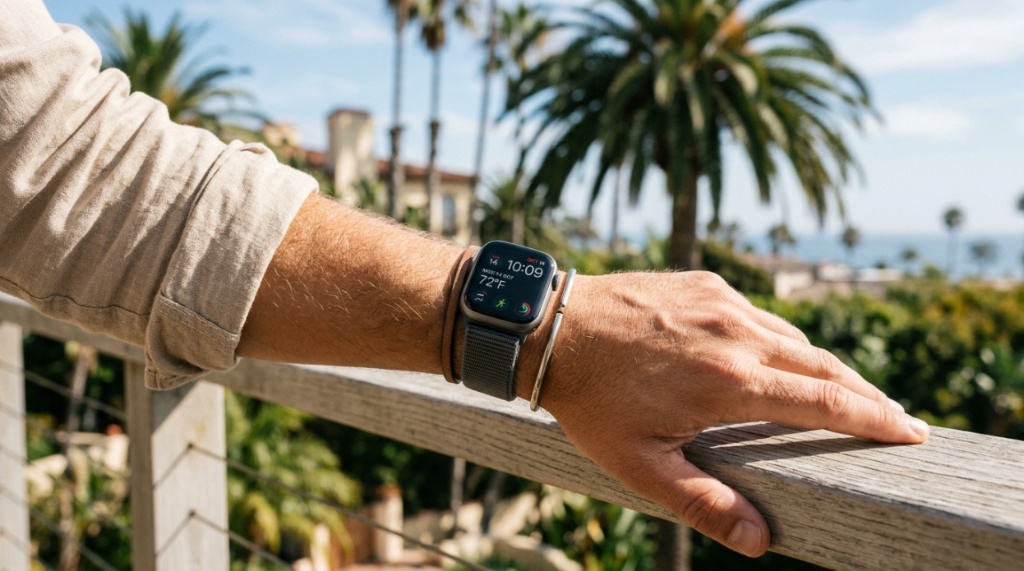
The screen is what you interact with all day, and the technology behind it affects visibility and battery life significantly. Most premium watches use AMOLED displays, which offer vibrant colors, deep blacks, and high brightness. These are excellent for viewing maps and photos but can be power-hungry, especially with an always-on display enabled.
Alternatively, some rugged or outdoor-focused watches use Memory-in-Pixel (MIP) displays. These are reflective, meaning they get more visible in direct sunlight—a huge plus for California’s sunny climate. They consume very little power, leading to significantly longer battery life, but they lack the vibrant color saturation of AMOLED. If you spend most of your time outdoors and prioritize battery life over visual flair, a MIP display is a smart choice. If you want a watch that looks beautiful indoors and supports rich watch faces, AMOLED is the way to go.
Operating Systems and Ecosystem Compatibility
Your choice of smartwatch is heavily dictated by your smartphone. The two main ecosystems are Apple (watchOS) and Google (Wear OS). There is also a third category of proprietary operating systems used by brands like Garmin and Suunto, which focus heavily on fitness and outdoor metrics.
If you are an iPhone user, an Apple Watch offers the most seamless integration. If you use an Android phone, a Wear OS watch (like the Google Pixel Watch or Samsung Galaxy Watch) is your best bet for full functionality. However, if your primary goal is fitness and you care less about app integration, a Garmin or a watch from a dedicated sports brand might serve you better. These often have superior battery life and more detailed training metrics, though they lack the polished app store experience of the major players. For a comprehensive look at the best options currently available that fit this specific aesthetic and functional criteria, you can explore this curated list of the premium smartwatch California style.
Common Mistakes to Avoid When Buying
Many buyers make errors that lead to buyer’s remorse. Being aware of these pitfalls can save you time and money.
Ignoring the “Always-On” Display Feature
In a premium watch, the screen should always be visible. A raise-to-wake gesture is convenient, but it feels cheap when you are in a meeting and have to flick your wrist to see the time. Ensure the watch has an excellent always-on display mode that mimics a traditional watch face without draining the battery excessively.
Overlooking the Charging Cable
Losing a proprietary charging cable is a nightmare. Many brands use magnetic pucks that are specific to their model. Check if the watch supports standard Qi wireless charging, which allows you to use any compatible charger. This is a small detail that makes a huge difference in daily usability.
Prioritizing Features You Won’t Use
Do not pay extra for LTE cellular connectivity if you always carry your phone. Similarly, if you do not ski or dive, you do not need a watch with extreme depth ratings or ski maps. Focus your budget on better materials, longer battery life, and a better display rather than niche sensors you will never activate, Looking for more budget-friendly options that still offer robust wellness monitoring? Check out our guide to Find the Best Health Tracking Watch Under $100.
Frequently Asked Questions
Is a premium smartwatch worth the higher price compared to mid-range models?
Yes, if you value materials and longevity. The higher price typically buys you sapphire glass, titanium or steel cases, and better battery technology. These watches also tend to receive software updates for longer periods, ensuring your investment lasts several years rather than being obsolete in 18 months.
Can I wear a premium smartwatch while swimming in the ocean?
Yes, but you should rinse it with fresh water afterward. Salt water can corrode the charging contacts and the speaker grille over time. Look for a watch with a water resistance rating of at least 5 ATM for swimming, and ensure the band is also salt-water resistant, like fluoroelastomer or titanium.
How important is GPS accuracy for hiking?
Very important. If you hike in areas with heavy tree cover or near tall buildings, standard GPS can be inaccurate. Look for dual-band or multi-band GPS (L1+L5 frequencies). This provides centimeter-level accuracy, ensuring you stay on the right trail and get accurate distance readings.
What is the ideal battery life for a premium smartwatch?
For a premium lifestyle watch, aim for at least 2 days of battery life with the always-on display enabled. This allows you to track sleep without worrying about charging every night. If you are an ultra-marathoner or multi-day backpacker, you may need to look at specialized watches that offer 14+ days of battery life, though they often sacrifice smart features.
Can I use a smartwatch with an iPhone if it is not an Apple Watch?
Yes, but with limitations. Wear OS watches and Garmin watches work with iPhones, but you lose the ability to reply to messages directly from the watch in some cases, and certain health data may not sync to Apple Health. You will also miss out on seamless handoff features like unlocking your Mac. For the best experience, an Apple Watch is recommended for iPhone users.
Conclusion
Selecting the right premium smartwatch for the California lifestyle is about finding the intersection of form and function. It requires looking beyond the spec sheet to consider how the device feels on your wrist, how it looks with your wardrobe, and how it performs in the specific environments you frequent. Prioritize titanium or steel construction for durability, ensure the battery life matches your travel habits, and choose a display that is readable in bright sunlight. By focusing on these core elements—materials, battery, and ecosystem—you will find a watch that is not just a piece of technology, but a reliable companion for your daily adventures. Take your time, compare your options, and invest in a piece that you will be proud to wear for years to come.