
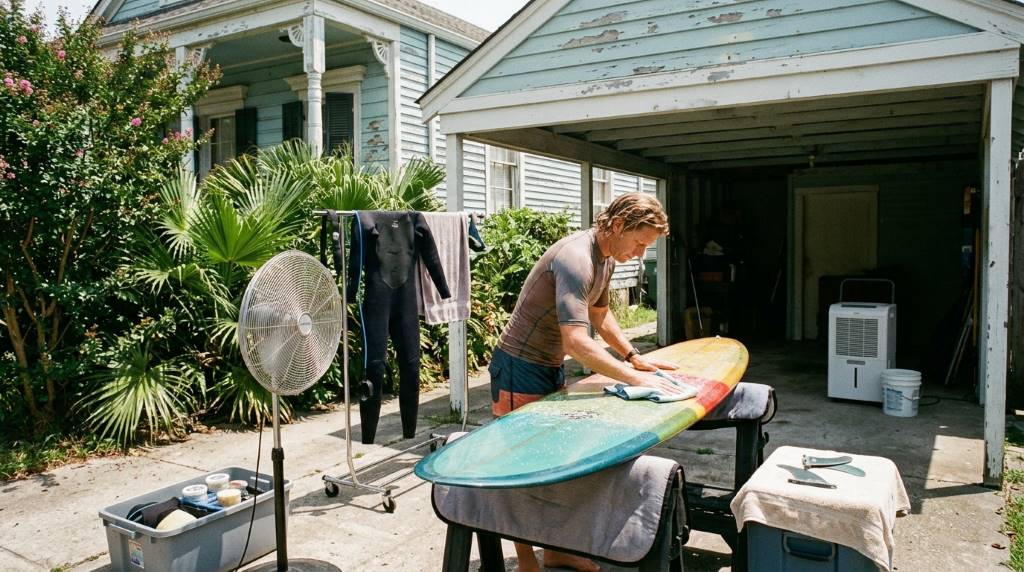
Summer in New Orleans brings intense humidity levels that often stay above 75% during peak coastal months. According to weather data from the National Weather Service, Louisiana ranks among the most humid states in the United States for much of the year. These conditions create serious problems for surfers because moisture can quickly damage boards, wetsuits, fins, electronics, and storage bags. Many local surfers also struggle with corrosion, mold, and weakened adhesives after repeated beach exposure. Therefore, understanding equipment care becomes just as important as wave selection during summer surfing trips. Smart storage methods, proper rinsing habits, and even preventing phase separation in boats can help extend the life of expensive surf gear.
Why New Orleans Humidity Creates Serious Surf Gear Problems
New Orleans sits close to the Gulf Coast, so warm air constantly carries moisture inland. As a result, surf equipment rarely gets enough time to dry completely between sessions. Saltwater exposure then combines with trapped humidity and accelerates corrosion on metal components. Surfboard fins, leash swivels, zippers, and wax tools often show damage within weeks. Many surfers underestimate how quickly moisture spreads inside storage spaces and vehicles.
Humidity also weakens surfboard adhesives and foam integrity over time. Consequently, boards stored in hot garages often develop soft spots and delamination. Many local riders improve durability by learning proper surf leash buying techniques because lower-quality gear absorbs moisture faster. Fabric items like board bags and wetsuits can also trap bacteria when they remain damp for long periods. This creates unpleasant odors and eventually breaks down stitching and elastic materials.
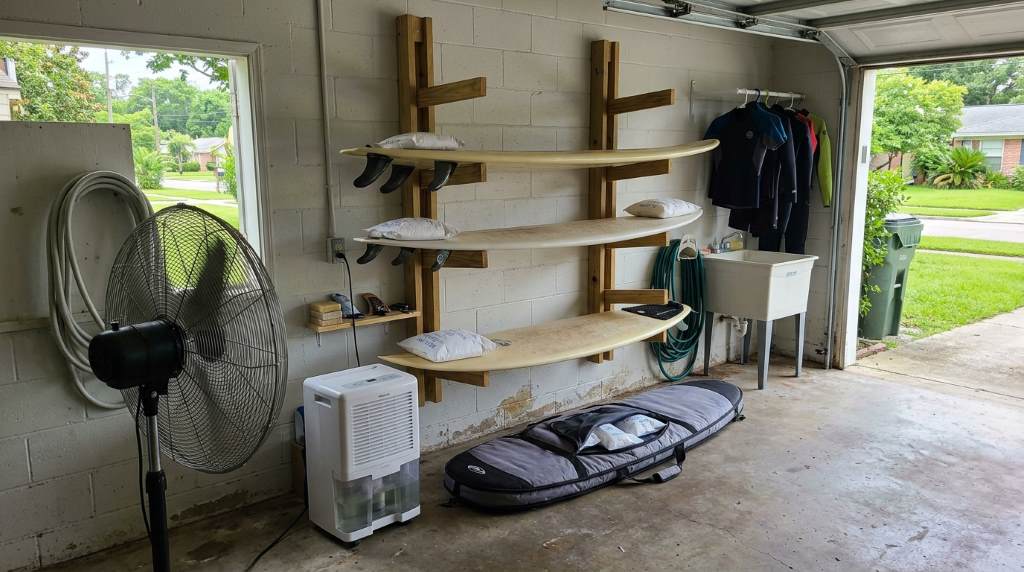
Electronics face additional risks during Louisiana summers. Waterproof watches, surf cameras, and GPS devices often collect internal condensation after repeated temperature shifts. Even sealed compartments can fail when hot air cools rapidly at night. Therefore, many experienced Gulf Coast surfers use silica packs inside gear cases. Small preventive steps often save hundreds of dollars in replacement costs.
Best Storage Methods for Surf Equipment in Humid Conditions
Choose Climate-Controlled Storage Areas
Indoor climate-controlled storage dramatically reduces humidity exposure for surf equipment. Air-conditioned spaces maintain lower moisture levels and prevent mold growth on soft gear. Moreover, controlled temperatures protect surfboard resin from expansion and cracking. Many surfers in New Orleans convert spare closets into small gear rooms for better airflow. Simple household dehumidifiers also help maintain safer storage conditions.
Garage storage often causes hidden moisture damage because humidity accumulates overnight. Consequently, surfboard bags may remain damp even after boards appear dry on the surface. Local surfers often improve protection by using proper summer surf clothing choices that dry faster after sessions. Mesh storage racks also allow airflow underneath equipment instead of trapping moisture against walls or floors. Better circulation keeps fabrics fresher and reduces mildew buildup.
Keep Boards Elevated Off Concrete Floors
Concrete floors absorb moisture during humid weather and slowly release it into nearby equipment. Therefore, surfboards should never rest directly on garage or shed flooring. Elevated racks help improve airflow while reducing trapped condensation underneath boards. Wooden wall mounts or padded stands work well for most surf setups. This simple adjustment can significantly reduce long-term moisture damage.
Soft racks also help prevent pressure dents that become worse in humid temperatures. Additionally, vertical storage positions allow water to drain more effectively after rinsing sessions. Many experienced surfers rotate stored boards every few weeks for even exposure. Consistent positioning reduces stress on foam cores and fiberglass layers. Proper storage habits often extend surfboard lifespan by several seasons.
How Saltwater and Humidity Accelerate Corrosion
Salt residue attracts airborne moisture even after equipment appears dry. As a result, corrosion continues long after surfers leave the beach. Metal leash swivels, fin screws, and roof rack hardware usually show the first signs of rust. Many Gulf Coast surfers mistakenly ignore minor discoloration until components seize completely. Routine rinsing remains one of the most effective defenses against corrosion.
Freshwater rinses should happen immediately after every surf session. However, quick sprays alone rarely remove hidden salt buildup around screws or seams. Many surfers improve protection by following detailed guides on keeping surf gear protected throughout summer travel. Soft brushes also help remove residue from textured traction pads and fin boxes. Thorough cleaning prevents salt crystals from attracting additional moisture overnight.
Metal corrosion becomes worse inside parked vehicles during Louisiana summers. Temperatures inside cars often exceed 120 degrees Fahrenheit during afternoon heat. Consequently, trapped humidity creates a miniature steam chamber around wet gear. Surfers should crack windows slightly or remove equipment immediately after sessions. Small ventilation improvements greatly reduce hidden moisture accumulation.
Practical Drying Techniques for Surf Gear
Use Indirect Airflow Instead of Direct Heat
Many surfers damage equipment by placing wet gear directly under strong sunlight. Excessive heat weakens adhesives and can warp fiberglass structures over time. Instead, indirect airflow provides safer and more effective drying conditions. Fans positioned near shaded drying areas help circulate air evenly across surfaces. This method reduces both odor buildup and material stress.
Wetsuits should always hang inside out during the first drying phase. After the interior dries, surfers can reverse the suit for outer drying. This process prevents moisture pockets from remaining trapped in seams and folds. Wide hangers also reduce shoulder stretching compared to thin wire hangers. Proper drying techniques preserve flexibility and insulation longer.
Rotate Equipment During Drying
Boards and accessories dry unevenly when left in one position for hours. Therefore, rotating equipment periodically helps expose damp sections to airflow. Many surfers overlook fin boxes and leash plugs where moisture often remains hidden. Small towels can absorb excess water from these tight areas before storage. Consistent rotation prevents hidden mildew growth inside gear compartments.
Board bags require special attention because padded materials trap humidity deeply. Consequently, many experienced surfers unzip bags completely after every session. Turning bags inside out for several hours also improves evaporation rates. Some Gulf Coast surfers even use portable camping fans inside storage bags overnight. These uncommon techniques help prevent lingering mildew odors.
Protecting Surfboards from Delamination in High Humidity
Delamination occurs when fiberglass layers separate from the foam core beneath the surface. High humidity combined with heat creates ideal conditions for this problem. Water vapor expands inside tiny cracks and weakens adhesive bonds over time. Therefore, small dings should receive repairs immediately after discovery. Ignoring minor damage often leads to expensive structural repairs later.
White or reflective board covers help reduce heat absorption during transport. Dark-colored bags absorb more solar heat and increase internal temperatures rapidly. Many surfers also loosen roof rack straps slightly during extreme heat to reduce pressure stress. Excessive compression weakens fiberglass layers faster in humid conditions. Careful transport habits protect boards just as much as proper storage.
Another overlooked issue involves trapped moisture inside traction pads. Water often seeps beneath older pads and remains hidden for weeks. Consequently, adhesive breakdown accelerates around the tail section of surfboards. Periodic pad removal and cleaning can prevent deeper foam damage. This maintenance step rarely appears in standard surfing blogs yet proves valuable in humid Gulf climates.
Humidity Protection for Surf Electronics and Accessories
Surf cameras and waterproof speakers still require maintenance despite their protective ratings. Humidity slowly weakens seals and increases condensation risks inside electronic housings. Therefore, accessories should dry fully before charging or sealing into cases. Battery compartments also benefit from occasional inspection for moisture residue. Preventive care helps avoid sudden failures during surf trips.
Silica gel packets remain one of the cheapest and most effective humidity solutions available. Many surfers place packets inside board bags, camera cases, and glove compartments. These packets absorb excess moisture before condensation develops on sensitive surfaces. Replacing them every few months improves effectiveness significantly. Small moisture barriers often prevent expensive electronic replacements.
Portable waterproof containers also help during sudden Gulf Coast rainstorms. Afternoon storms frequently appear with little warning during Louisiana summers. Consequently, surfers should carry sealed storage containers for phones and keys. Hard-shell waterproof cases provide better long-term protection than thin plastic pouches. Reliable storage solutions reduce both water and humidity exposure.
Creating a Surf Gear Maintenance Routine
Consistent routines make humidity protection easier and more effective. Surfers who clean gear immediately after sessions experience fewer long-term equipment problems. Even simple habits like towel drying metal parts reduce corrosion dramatically. Scheduled maintenance also helps identify hidden damage before it worsens. Small preventive actions often save significant repair expenses later.
A weekly maintenance checklist can simplify equipment care during busy surf seasons. Many local surfers follow routines similar to these:
- Rinse all gear with freshwater after each session
- Inspect surfboard dings and cracks weekly
- Air dry wetsuits completely before storage
- Replace rusted screws and metal components quickly
- Use moisture absorbers inside storage spaces
- Rotate stored boards every few weeks
Monthly deep cleaning also helps remove hidden salt deposits and bacteria buildup. Additionally, organized storage systems reduce clutter and improve airflow around equipment. Surfers who maintain routines usually spend less money replacing damaged gear. Consistency matters more than expensive cleaning products. Effective care mostly depends on discipline and awareness.
Local Climate Challenges Unique to New Orleans Surfers
New Orleans surfers face environmental conditions different from many traditional surf regions. Coastal marsh humidity creates nearly constant moisture exposure throughout summer. Afternoon thunderstorms then add sudden rain and rapid temperature shifts. These changing conditions create repeated expansion and contraction inside surf materials. Equipment endures far more environmental stress than many surfers realize.
Flood-prone neighborhoods also create unique storage challenges for local residents. Many garages experience elevated moisture even without direct flooding events. Therefore, raised shelving systems become especially valuable in low-lying areas. Waterproof bins can protect accessories during sudden weather emergencies. Local climate awareness helps surfers prepare more effectively.
Another uncommon challenge involves airborne organic material from nearby wetlands. Fine particles often settle on damp surf equipment and encourage mold growth faster. Consequently, gear stored near open windows may collect mildew despite appearing clean. Air purifiers and enclosed storage containers help reduce this problem significantly. This regional factor rarely receives attention in national surfing guides.
Conclusion
High humidity during surfing summer in New Orleans, LA creates serious risks for boards, wetsuits, electronics, and accessories. However, proper storage, consistent rinsing, controlled airflow, and moisture prevention strategies can dramatically reduce equipment damage. Surfers who act early often avoid expensive replacements and enjoy better gear performance throughout the season. Local climate awareness also helps riders adapt maintenance routines more effectively. For additional guidance on keeping equipment in top condition, explore this helpful resource on surf gear maintenance solutions and start protecting your investment today.
FAQs
How often should surfers clean equipment during humid summers?
Surfers should rinse and dry all equipment after every session to prevent moisture buildup.
Can humidity damage surfboards even without direct water exposure?
Yes, trapped moisture in hot environments can weaken adhesives and cause delamination over time.
What is the best place to store surf gear in New Orleans?
Climate-controlled indoor storage areas provide the best protection against humidity damage.
Do waterproof electronics still need humidity protection?
Yes, humidity can still create internal condensation and weaken protective seals gradually.
Why do surfboard bags develop mildew so quickly?
Padded materials trap moisture deeply and often remain damp long after surfing sessions end.