
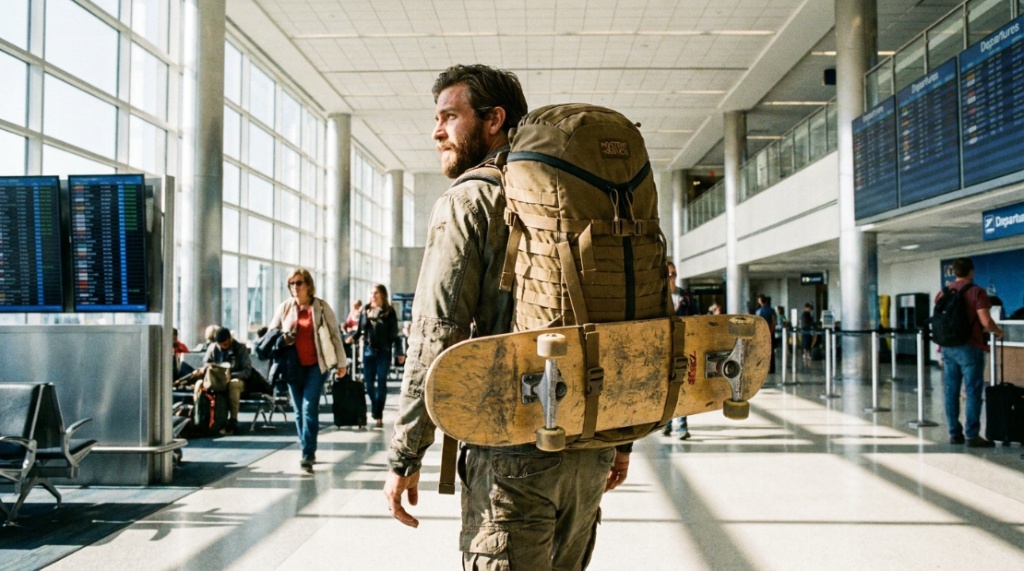
There’s a specific kind of frustration that comes from trying to navigate an airport terminal with a deck tucked under one arm, a laptop bag slung over the other, and a duffel bag dragging across the floor. You might be heading out for a weekend session in a new city or flying across the country to chase better weather. The core problem is that standard backpacks simply aren’t built to carry a skateboard securely, and most skateboard-specific options fail at the “travel” part of the job. A true skateboard travel backpack needs to handle your gear *and* your board without turning your commute into a logistical nightmare. This guide breaks down exactly what to look for, helping you avoid the common pitfalls that lead to broken straps, scratched decks, and wasted money.
Key Takeaways
- Not all skateboard backpacks are travel-ready; prioritize padded laptop compartments and luggage pass-throughs for airport use.
- Carrying style matters: choose between vertical straps for portability and horizontal straps for stability, but never buy a backpack with flimsy buckles.
- Storage capacity should match your trip length; a 20L pack is for daily commutes, while a 30L+ pack is necessary for multi-day travel.
- Durability is non-negotiable; look for high-denier nylon or polyester and reinforced stitching by the truck anchors.
- Always measure your deck width against the backpack’s carrying system to ensure a snug, rattle-free fit.
Why a Standard Backpack Won’t Cut It
If you are considering using a regular hiking backpack or a school bag, stop right there. While you can technically stuff a deck inside a large main compartment, doing so ruins the pack’s internal organization. More importantly, the weight distribution is terrible. A skateboard is wide and heavy, and when it’s not secured against your back properly, it will swing side to side, pulling on your shoulders and throwing off your balance. This is not just uncomfortable; it is dangerous when you are walking through busy transit hubs or navigating narrow airplane aisles
A dedicated skateboard travel backpack solves this by anchoring the deck to the exterior of the pack. This keeps the weight of the board close to your spine, maintaining a natural center of gravity. It also separates your dirty, gritty wheels from your clean clothes and delicate electronics.
The Anatomy of a Travel-Ready Skateboard Pack
When you start shopping, you will notice that most skate backpacks look similar at a distance. The difference lies in the details. To find the ultimate travel companion, you need to evaluate the pack based on three major criteria: how it carries the board, how much it holds, and how it protects your gear.
Vertical Straps vs. Horizontal Straps vs. Side Pockets
This is the most critical decision. There are three primary ways backpacks carry boards:
- Vertical Straps (Front Loading): The board slides down through two loops or straps on the front of the bag, resting vertically. This is the best option for travel because it keeps the board out of the way when you set the bag down. It also prevents the board from hitting people behind you in crowded spaces.
- Horizontal Straps (Back Loading): The board is secured across the front via two compressions straps. This is easier to access quickly, but the board sticks out on both sides. This makes the bag significantly wider and awkward to fit into overhead bins or under airplane seats.
- Side Pockets/Skate Sleeves: Some bags feature a specialized sleeve on the side of the pack. While convenient for holding a board, this adds significant width on one side and often throws off the balance of the bag.
Our Recommendation for Travel: Look for a backpack with vertical straps that cinch tightly. They offer the most compact profile for navigating tight spaces.
Assessing the Closures and Buckles
Skateboard straps take a beating. You are constantly pulling the board in and out, and the friction of the grip tape against the straps can wear down even the toughest webbing. Do not buy a bag with plastic cinch buckles that rely on pressure alone. Eventually, they will slip. Look for:
- Metal or reinforced plastic buckles: These must “click” with confidence and require a deliberate squeeze to release.
- Elastic retention straps: Some packs use a bungee system. While easy to use, bungees lose elasticity over time and can flap around. A solid nylon strap with a buckle is much more reliable for securing your board during baggage handling.
- Strap keepers: Ensure the excess strap material can be rolled up and secured, preventing it from snagging on conveyor belts or getting caught in escalators.
Storage and Compartmentalization: The Travel Test
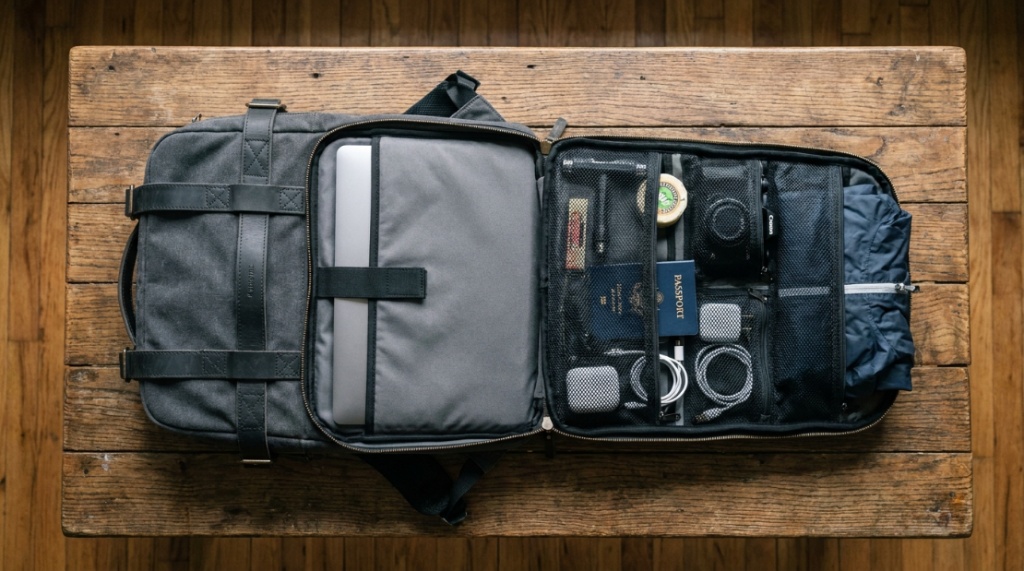
Now we get to the “travel” part of the title. A skateboard backpack for the park can have just one big pocket. A travel backpack needs a place for everything. Here is the minimum spec you should look for when reading product descriptions.
The Laptop and Tech Safehouse
Trusting your MacBook or tablet to a soft, flimsy sleeve is risky. A proper travel pack needs a dedicated, suspended laptop compartment. This means the laptop sits in a pocket that is raised off the bottom of the bag, protecting it from impact if you set the bag down hard. Ideally, this compartment should open from the side or back (clamshell opening) so you can access your electronics without unpacking your t-shirts.
Capacity and Volume
Pack volume is measured in liters. Here is a quick guide to what you can expect:
| Volume | Travel Use Case | What Fits |
|---|---|---|
| 20L – 25L | Day trips and carry-on essentials | A deck, a 13″ laptop, a hoodie, a water bottle, and small toiletry kit. |
| 25L – 35L | Weekend getaways | Everything above, plus a couple of changes of clothes and skate shoes. |
| 35L+ | Long-term travel/Work trips | Fits a deck, 15″ laptop, multiple outfits, and tech accessories. |
Don’t forget the luggage pass-through. If you are a frequent flyer, a horizontal strap on the back panel that allows you to slide the backpack over the handle of your rolling suitcase is a game-changer. It turns your backpack into a “personal item” and saves you from back pain during long layovers.
Easy-Access Pockets for Airport Security
Airport security is a hassle. If you have to dig to the bottom of your bag for your phone, wallet, or boarding pass, you will be that person holding up the line. Look for a pack with a “quick-stash” pocket on the side or top. This pocket should be large enough to hold a passport and phone but not so large that things get lost in it,Whether you are prepping your gear for a cross-country flight or looking for a compact daily carrier that transitions seamlessly to street sessions, finding the right hardware setup makes all the difference. For riders shopping for gear locally or looking for alternative setups to pack on regional trips, you might also want to check out this affordable skateboard with handle in florida.
Material Durability and Weather Resistance
Your board is dirty. The ground is dirty. Airport tarmacs are dirty. Your backpack needs to survive being thrown around. When checking the specs, look for fabric weights. Avoid anything less than 600D polyester. For high-end durability, look for 840D Ballistic Nylon or Cordura. These materials resist abrasion from grip tape and are tough enough to survive the rough-and-tumble environment of commercial travel.
Furthermore, consider the weather. If you get caught in the rain at the gates, your gear is vulnerable. Many skate packs use standard canvas, which soaks up water like a sponge. Look for a backpack that either has a water-resistant coating (often listed as a PU coating on the inside) or includes a rain cover that pulls out of a hidden pocket.
Comfort and Fit Under Load
A heavy skateboard plus a laptop plus clothes gets heavy fast. If the backpack has terrible ergonomics, you will be in severe pain before you even reach security.
Ventilated Back Panels
Your back is going to sweat. There is no way around it if you are carrying a board. However, a good pack will include a “trampoline” back panel. This is a mesh layer that pulls the bag away from your body, allowing air to flow. This is crucial if you live in warm climates or are walking quickly between terminals.
Load Lifter Straps
Look at the top of the shoulder straps where they meet the bag. If there is a small angled strap connecting them to the top of the pack, these are “load lifters.” When you tighten these, they pull the weight of the pack inward toward your shoulders, stopping the bag from sagging away from your back. This makes a massive difference when carrying heavy skate tools or multiple decks.
Common Mistakes to Avoid When Buying
The market is saturated with cheap bags, and it is easy to make a mistake. Here are three errors most travelers make when buying their first skate travel pack:
- Ignoring the grip tape factor: Grip tape is essentially sandpaper. If the backpack has fabric straps on the side where the board rests, the rough surface will wear holes into the fabric over time. Ensure the board sits on a leather or rubberized patch.
- Buying for style over function: Skateboard brands often release “lifestyle” backpacks that look cool but have terrible stitching. Always check if the bag has a dedicated compression system rather than just a bungee cord.
- Forgetting about thermal protection: If you are carrying a hydration bladder or electronics, look for a pack with some thermal lining to protect against extreme temperature changes in aircraft cargo holds.
Organizing Your Gear: A Step-by-Step Strategy
Once you buy the perfect pack, how you fill it matters. Here is the best method to pack a skateboard travel backpack:
- Bottom Layer (Heavy items): Place skate tools, bearings, and shoes at the bottom of the main compartment. This creates a stable base.
- Middle Layer (Soft items): Roll your clothes tightly and stack them in the middle. Rolling compresses air and prevents wrinkles.
- Top Layer (Essentials): Keep a lightweight jacket or sweater on top to pad the electronics if the bag is tossed.
- Access the Tech: Use the side or rear laptop zipper to access your computer independently of the main clothes compartment. This is the biggest advantage of a “travel” pack versus a “skate” pack.
- Straps Down: Slide the board into the straps and tighten them only enough to hold the deck securely. Over-tightening can stress the seams.
Frequently Asked Questions
Can I use a skateboard backpack as a carry-on for flights?
Yes, most skateboard travel backpacks are designed to fit in overhead bins. However, you must check the specific dimensions of the bag against your airline’s size limits. Keep in mind that the deck hanging on the front of the bag consumes storage space. To go through security, you will often need to detach the board and put it through the X-ray machine separately.
Is it better to carry my board vertically or horizontally?
For travel, vertical is almost always better. A board carried vertically (straps at the top and bottom of the deck) keeps the profile of the backpack slim. Horizontal straps widen the bag by at least 22 inches (deck length), making it nearly impossible to navigate train aisles or escalators without hitting others.
How many boards can a standard travel backpack hold?
Most travel skate backpacks are designed to hold one standard deck (up to 8.5 inches wide). Some “wide” versions can accommodate 9-inch decks. Very few travel bags can hold two complete boards because doing so doubles the weight and makes the bag too wide for carry-on compliance. If you plan to travel with two boards, you may need a specialized case rather than a backpack.
How do I stop the board from scratching my backpack?
When sliding a skateboard into the retention straps, the grip tape will inevitably rub against the pack. To prevent abrasion, ensure the contact points (usually the lower corners of the board) land on reinforced leather or synthetic suede patches. If your backpack does not have these patches, you can apply clear skate rail tape to the back of the deck to minimize friction damage.
Are wheelie bags or backpack hybrids worth it?
Only if you are traveling primarily in airports and hotels. Hybrid bags with wheels add a significant amount of weight (usually 1.5 lbs or more) and have weaker suspension for uneven terrain. If you plan to ride your skateboard *to* the bus stop or train station, a pure backpack is the better choice due to better weight distribution.
Conclusion
Choosing the right skateboard travel backpack comes down to balance. You need a bag that secures your deck without turning it into a bulky obstacle, protects your expensive gadgets, and has enough room for your travel essentials. Look for durable fabric with reinforced skate straps, a padded and suspended laptop compartment, and a luggage pass-through for airport days. Do not skimp on the buckles or the back padding. The best travel backpack is the one that you forget you are wearing because it distributes the weight so well. Take your time comparing features, measure your board width, and prioritize a clamshell design over a simple top-loader. With the right pack secured to your shoulders, the only thing you will have to worry about is finding the next great spot to skate.