
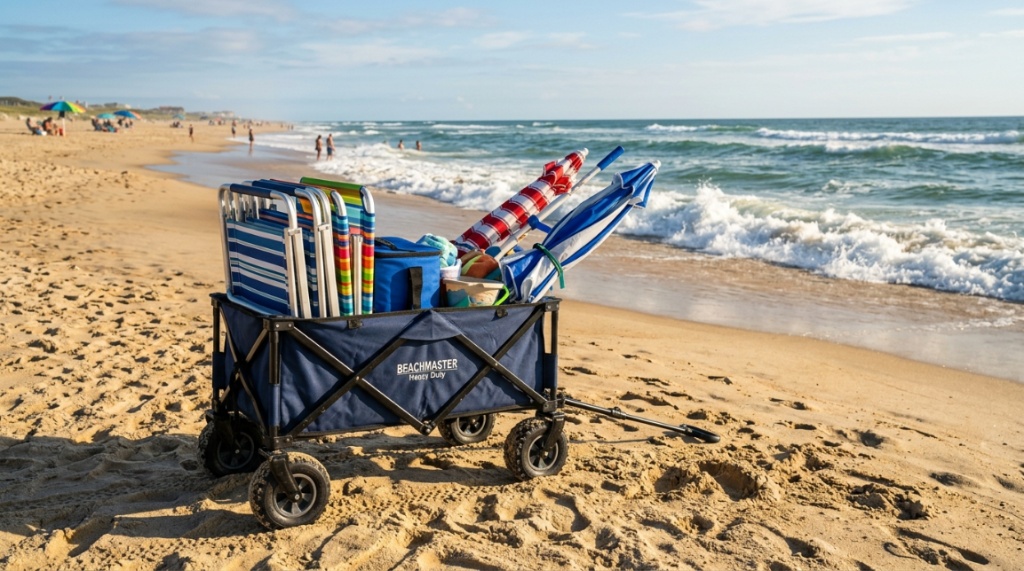
Dragging coolers, chairs, umbrellas, and beach bags across soft sand is exhausting before you even set up camp. A foldable wagon solves that problem, but not all wagons handle the beach equally. Many carts marketed as “all-terrain” struggle on loose sand, while others collapse under heavy loads. This guide breaks down exactly how to compare foldable wagons for easy beach transport, covering wheel design, frame durability, capacity, and the practical details that make or break a day at the shore. By the end, you will know precisely what to look for and which trade-offs matter most for your specific beach routine.
Why Standard Wagons Fail on Sand
Most generic utility wagons use thin plastic wheels with shallow treads. These wheels sink into loose, dry sand because they lack the surface area needed to distribute weight. When a wheel sinks, the axle drags, and you end up pulling far more resistance than the load itself. This is the number one reason people abandon wagons after one beach trip.
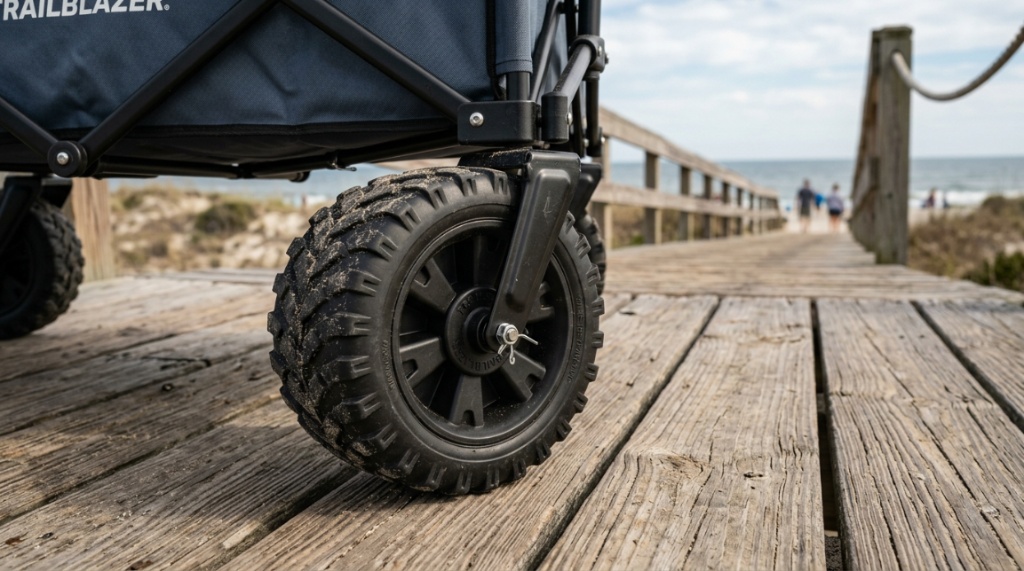
Beach-specific wagons solve this with oversized, wide wheels—typically inflatable or made of dense foam—that float over the sand rather than cutting into it. The wheel diameter matters too. Larger wheels roll over small obstacles like driftwood and uneven terrain more easily. If you are comparing options, wheel width and diameter should be your first filter, not the color or the cup holders.
Inflatable vs. Solid Foam Wheels
Inflatable wheels offer the smoothest ride on sand because they deform slightly under load, increasing contact area. They also absorb shock better on bumpy paths. The downside is maintenance: punctures are possible, and you need to check air pressure before each trip.
Solid foam wheels never go flat and require zero maintenance. They are heavier than inflatables, but they provide consistent performance on sand and pavement alike. For most families, foam wheels are the more practical choice because they eliminate the risk of arriving at the beach with a flat tire and no pump.
Key Features to Compare Before Buying
Once you confirm the wheels are beach-ready, shift your attention to the frame, fabric, and storage design. These features determine whether the wagon lasts more than one season and whether it actually simplifies your trip.
Frame Material and Weight Capacity
Steel frames are heavier but more durable and better suited for heavy loads. Aluminum frames are lighter, making them easier to lift into a car trunk, but they typically have lower weight limits. Check the stated capacity carefully—a wagon rated for 150 pounds might struggle with a loaded cooler plus two kids on a return trip.
Look for a reinforced base plate, not just a fabric sling. A rigid base prevents items from sagging through the bottom and keeps the wagon stable on uneven sand. Also, consider the folded dimensions. A wagon that folds to a compact, flat shape fits better in small trunks and is easier to store at home.
Handle Design and Maneuverability
The handle height should match your natural walking position. If the handle is too low, you will hunch over and tire quickly. If it is too high, you lose leverage for pulling. Adjustable handles are ideal because they accommodate different family members.
Swivel front wheels improve steering significantly on crowded beaches. Fixed wheels are simpler and more durable but require more effort to turn. A wagon with a wide wheelbase is more stable on slopes and less likely to tip when loaded unevenly.
Fabric Quality and Cleanup
Beach wagons face constant exposure to salt, sand, and water. Look for 600D or 900D polyester fabric, which resists tearing and handles repeated wet-dry cycles. The fabric should be easy to rinse—ideally, you can hose it down and let it dry without worrying about rust or mildew.
Drain holes in the bottom are a small but important detail. They let sand and water escape instead of pooling inside the wagon. Some models include a removable liner, which makes cleanup even easier. You can lift the liner out, shake it, and wash it separately.
Comparing Capacity and Intended Use
Capacity is not just about weight—it is about volume and how you pack. A wagon with a deep interior holds bulky items like beach tents and folding chairs upright. A shallower wagon forces you to stack items, which reduces usable space and makes access harder.
Consider what you actually haul. A family of four with a large cooler, a canopy, chairs, and toys needs a wagon with at least 150 liters of volume. A couple or solo beachgoer can manage with a smaller, lighter model. Overbuying capacity adds weight and makes the wagon harder to pull when empty.
Multi-Use Versatility
Many buyers want a wagon that works beyond the beach. If you plan to use it for grocery runs, park outings, or camping, look for features like a folding canopy for sun protection, a zippered pocket for small items, and a parking brake for slopes. These additions add weight and cost, so decide whether you genuinely need them or are paying for features you will rarely use.
For those who want a detailed breakdown of specific models and real-world performance in sandy conditions, this guide to foldable wagons for easy beach transport provides practical comparisons and recommendations based on Florida beach conditions.
Practical Considerations Most Buyers Overlook
Several factors rarely appear in product descriptions but significantly affect daily usability. Pay attention to these details before making a purchase.
Folding Mechanism and Storage
Some wagons fold into a compact rectangle, while others fold into a bulky cube. Check the folded dimensions against your car trunk. Also, test the folding mechanism if possible—some designs require two hands and significant force, which is frustrating when you are tired and sandy.
Consider whether the wagon stands upright when folded. A self-standing folded wagon is much easier to store in a garage or closet. Models that flop over take up more floor space and are harder to grab quickly.
Braking and Parking on Slopes
Beaches rarely have perfectly flat parking spots. A wagon with a parking brake prevents it from rolling away while you load or unload. This is especially important if you have children nearby. The brake should be easy to engage with one hand, even when the wagon is loaded.
Warranty and Replacement Parts
Check whether the manufacturer sells replacement wheels, handles, or fabric liners. A wagon with available spare parts lasts much longer than one that becomes useless when a single wheel breaks. A warranty of at least one year is standard; longer warranties indicate higher confidence in durability.
Planning to haul gear for outdoor exhibitions or large coastal events? Check out our guide on the Fort Lauderdale International Boat Show FIBS 2026 for tips on navigating massive venues efficiently.
Common Mistakes When Choosing a Beach Wagon
Many buyers make the same errors, leading to disappointment and wasted money. Avoid these pitfalls:
- Choosing style over substance: A wagon with attractive colors but narrow wheels will fail on sand. Prioritize wheel design above all else.
- Ignoring empty weight: A heavy wagon is difficult to lift into a car and hard to pull when empty. Balance durability with manageable weight.
- Overlooking the return trip: The wagon will be heavier and messier on the way back. Ensure the handle and wheels still perform well with a full, sandy load.
- Assuming all-terrain means beach-ready: “All-terrain” often refers to grass and gravel, not deep, dry sand. Verify wheel width and type specifically for sand.
- Skipping the fold test: A wagon that is hard to fold will stay in your trunk, unused. Practice the folding motion before buying.
How to Test a Wagon Before Committing
If you are shopping in a physical store, perform a quick evaluation. Push down on the frame to check for flex. A wobbly frame indicates poor construction. Lift the wagon to feel its empty weight. Roll it across different surfaces if possible, including a carpeted area that simulates some resistance.
If you are buying online, read reviews specifically mentioning sand performance. Look for comments about wheel sinking, handle comfort, and durability after several uses. Photos from real customers often reveal details that professional product shots hide, such as actual folded size and fabric quality.
Frequently Asked Questions
What wheel size is best for beach wagons?
Wheels should be at least 10 inches in diameter and 4 inches wide for reliable sand performance. Larger wheels, around 12 inches, handle soft sand and uneven terrain even better. Narrow wheels under 3 inches wide will sink in dry sand.
Can I use a regular utility wagon on the beach?
You can, but only on hard-packed sand near the waterline. On dry, loose sand, regular wagons with small plastic wheels will sink and become very difficult to pull. For consistent beach use, choose a wagon specifically designed with wide, sand-friendly wheels.
How much weight should a beach wagon hold?
Look for a capacity of at least 100 pounds for basic use, and 150 pounds or more for family outings with coolers and chairs. Remember that the weight limit includes the wagon’s own weight, so account for that when calculating your load.
Are inflatable wheels better than foam wheels for sand?
Inflatable wheels provide a smoother ride and slightly better sand performance, but they require maintenance and can puncture. Foam wheels are maintenance-free, never go flat, and perform nearly as well. For most beachgoers, foam wheels offer the better balance of reliability and performance.
How do I clean a beach wagon after use?
Rinse the wagon with fresh water to remove salt and sand. Wipe down the frame to prevent corrosion, especially if it has exposed metal parts. Let the fabric dry completely before folding and storing to prevent mildew. Drain holes in the bottom make this process much easier.
Conclusion
Choosing the right foldable wagon for beach transport comes down to prioritizing wheel design, frame durability, and practical features that match your specific needs. Wide, large wheels are non-negotiable for sand. A sturdy frame with a reinforced base handles heavy loads without sagging. Adjustable handles, swivel wheels, and a parking brake improve daily usability in ways that make a real difference on a long beach day.
Take your time comparing options, and do not be swayed by attractive designs or extra accessories you will rarely use. Focus on the core mechanics that determine performance on sand. A well-chosen wagon will serve you for years, making every beach trip easier from the parking lot to the shoreline and back again.