
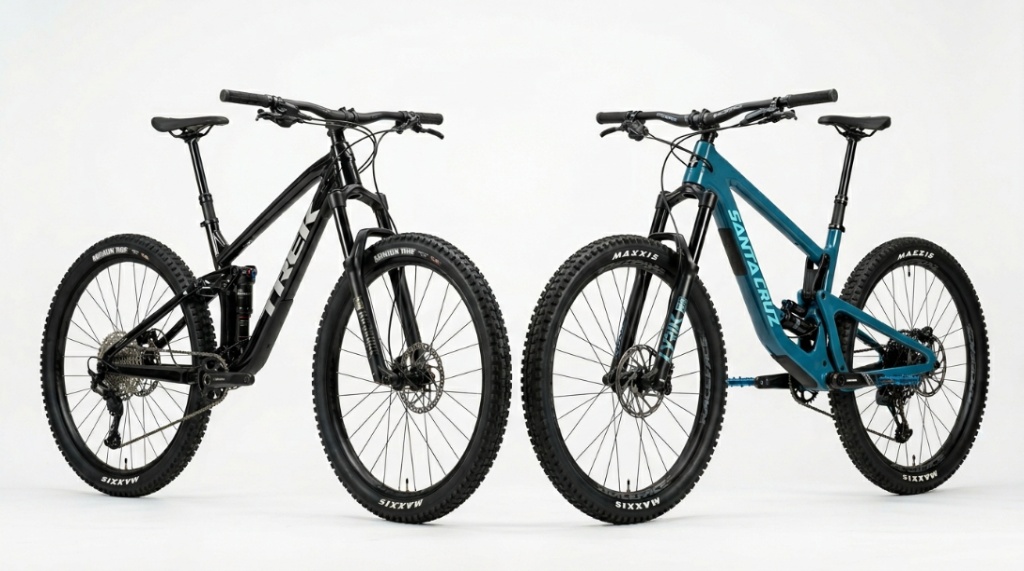
You are standing in the bike shop, staring at two nearly identical mountain bikes. One has 26-inch wheels. The other rolls on 27.5-inch wheels. Which one do you buy? This is one of the most common dilemmas for new riders and experienced trail enthusiasts alike. The difference between a 26-inch mountain bike inch mountain bike goes far beyond a simple number. It affects your speed, control, comfort, and how much fun you have on the trail. If you pick the wrong size, you might struggle with handling or feel unstable on descents. This guide will help you make the right choice based on your height, riding style, and budget.
What Is the Main Difference Between 26-Inch and 27.5-Inch Wheels?
The 26-inch wheel is smaller and lighter while the 27.5-inch wheel (also called 650b) is larger and offers better rollover capability. The 26-inch wheel was the industry standard for decades. It is nimble, accelerates quickly, and feels playful on tight trails. The 27.5-inch wheel is a modern compromise. It rolls over obstacles more easily than a 26-inch wheel but remains more maneuverable than a 29-inch wheel.
Key Physical Differences
- Diameter: 26 inches = 559 mm ISO. 27.5 inches = 584 mm ISO.
- Tire volume: 27.5-inch tires generally have more air volume for better traction.
- Weight: 26-inch wheels are typically lighter, making the bike feel snappier.
- Contact patch: 27.5-inch tires offer a larger contact patch for improved grip.
Which Wheel Size Is Better for Beginners?
Beginners should lean toward a 27.5-inch mountain bike if they are of average adult height. The 27.5-inch wheel provides more stability and confidence when learning basic trail skills. It rolls over roots and rocks with less effort, which reduces the chance of an unexpected stop. However, shorter riders (under 5 feet 4 inches) often find 26-inch bikes easier to handle because the frame geometry is more proportionate to their body size.
If you are under 5 feet, a 26-inch bike will likely fit you better. The standover height is lower, and the reach is shorter. This allows you to put your feet flat on the ground without stretching, which builds confidence.
How Does Rider Height Affect Your Choice?
Rider height is the most important factor in deciding between 26-inch and 27.5-inch wheels. If you are shorter than 5 feet 4 inches, a 26-inch bike usually fits better. The smaller wheel diameter keeps the bottom bracket lower and the top tube shorter. If you are between 5 feet 4 inches and 6 feet tall, a 27.5-inch bike is the sweet spot. It offers a better fit with modern geometry. If you are over 6 feet, you might prefer 29-inch wheels, but a 27.5-inch bike can still work if you prefer agility over straight-line speed.
Height Guide Table
| Rider Height | Recommended Wheel Size | Reason |
|---|---|---|
| Under 5’0″ | 26-inch | Better standover height and reach |
| 5’0″ to 5’4″ | 26-inch or 27.5-inch | Depends on inseam and preference |
| 5’4″ to 6’0″ | 27.5-inch | Best balance of fit and performance |
| Over 6’0″ | 27.5-inch or 29-inch | Consider 29-inch for stability |
Why Does Wheel Size Affect Acceleration and Speed?
Wheel size directly impacts how a bike accelerates and maintains speed. A 26-inch wheel has a smaller circumference, which means less rotational mass. This allows the wheel to spin up to speed faster. If you ride tight, technical trails with frequent turns and short climbs, a 26-inch bike will feel more responsive. A 27.5-inch wheel has more mass farther from the center. It takes slightly more energy to accelerate but holds momentum better once moving. On longer climbs or flowy trails, the 27.5-inch wheel feels more efficient because it does not lose speed as quickly between pedal strokes.
Which Wheel Size Is Best for Technical Trails?
For technical trails with roots, rocks, and steep climbs, a 27.5-inch wheel is generally better. The larger diameter rolls over obstacles more smoothly. You will pedal less to clear a root or rock. The 26-inch wheel requires more precise line choice and sometimes a small bunny hop to avoid getting stuck. However, if the trail is very tight with sharp switchbacks, the 26-inch wheel wins. It turns faster and feels more maneuverable in tight spaces. Riders who value agility over plowing capability often prefer 26-inch bikes in technical terrain.
Trail Type Comparison
- Tight switchbacks: 26-inch is easier to whip around corners.
- Rooty climbs: 27.5-inch rolls over roots with less effort.
- Rock gardens: 27.5-inch maintains momentum better.
- Flow trails: 27.5-inch carries speed more efficiently.
- Jump lines: 26-inch feels more playful and easier to maneuver in the air.
How Does Suspension Compatibility Affect Your Decision?
Suspension forks and rear shocks are designed around specific wheel sizes. A 26-inch bike has less fork travel available in modern suspension forks. Most manufacturers now make forks primarily for 27.5-inch and 29-inch wheels. This means if you buy a 26-inch bike today, you have fewer upgrade options. The 27.5-inch platform has widespread support from brands like Fox, RockShox, and DVO. You can find air forks, coil forks, and even electronic suspension for 27.5-inch wheels. This makes the 27.5-inch bike a better long-term investment if you plan to upgrade components.
Can You Swap 27.5-Inch Wheels onto a 26-Inch Frame?
In most cases, you cannot swap 27.5-inch wheels onto a 26-inch frame. The wheel diameter is 25 mm larger, which can cause the tire to rub against the fork crown, frame stays, or brake calipers. Even if the wheel fits, it changes the bike geometry significantly. The bottom bracket rises, the head angle steepens, and the bike handles differently. Some riders have successfully used 27.5-inch wheels on 26-inch frames with disc brakes and careful tire selection, but it is not a reliable upgrade. If you want 27.5-inch wheels, buy a bike designed for them.
Which Wheel Size Offers Better Tire Selection in 2024?
As of 2024, 27.5-inch tire availability is far superior to 26-inch. Most major tire brands have reduced their 26-inch offerings significantly. You can still find 26-inch tires from companies like Schwalbe and Maxxis, but the selection is limited to basic tread patterns and rubber compounds. The 27.5-inch market has dozens of options for every riding style. You can choose from lightweight XC race tires, heavy-duty downhill tires, and everything in between. If you want to customize your bike for specific conditions, the 27.5-inch platform gives you more freedom.
Your wheel size dictates how you handle rough terrain, but safety gear is just as critical. If you are tackling technical, high-altitude terrain, ensure you match your setup with the right Mountain Bike Helmet for Colorado Trail Conditions to handle unpredictable rock gardens and steep descents.
What Is the Resale Value Difference?
27.5-inch mountain bikes hold their value much better than 26-inch bikes. The 26-inch standard is essentially obsolete in the current market. New bike releases with 26-inch wheels are rare, and used 26-inch bikes sell for significantly less than comparable 27.5-inch models. If you plan to resell your bike in the future, a 27.5-inch bike is the smarter financial choice. However, if you find a used 26-inch bike at a steep discount, it can still be a great entry point if it fits you and matches your riding style.

Which Wheel Size Is Cheaper to Buy New?
New 26-inch mountain bikes are almost exclusively found in the budget and children’s categories. You can buy a decent 26-inch hardtail for around $300 to $600. A comparable 27.5-inch hardtail typically starts around $500 and goes up to $2,000 or more. If your budget is tight, a 26-inch bike might be your only option. Just be aware that component quality on cheap 26-inch bikes is often lower. A well-maintained used 26-inch bike from a reputable brand can be a better value than a new budget bike.
Is the 27.5-Inch Wheel the Best All-Around Choice?
For most adult riders, the 27.5-inch wheel is the best all-around choice. It offers a balanced blend of agility, stability, and rollover capability. It works well for cross-country, trail riding, and even light enduro. The 26-inch wheel is better for smaller riders or those who prioritize playful handling above all else. The 29-inch wheel is better for tall riders who want maximum speed and stability. The 27.5-inch wheel sits perfectly in the middle. It is versatile enough to handle almost any trail condition while still feeling fun and responsive.
How Does Wheel Size Affect Bike Geometry?
Wheel size changes the entire geometry of a mountain bike. A larger wheel raises the bottom bracket and slackens the head angle slightly. This makes the bike more stable at high speeds but less agile in slow corners. A smaller wheel lowers the bottom bracket and steepens the head angle. This makes the bike feel more responsive and easier to manual. When comparing a 26 Inch Mountain Bike + 27.5 Inch Mountain Bike side by side, the 26-inch bike will always feel more upright and twitchy. The 27.5-inch bike will feel more planted and confident at speed.
Geometry Effects Summary
- Head angle: 26-inch is steeper, 27.5-inch is slacker.
- Bottom bracket height: 26-inch is lower, 27.5-inch is higher.
- Wheelbase: 26-inch is shorter, 27.5-inch is longer.
- Standover height: 26-inch is lower, easier to mount.
Frequently Asked Questions
Can a tall person ride a 26-inch mountain bike?
A tall person over 6 feet can ride a 26-inch mountain bike, but it will feel cramped. The reach is shorter, the seat post may not extend high enough, and the bike will feel unstable at speed. For tall riders, a 27.5-inch or 29-inch bike is far more comfortable and safe.
Are 26-inch mountain bikes still made in 2024?
Very few new 26-inch mountain bikes are manufactured in 2024. Most major brands have stopped production for adult models. You can still find them in children’s sizes and budget department store bikes. Used 26-inch bikes are abundant on the secondhand market.
Which wheel size is easier to jump with?
A 26-inch wheel is easier to jump because it is lighter and spins up faster. The smaller wheel makes the bike feel more playful in the air. Many dirt jumpers still prefer 26-inch wheels for this reason. The 27.5-inch wheel requires more effort to lift but feels more stable on landings.
Does wheel size matter for downhill riding?
Yes, wheel size matters significantly for downhill riding. 27.5-inch wheels are the standard for modern downhill bikes because they offer a good balance of stability and maneuverability. 26-inch wheels are less stable at high speeds and require more active riding to maintain control through rough sections.
Can I use 26-inch tires on 27.5-inch rims?
No, 26-inch tires will not fit 27.5-inch rims. The bead seat diameter is different. A 26-inch tire requires a 559 mm rim, while a 27.5-inch tire requires a 584 mm rim. The tire will be too loose and will not seal properly even with tubeless setup.
Are 27.5-inch wheels better for climbing?
27.5-inch wheels are generally better for climbing because they roll over obstacles more easily. You lose less momentum when hitting roots or rocks. However, on steep, technical climbs with tight corners, the 26-inch wheel can be advantageous due to its quicker turning ability.
What is the weight difference between 26-inch and 27.5-inch wheels?
A 26-inch wheel and tire combination is typically about 200 to 400 grams lighter per wheel compared to a 27.5-inch setup. This weight difference affects acceleration and climbing feel. Lighter wheels spin up faster but hold less momentum.
Conclusion
Choosing between a 26-inch and 27.5-inch mountain bike comes down to your height, riding style, and budget. If you are under 5 feet 4 inches or want a playful bike for tight trails, a 26-inch wheel is a solid choice. If you are average height, ride a variety of terrain, or want better resale value and tire options, the 27.5-inch wheel wins. Remember that geometry and fit matter more than wheel size alone. Test ride both sizes if possible. Sit on the bike, check the standover height, and take it around a parking lot. Your body will tell you which size feels right. Once you decide, hit the trails with confidence knowing you have the right tool for the job.