

Whether you are a beginner paddling out for the first time or a seasoned surfer chasing big waves, what you wear in the water matters. The right gear keeps you comfortable, safe, and focused on the ride. This guide walks you through everything you need to know about surf clothing, wetsuits vs swimsuits, and surf accessories so you can make smart choices before hitting the beach.
Why What You Wear in the Water Matters
Surfing is a physically demanding sport. You spend long hours in the sun, salt water, and sometimes cold ocean temperatures. Wearing the wrong clothing can lead to skin irritation, restricted movement, or even hypothermia in colder water. Therefore, choosing the right surf gear is not just about looking good. It is about performance and protection.
Additionally, surf-specific clothing is designed with the ocean in mind. Regular cotton T-shirts, for example, become heavy when wet and drag you down. Surf brands engineer their fabrics to be lightweight, quick-drying, and resistant to saltwater damage.
Understanding Wetsuits: Who Needs One?
A wetsuit is a close-fitting garment made from neoprene foam rubber. It traps a thin layer of water between the suit and your skin. Your body then warms that water, which acts as insulation. This is why wetsuits are essential in cold water.
When a Wetsuit Makes Sense
Water temperature is the main factor. As a general rule:
- Water above 72°F (22°C): a wetsuit is optional
- Water between 60–72°F (15–22°C): a shorty or thin full suit works well
- Water below 60°F (15°C): a thick full suit with booties and gloves is recommended
Wetsuits come in different thicknesses, measured in millimeters. A 2mm suit offers light insulation. A 5/4mm suit is built for cold, winter conditions. The first number refers to the thickness across the chest, and the second refers to the arms and legs.
Types of Wetsuits
Full suits cover the entire body from ankles to wrists. They offer the most warmth. Shorties, however, have short arms and legs and suit warmer water. Spring suits fall somewhere in between. Some surfers also wear wetsuit vests or tops without the full suit on warmer days.
Fit is critical. A wetsuit that is too loose will let water flush through constantly, reducing its ability to keep you warm. A suit that is too tight will restrict your paddle stroke. Always try before you buy, or refer carefully to the brand’s size chart.
Swimsuits for Surfing: Practical or Not?
Swimsuits are a popular choice in warm tropical destinations. They are lightweight, flexible, and easy to move in. However, not all swimsuits are created equal when it comes to surfing.
What to Look for in a Surf Swimsuit
Standard fashion swimsuits are often not built for the ocean. They can slip out of place during wipeouts or fade quickly from sun and saltwater exposure. Therefore, choosing a surf-specific swimsuit makes a big difference.
For women, a good surf bikini features:
- Secure ties or clips that hold during falls
- Higher-coverage bottoms to prevent slipping
- Chlorine and saltwater-resistant fabric
For men, board shorts are the most common choice. They sit at the hips, are made from quick-drying polyester blends, and usually feature a secure Velcro or drawstring waist. Some board shorts include a mesh lining that doubles as underwear.
When comparing surf clothing, wetsuits vs swimsuits is ultimately a question of water temperature and personal preference. In warm water, swimsuits offer freedom of movement. In cold water, wetsuits win every time.
Rash Guards: The Middle Ground
Rash guards deserve a special mention. These are tight-fitting tops made from Lycra or spandex. They protect against skin rash from the surfboard, sun exposure, and minor jellyfish contact. They can be worn under a wetsuit or on their own over a swimsuit.
Rash guards come in short-sleeve and long-sleeve versions. Long-sleeve options offer better UV protection, which is important for surfers who spend hours in direct sunlight. UPF 50+ rated rash guards block over 98% of harmful UV rays.
Many beginner surfers overlook rash guards. However, after a few sessions dragging their stomach across a waxed surfboard, most quickly add one to their kit.
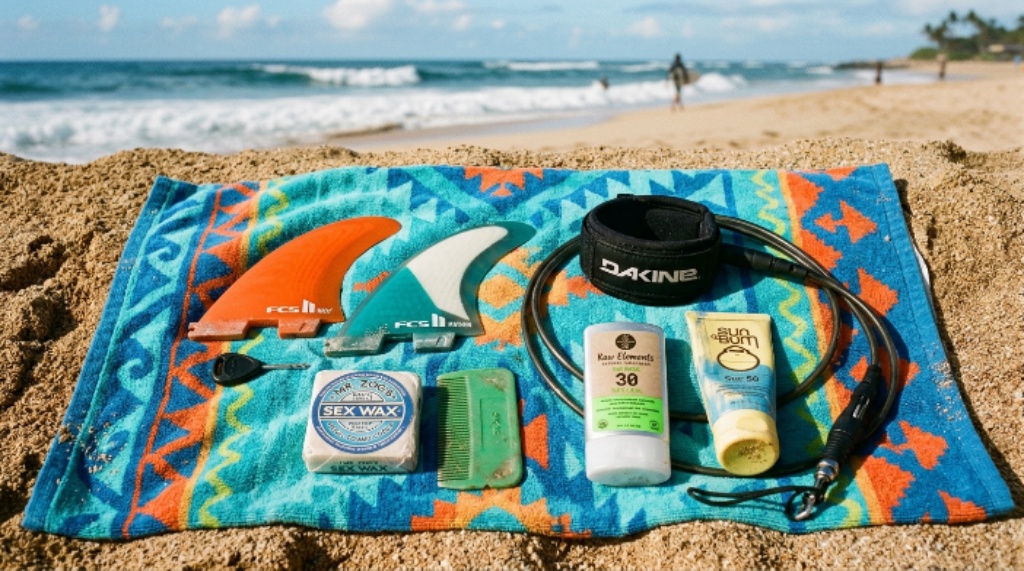
Essential Surf Accessories
Beyond clothing, the right surf accessories can significantly improve your time in the water. Some are safety items. Others are comfort-focused. All of them are worth considering.
Surf Leash
The leash connects your ankle to the surfboard. Without one, your board becomes a dangerous projectile in the water. Leashes come in different lengths and thicknesses depending on the size of your board and wave conditions. As a rule, your leash should be roughly the same length as your surfboard.
Surf Wax
Surf wax is applied to the top of the board to create traction. Without it, you will slide right off. There are different wax types for different water temperatures. Cold water wax stays soft in cold conditions. Tropical wax is harder and designed for warm water. Applying a basecoat first, then layering with a temperature-appropriate topcoat, gives the best grip.
Fins
Fins attach to the bottom of the surfboard and control direction and stability. Most boards come with fins, but many surfers customise their fin setup. Larger fins provide more stability and are great for beginners. Smaller fins allow faster, more responsive turns for advanced surfers.
Sunscreen
This one is often forgotten but critically important. Surfers are exposed to intense UV radiation, often for several hours at a time. A reef-safe, water-resistant sunscreen with at least SPF 50 is recommended. Apply generously to all exposed skin and reapply every two hours. Many surfers also use zinc oxide on their nose and cheeks for extra protection.
Ear Plugs
Repeated exposure to cold water and wind can cause surfer’s ear, a condition where bony growths form in the ear canal. Wearing surf-specific earplugs helps prevent this condition. They are designed to allow sound through while keeping water out.
Changing Robe or Poncho
A changing robe, sometimes called a dryrobe, is a large, warm garment you can slip on after your session. It allows you to change out of your wetsuit in the car park without exposing yourself. Many have warm fleece linings and are wind-resistant. These have become very popular in colder surf destinations.
How to Care for Your Surf Gear
Looking after your gear extends its life significantly. After every surf session, rinse your wetsuit thoroughly with fresh water. Salt and UV degrade neoprene quickly. Hang it inside out, away from direct sunlight. Never put a wetsuit in a washing machine or dryer.
Board shorts and rash guards should also be rinsed after every use. Avoid leaving them wet in a bag for extended periods, as this leads to mildew and smell.
Fins should be checked regularly for cracks or chips. A damaged fin can affect performance and may even break in the water.
Conclusion
Getting your surf clothing right is one of the best investments you can make as a surfer. Understanding the difference between surf clothing, wetsuits vs swimsuits, and knowing which surf accessories to pack can transform your experience in the ocean. Wetsuits are essential in cold water and optional in warm. Swimsuits offer flexibility in tropical conditions but should be surf-specific. Rash guards protect against sun and rash. Accessories like leashes, wax, fins, and sunscreen are non-negotiable parts of any surfer’s kit.
Start with the basics, learn your local water conditions, and build your gear collection from there. The ocean will be waiting.
Frequently Asked Questions
What is the difference between a wetsuit and a rash guard?
A wetsuit is made from neoprene and provides thermal insulation in cold water. A rash guard is a thin, stretchy top made from Lycra or spandex that protects against skin rash and UV rays. Rash guards do not provide warmth.
Can I surf in a regular swimsuit?
Yes, but it is not ideal. Regular swimsuits may slip during wipeouts and can fade quickly from saltwater exposure. A surf-specific swimsuit is designed to stay in place and withstand ocean conditions.
How thick should my wetsuit be?
Wetsuit thickness depends on water temperature. In warm water (above 72°F), a 2mm suit or none at all is fine. In cold water (below 60°F), a 5/4mm or thicker suit is recommended.
Do I need a surf leash as a beginner?
Yes, absolutely. A leash keeps your board close after a wipeout and prevents it from hitting other surfers. It is a basic safety item and should always be worn.
What type of sunscreen should surfers use?
Surfers should use a reef-safe, water-resistant sunscreen with SPF 50 or higher. Reef-safe formulas avoid chemicals like oxybenzone, which harm coral reefs. Mineral-based sunscreens with zinc oxide or titanium dioxide are a good choice.
Related Topics:
How to Save on Shopping: Know the Hidden Tricks
Gift Ideas for Kids Who Like Space: Inspiring the Next Generation of Astronauts